

CNC Machining
CNC Machining Services
CNC machining removes material from solid stock with computer-controlled mills, lathes, and multi-axis centers.
Create a quote
Introduction: Fine metal powder explains how custom metal 3D printing turns digital geometry into fused metal parts without guaranteeing identical material outcomes.
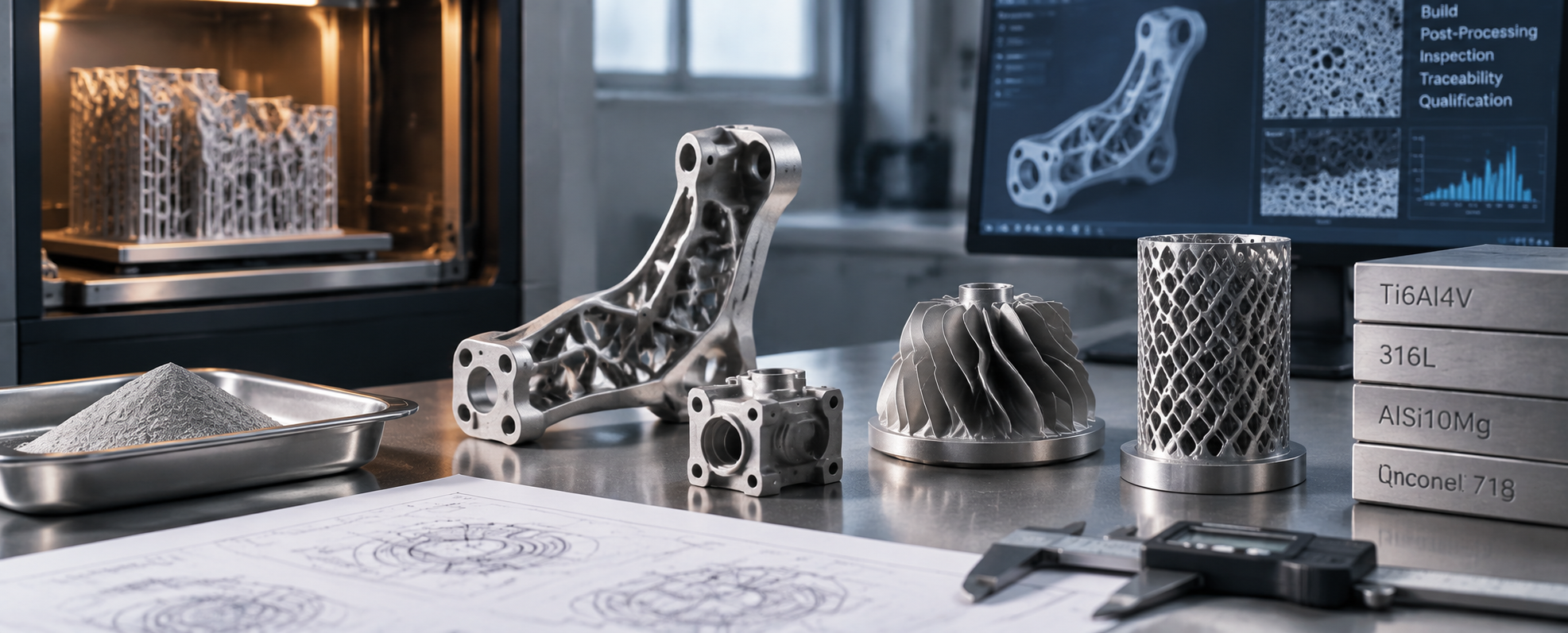
For engineers, product designers, and manufacturing teams comparing metal processes, the word “powder” can sound like a material detail rather than a manufacturing logic. In SLM, however, fine metal powder is not just feedstock. It shapes how layers are spread, how laser energy interacts with the build area, how geometry is created, and why finished 3D printed metal parts need conservative interpretation around density, properties, and post-processing. AIHFABS describes its SLM service in this powder-bed context, using fine metal powder, high-power laser melting, and layer-by-layer consolidation as the basis for custom metal 3D printing.
Fine metal powder matters because SLM does not begin with a block of metal, a wire, or a liquid resin. It begins with many small metal particles arranged into a thin bed that can be selectively melted where the CAD slice requires solid material. That difference changes the manufacturing logic. In machining, the starting material is already a continuous solid, and the process removes unwanted material. In wire-fed processes, material is delivered along a path and deposited. In resin printing, light cures a photopolymer into shape. In powder bed metal additive manufacturing, the powder layer is both the raw material field and the temporary support environment around the part. The part emerges only where energy has transformed loose powder into fused metal. This is why fine metal powder is a useful concept for understanding custom metal 3D printing before discussing specific alloys or applications. The powder form makes it possible to build complex cross-sections one layer at a time, but it also introduces boundaries that a material comparison reader should keep clear. Powder form alone does not define final strength, fatigue behavior, surface finish, inspection status, or certification. Those outcomes depend on the selected material, part geometry, process parameters, build orientation, thermal history, post-processing, and verification requirements. AIHFABS lists SLM as a metal 3D printing service using fine metal powder and metal material options, but that should be read as a manufacturing-process description, not as a universal promise that every metal, geometry, or performance target is automatically available. The material meaning is also different from a simple “metal equals metal” assumption. A steel bar, a cast aluminum blank, a titanium forging, and a bed of fine metal powder may all be metallic, yet they enter manufacturing with different structures and process dependencies. Powder metal 3D printing in the SLM context relies on controlling how powder is distributed, melted, cooled, and repeated across many layers. For B2B teams comparing methods, this means the first question is not only “Which metal do we want?” but also “What does this material form allow the process to do, and where does the project need additional confirmation?” That framing prevents material-form knowledge from being confused with a finished-part performance guarantee.
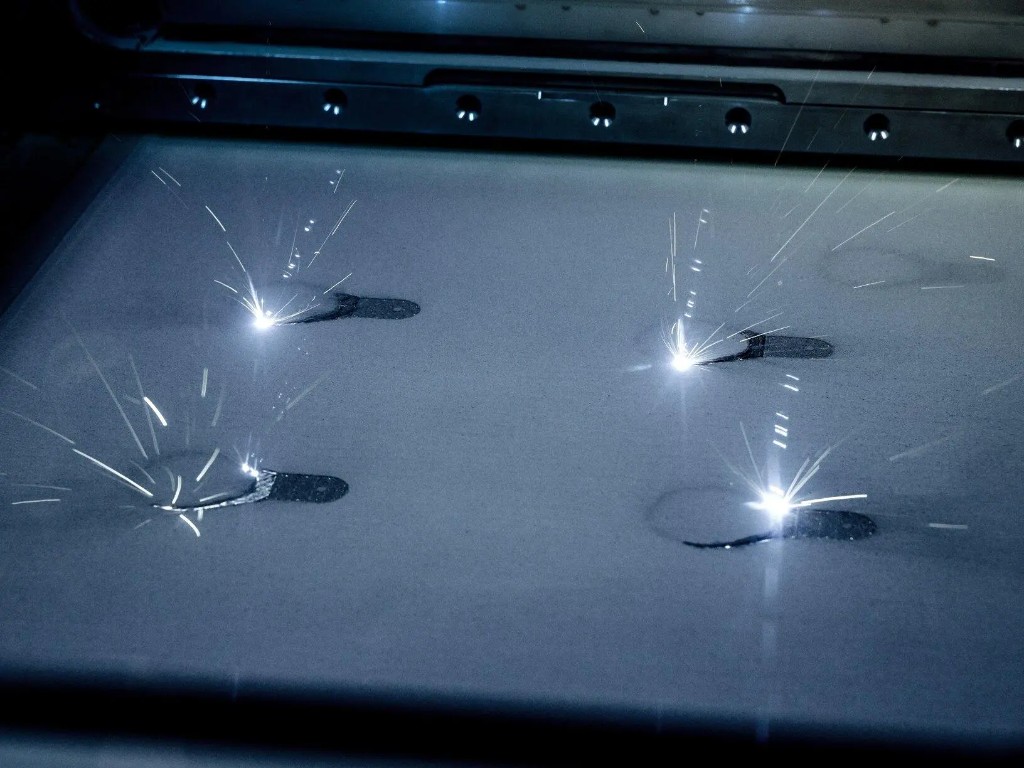
The phrase “layered fusion” is useful because it connects the powder bed to the final part shape. In SLM, a digital model is sliced into thin cross-sections, and each layer becomes a controlled manufacturing event. A uniform layer of metal powder is spread over the build area, the laser selectively melts the required regions, molten material solidifies, and the build platform moves so the next layer can be formed. Over many cycles, these slices accumulate into a three-dimensional metal part. The important point is that the part is not carved out at the end; its internal and external geometry are progressively created through repeated local melting and solidification.
• Powder spreading creates the physical layer that the laser can act on. A powder bed must present material in a form suitable for selective melting, which is why powder behavior is central to the process concept even when particle size, powder brand, and batch documentation are not specified in a general service overview.
• Laser scanning turns selected regions of the powder layer into fused metal. The laser follows the sliced geometry rather than the full 3D model at once, so the relationship between CAD data, slicing, scan path, and energy input is fundamental to how a 3d printing metal service makes parts.
• Solidification connects each new fused region with the layer below. This is where the process begins to move from loose powder toward a consolidated metal structure, but the final result still depends on material, geometry, process control, thermal behavior, and any later heat treatment or machining.
• Repeated building transforms many thin events into one part. The repeated cycle explains why SLM can create features such as internal channels or consolidated assemblies, while also explaining why support removal, depowdering, and other post-processing may be part of the finished-part pathway.
This forming path is also why SLM belongs in the powder bed fusion family rather than being treated as a generic 3D printing label. Powder bed fusion processes use thermal energy to selectively fuse regions of a powder bed, and SLM is one metal-oriented expression of that broader principle. For material comparison readers, this classification helps separate process mechanics from marketing vocabulary. A metal 3d printing service may involve powder bed fusion, directed energy deposition, binder-based routes, or other methods; the term should not be collapsed into one universal metal-printing workflow. In the AIHFABS SLM context, the relevant mechanism is the powder bed and high-power laser melting of fine metal powder, followed by solidification and later steps such as depowdering, support removal, and, when required, heat treatment or machining. The layered nature also shapes design interpretation. Since each cross-section must be formed in sequence, features such as overhangs, enclosed passages, thin walls, and thermal mass do not behave as abstract CAD geometry alone. They interact with build orientation, support strategy, heat flow, and access for powder removal. This does not turn the article into a design manual, but it explains why powder and layered fusion are inseparable. The powder bed enables geometry, the laser defines local fusion, and repeated layers make the part possible. When a project team understands that chain, it can read SLM service language more accurately and avoid assuming that a digital model automatically becomes an equivalent solid metal object without process interpretation.
Terms such as “fully dense metal parts” and “near-full density” can be helpful when they signal the direction of SLM compared with processes that create visibly porous, loosely bound, or non-metal polymer parts. They should not be stretched into an absolute claim that every part is completely pore-free, reaches the same density, or delivers identical performance across all materials and geometries. In powder metal 3D printing, density is an outcome influenced by powder characteristics, energy input, scan strategy, thermal conditions, part design, post-processing, and inspection method. A service description can describe the intended consolidation mechanism, but a specific project still needs its own material data, process assumptions, and quality requirements if density is critical. This boundary is especially important because “dense” is often used by different readers at different levels of precision. A product designer may use it to mean “a real metal part rather than a plastic prototype.” A mechanical engineer may think about porosity, fatigue sensitivity, heat treatment response, or dimensional stability. A quality team may need measurement methods, acceptance criteria, and documented inspection results. These meanings are related, but they are not identical. AIHFABS uses SLM language around fine metal powder, laser melting, and dense metal parts, and those terms are useful for understanding the process direction. They should not be rewritten as a blanket guarantee of zero porosity, fixed strength, or equal performance for every listed or reviewed material. A conservative reading also protects good engineering decisions. For example, SLM may be an attractive custom metal 3D printing route for complex structures, internal features, lightweight components, or low-volume metal parts that are difficult to machine from solid stock. Yet the feasibility and final behavior of a part still depend on details beyond the material form. Overhangs may require support and later removal. As-built metal surfaces may be grainy and may need polishing, coating, CNC finishing, or machining when functional surfaces are important. Some materials or alloy families may require project review, and heat treatment may be relevant depending on the part and material. These conditions do not weaken the concept of SLM; they make the concept more realistic. The key distinction is between material-structure knowledge and performance commitment. Fine metal powder explains how SLM can create metal geometry layer by layer. Powder bed fusion explains why localized melting and solidification are central to the process. Density language explains the intended consolidation direction. None of these terms alone replaces a project-specific specification, material certificate, inspection report, or validated production process. For teams comparing a metal 3D printing service with machining, casting, or other additive routes, the practical value is clarity: SLM can be understood as a powder-bed laser fusion method for custom metal parts, while final properties must remain tied to confirmed material, geometry, post-processing, and verification requirements.
Fine metal powder is more than a raw material phrase in SLM. It is the entry point for understanding how custom metal 3D printing builds metal parts from a powder bed through repeated laser fusion and solidification. This view helps readers separate process mechanics from overbroad performance assumptions. AIHFABS provides an SLM service context where fine metal powder, metal materials, layered melting, depowdering, support removal, and optional finishing terms can be read together. The most useful next step is not to treat powder language as a guarantee, but to use it as a clearer foundation for understanding SLM material terminology and project-specific boundaries.
Q:Why does fine metal powder matter in custom metal 3D printing?
A:Fine metal powder matters because it is the material form that allows SLM to create metal geometry layer by layer. The powder bed provides a thin, spreadable material field, and the laser selectively melts only the regions needed for each CAD slice. This is different from machining a solid block or extruding a filament. However, the use of fine metal powder does not by itself guarantee final strength, surface finish, density, or certification.
Q:Does powder metal 3D printing always guarantee fully dense metal parts?
A:No. Powder metal 3D printing can be associated with dense or near-full-density metal parts in the SLM context, but that wording should be interpreted conservatively. Density depends on material, geometry, process control, thermal behavior, post-processing, and inspection method. It should not be read as a universal promise of completely pore-free parts or identical performance across all materials and applications.
Q:How does layered fusion affect the way a 3D printing metal service makes parts?
A:Layered fusion means the part is built through many repeated powder spreading, laser melting, and solidification events. Each layer corresponds to a sliced section of the CAD model, so geometry is formed progressively rather than cut from a solid block. This enables complex metal structures, but it also makes build orientation, support needs, depowdering, and later finishing important parts of the manufacturing context.
What is Powder Bed Fusion Process Definition and Advantages
Powder Bed Fusion Additive Manufacturing Research Group

A process that fits this note. Open the spec, or put the file on a quote.
CNC machining removes material from solid stock with computer-controlled mills, lathes, and multi-axis centers.
Create a quote
CNC Milling Services use computer numerical control (CNC) mills to cut workpieces with rotating tools according to programmed toolpaths.
Create a quoteMaterials that sit next to this article. Check the card, then upload CAD.
Process, finish, and file notes from the shop — not a marketing blog.
Company, payment, shipping, and process answers by topic.
Questions about 3D printing processes, materials, MOQ, samples, and custom projects.
Production lead times, shipping options, and order tracking.
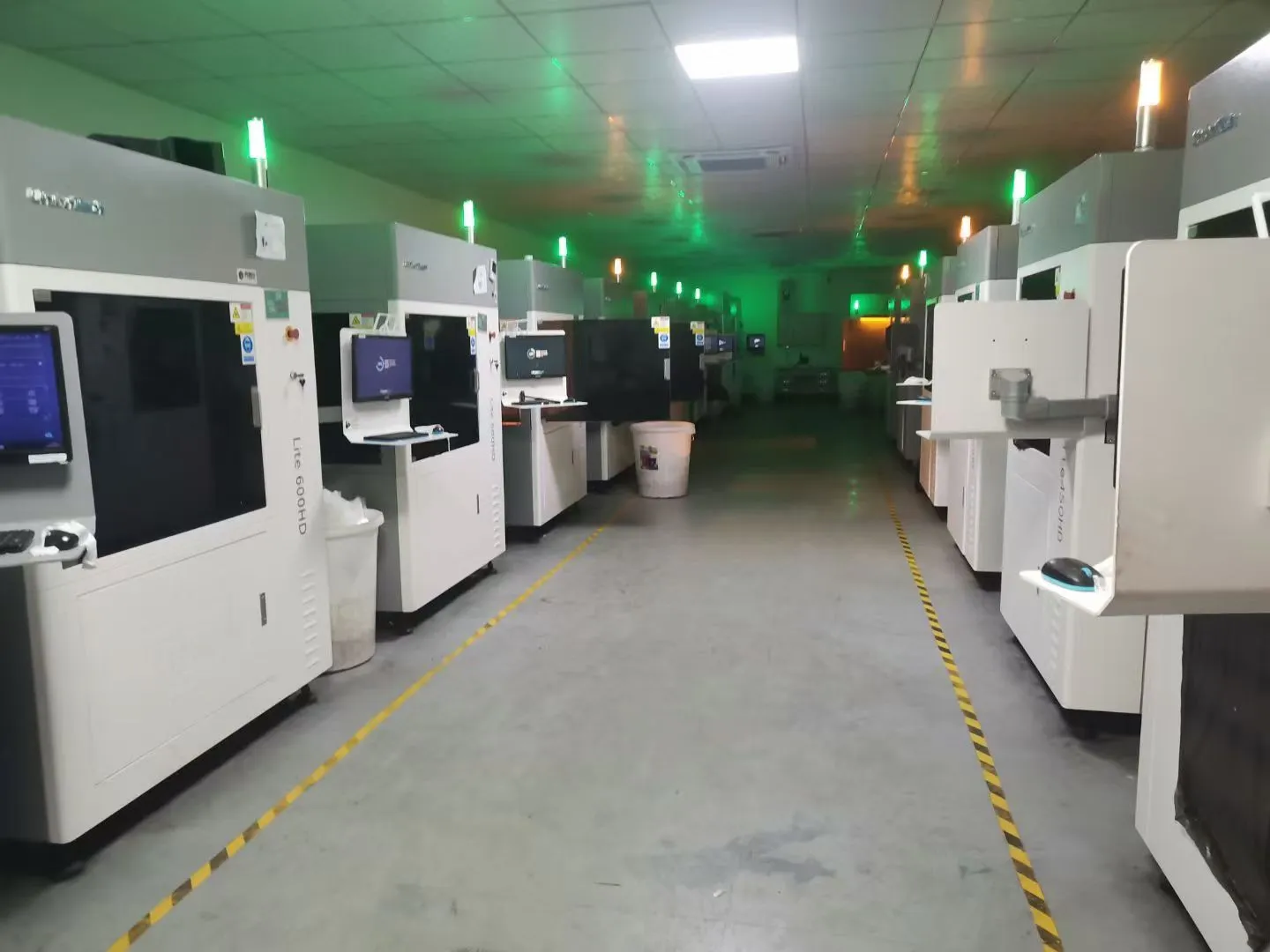
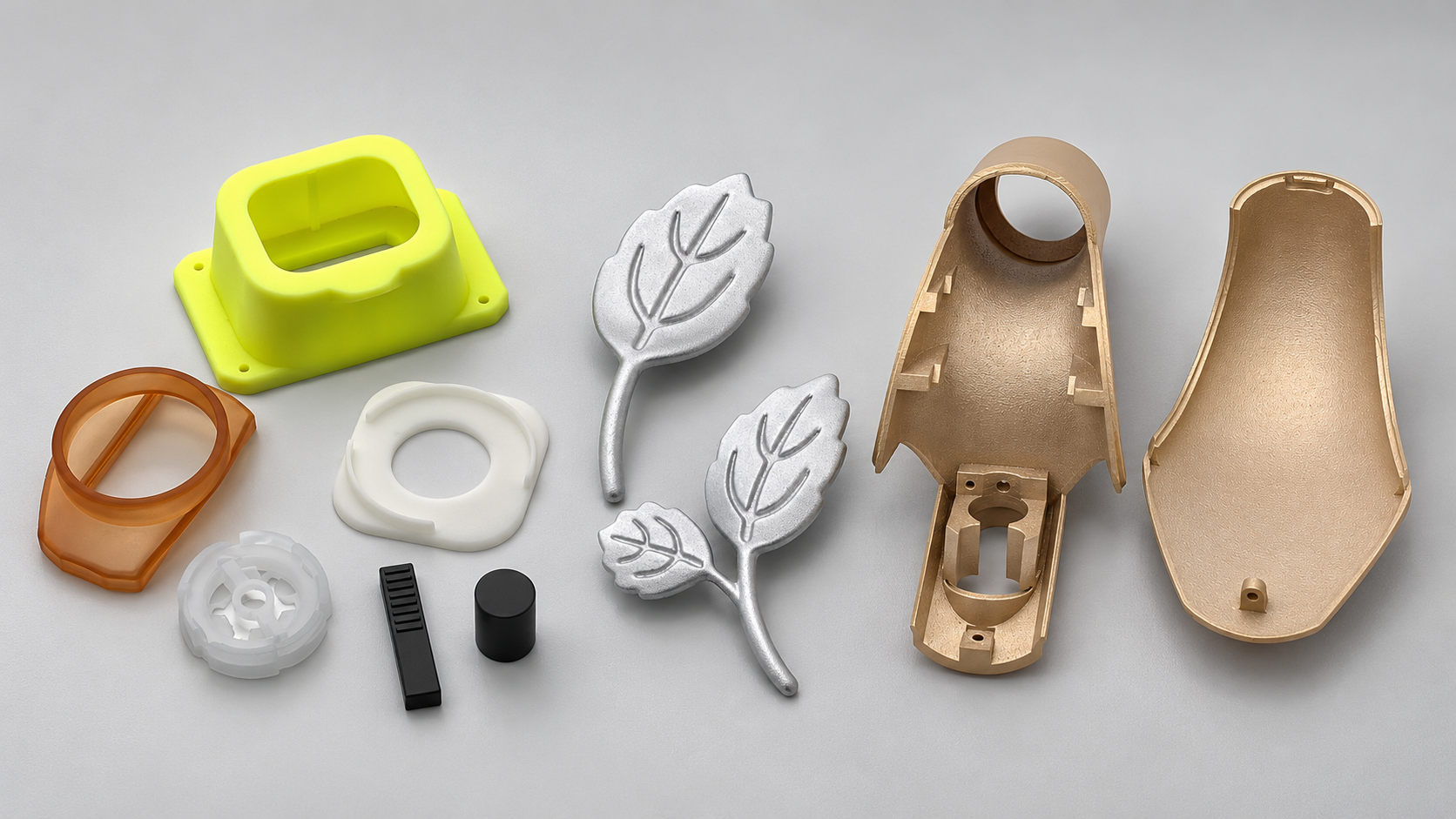
AIHFABS quotes custom 3D printing and CNC machining from a CAD upload. Compare SLA, SLS, MJF, SLM, FDM, DLP, milling, and turning, then add finishing such as vapor smoothing, dyeing, anodizing, polishing, or powder coating in the same order.
Instant quoting is built for prototypes, jigs, housings, and small-batch production. You see material, process, quantity, and lead time together, which keeps engineering changes from turning into a new round of supplier emails.
You can review material, process, quantity, and lead time together, so engineering changes do not turn into another round of supplier emails.
Upload STL, STEP, and other common CAD formats for an online quote.
Compare 3D printing technologies and CNC options on the same part.
Select polymers or metals, then add 3D Plus hardware finishing when needed.
Review price and lead time before checkout, or request a manual quote for special specs.
If this page describes a process, industry, or sample part you want to reproduce, start from the upload flow and match technology plus finishing to your drawing.
We use cookies to personalize your experience. By using this site, you agree to our Privacy Policy
Accept
Leave A Comment