


目次
Introduction: LCD resin 3D printing can be a practical choice for small, detailed parts, but resolution specifications and a low quote do not guarantee usable results. This guide puts LCD first: how its masked-light system affects detail, consistency, materials, and cost, and when DLP or SLA is a better alternative.
What Makes LCD Resin Printing Different?
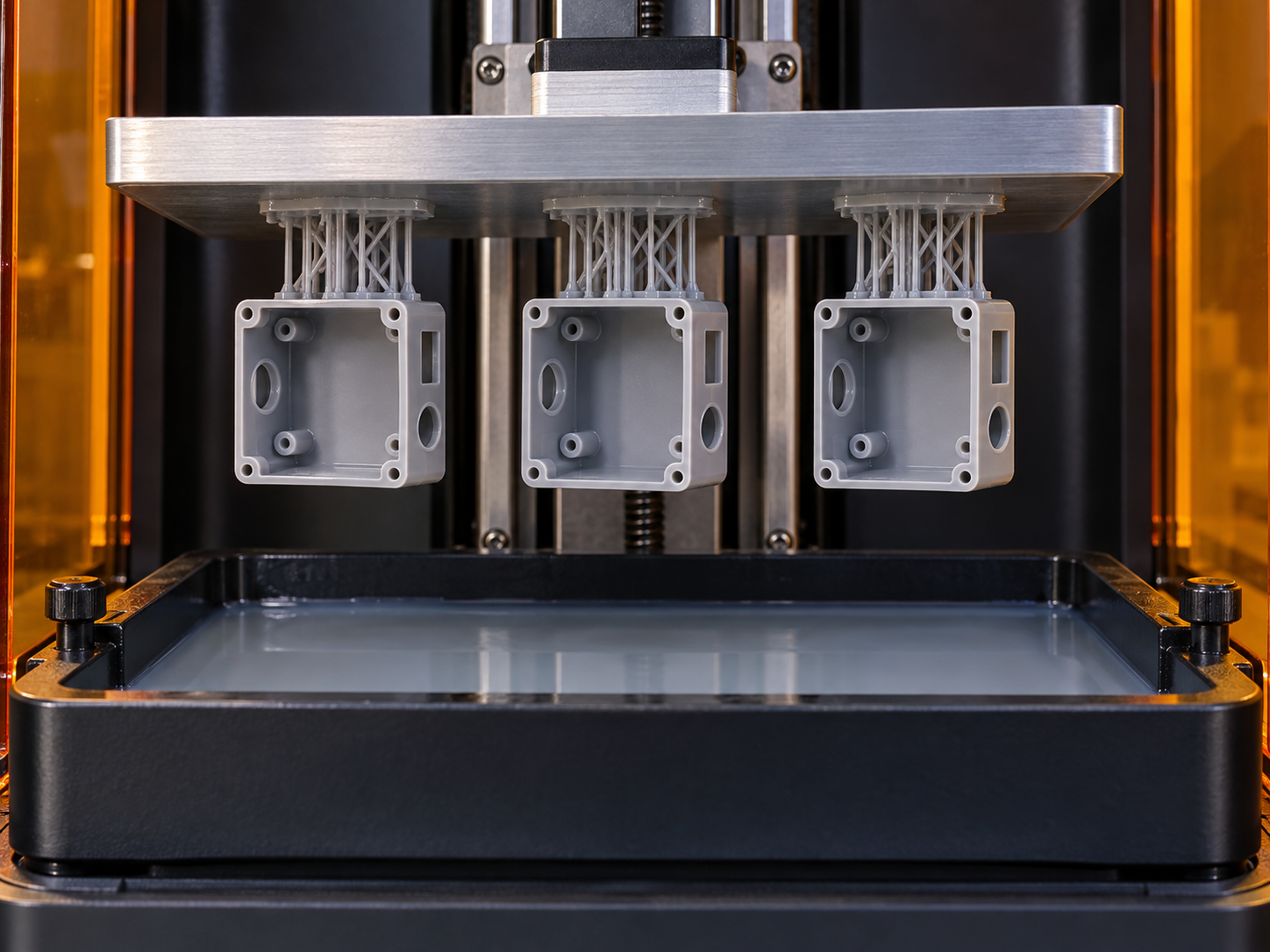
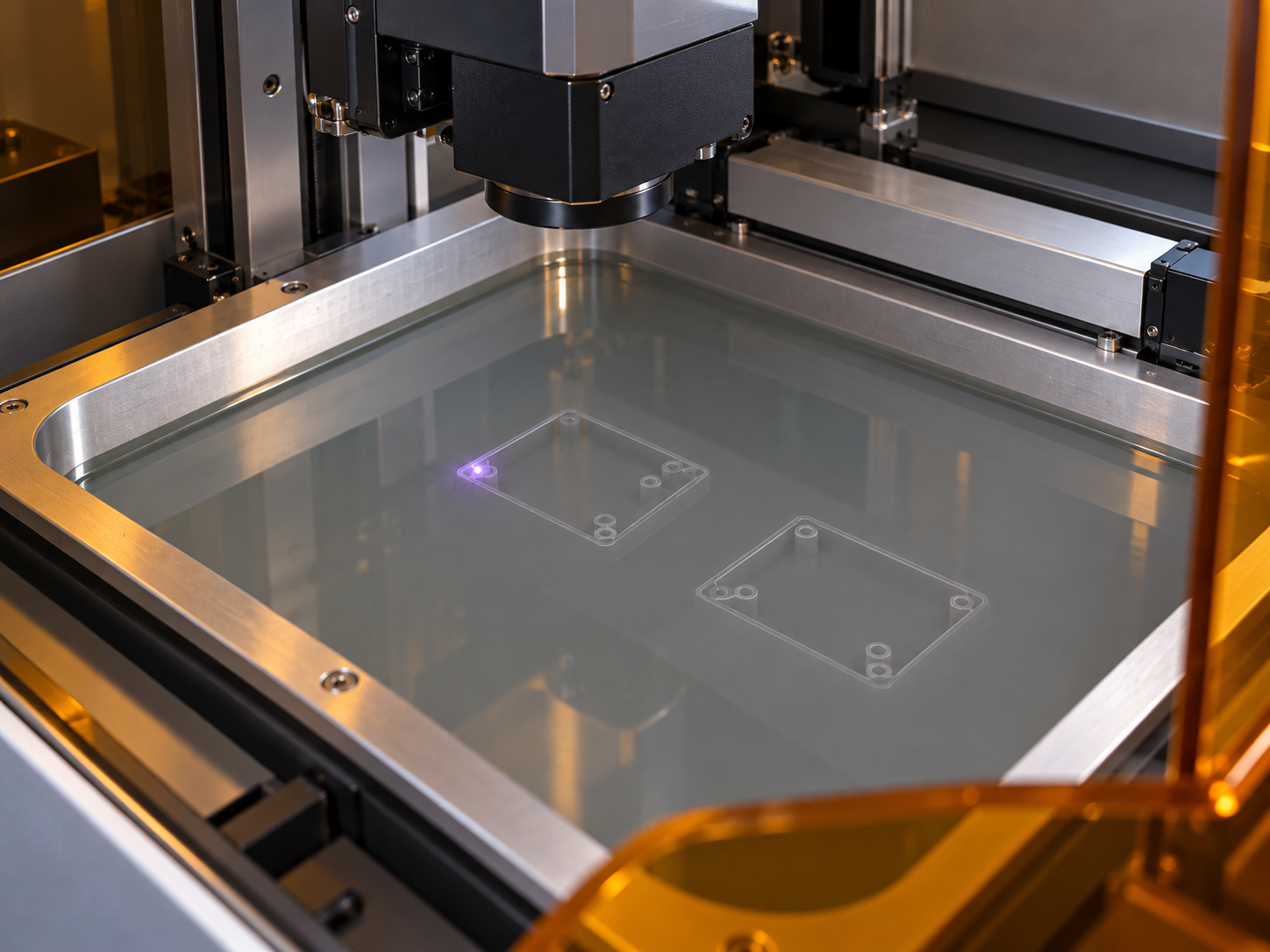
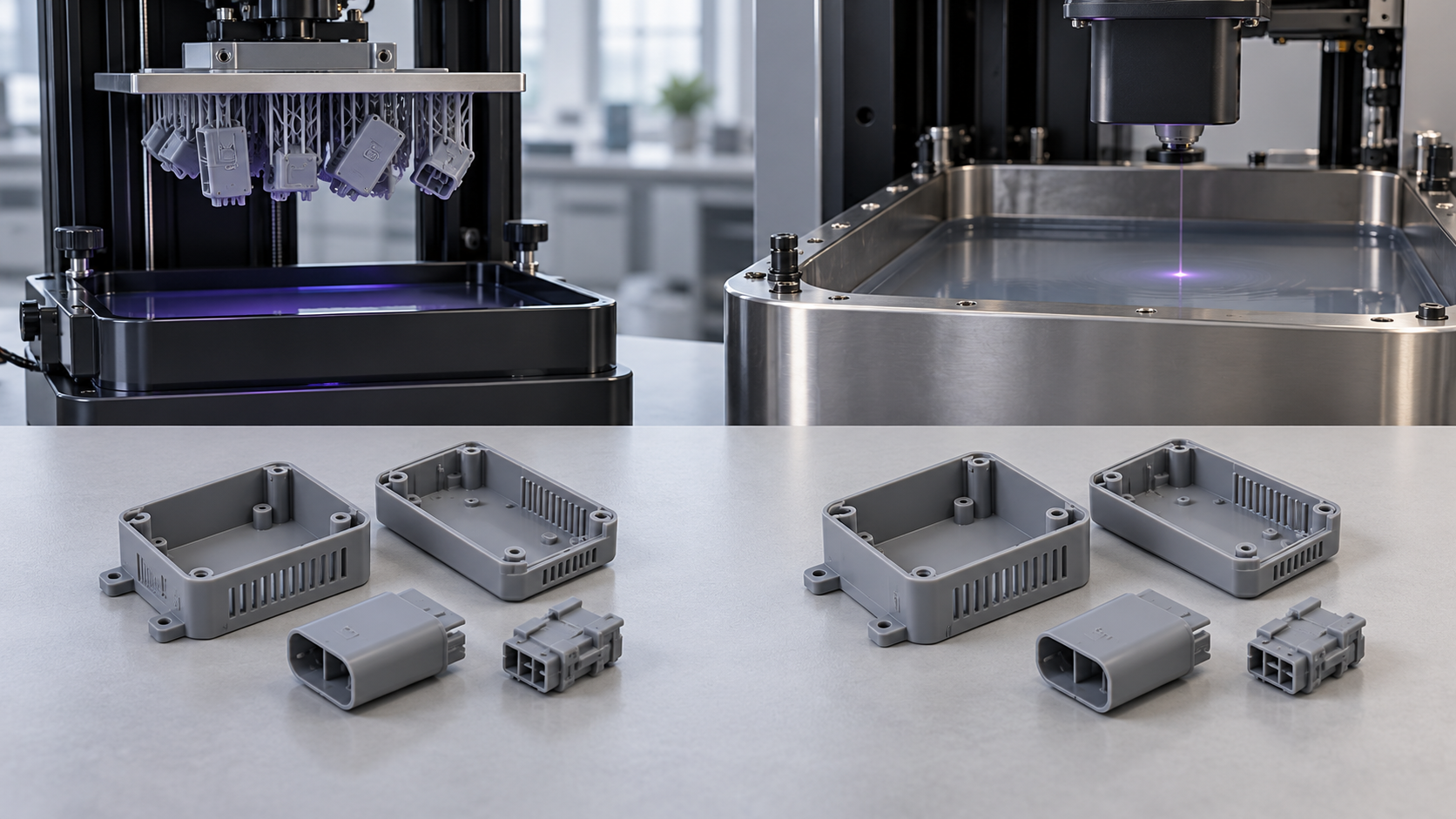
LCD printing, also called masked stereolithography (MSLA), uses a liquid-crystal screen as a mask between a light source and liquid photopolymer resin. The illuminated pattern defines a layer’s cross-section, allowing multiple features or parts in that layer to be exposed together. This makes LCD worth considering for compact visual prototypes and selected small batches.
The practical limits come from the LCD system itself: effective pixel size at the resin plane, light uniformity, mask transmission, exposure calibration, the selected resin, and the post-processing route. A higher advertised screen resolution alone cannot establish finished-part dimensional accuracy.
How DLP and SLA Differ from LCD
DLP also exposes a full layer, but forms its image with projected light instead of an LCD mask. SLA follows a laser scanning path. These differences provide useful alternatives when the available LCD machine does not meet a part's detail, surface, size, consistency, or qualified-material requirements. For a full DLP–SLA comparison, see the SLA vs DLP comparison.
LCD vs DLP: Can the LCD System Hold Small Features Consistently?
Actual XY Detail Matters More Than Screen Pixel Count
For LCD, compare the physical pixel footprint at the build plane with the size of your thinnest wall, smallest hole, narrowest slot, or lettering. Cure spread, orientation, resin, and cleaning can change these features after exposure. DLP has its own projected-pixel and optical constraints, so neither method should be ranked using nominal pixel count alone. Ask for printed samples made with the specific machine and resin proposed for your job.
Light Uniformity Across an LCD Build Plate
An LCD mask and its backlight must deliver sufficiently uniform light across the usable area. Variations in illumination, panel condition, and exposure calibration can produce differences between parts placed at the center and near the edges. This becomes important when multiple small housings or fitted components share a plate. Compare measured samples from different locations rather than assuming whole-layer exposure guarantees identical results.
When DLP Is the Better Alternative
Choose a proven DLP production route over an LCD quote if it produces more consistent critical features, has a better-qualified resin for the application, or reduces rejected parts and finishing effort. DLP's projected optics are not inherently superior in every case; the reason to switch is demonstrated performance for the actual part.
LCD vs SLA: How Do Surface Finish, Size, and Batch Needs Compare?
LCD may be attractive when a set of small parts can be exposed together on one platform. For a large single part or demanding curved surfaces, a suitable SLA system may offer a better manufacturing route. However, LCD pixel-related texture and SLA scan-path behavior do not predict delivered surface quality without considering orientation, support contacts, resin, curing, and finishing.
Check the usable LCD build area with supports, not just advertised screen dimensions. Enlarging the build area may affect physical pixel size depending on the machine design. If the required model does not fit, or a verified SLA sample meets the visible-surface requirement more reliably, SLA may be the better option. Neither process has a universal lead-time advantage.
LCD vs DLP vs SLA: Selection Matrix With LCD as the Starting Point
Start with the LCD option, then compare DLP or SLA only against the requirements that LCD has not yet demonstrated. The matrix below is a screening guide, not a universal ranking of technologies.
| Application | When to Consider LCD | When DLP or SLA May Be Better | Critical Check |
|---|---|---|---|
| Cost-sensitive visual prototypes | When small details and acceptable surfaces can be verified on the available LCD system | DLP for repeated precision batches; SLA for certain smooth contours or larger parts | Printed detail and finishing scope |
| Miniatures and display models | When an economical batch meets visual standards | DLP for repeatability or very fine features; SLA for selected surface requirements | Edge texture, viewing distance, supports |
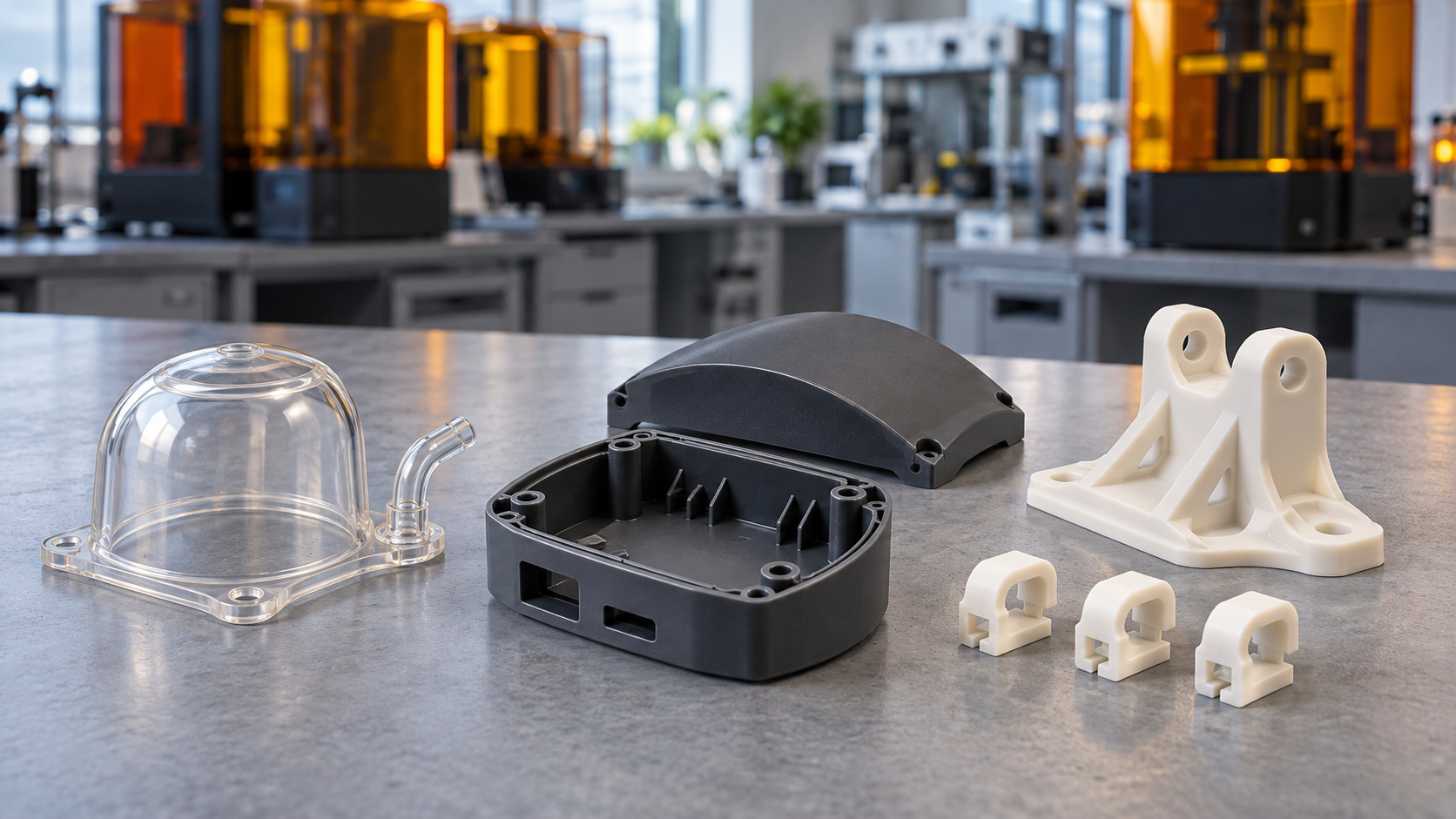
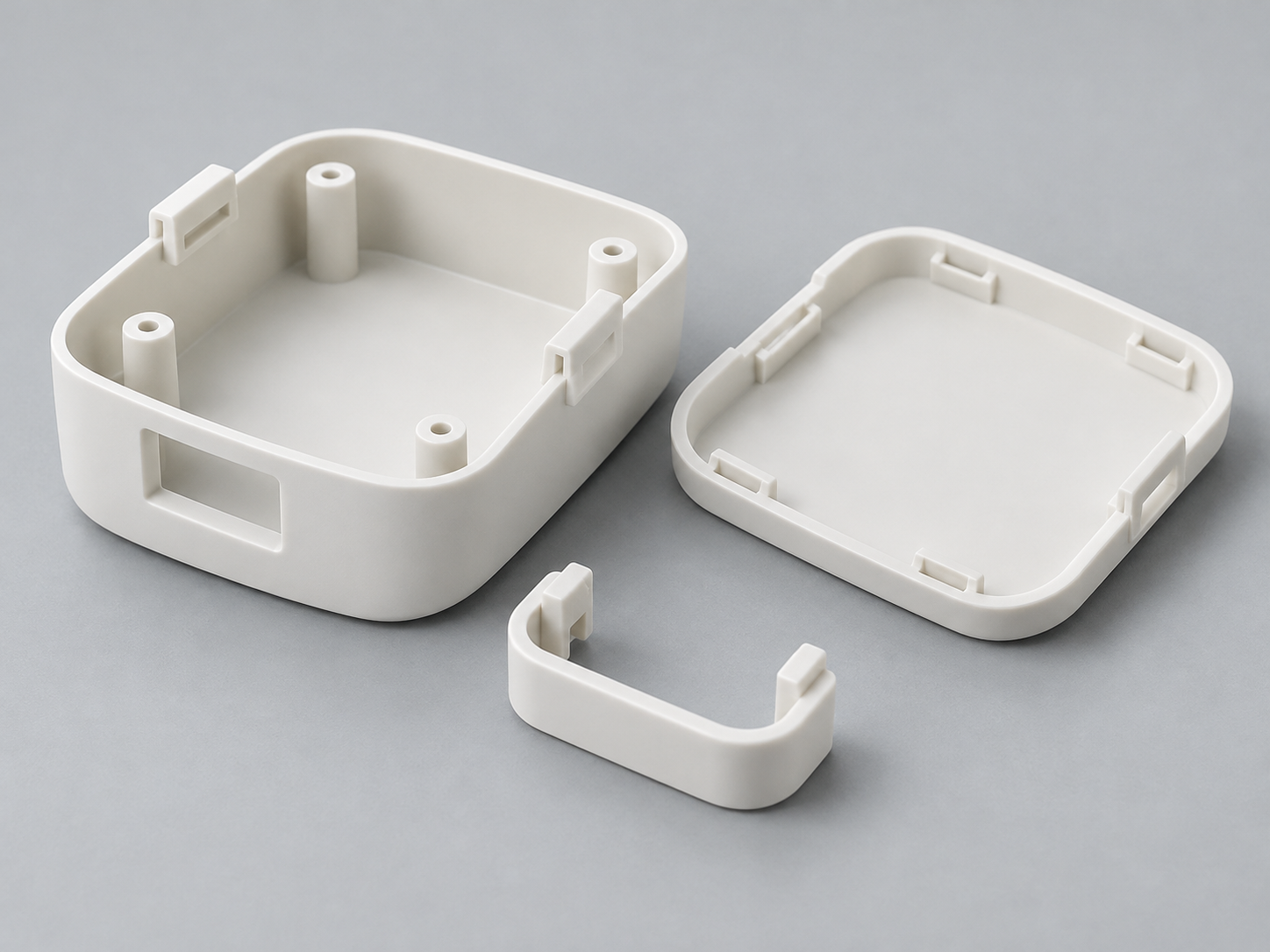
| Small electronic housings | When mating features and consistency pass inspection | DLP/SLA when tighter functional fit or qualified materials are needed | Hole, boss, snap, and mating clearances |
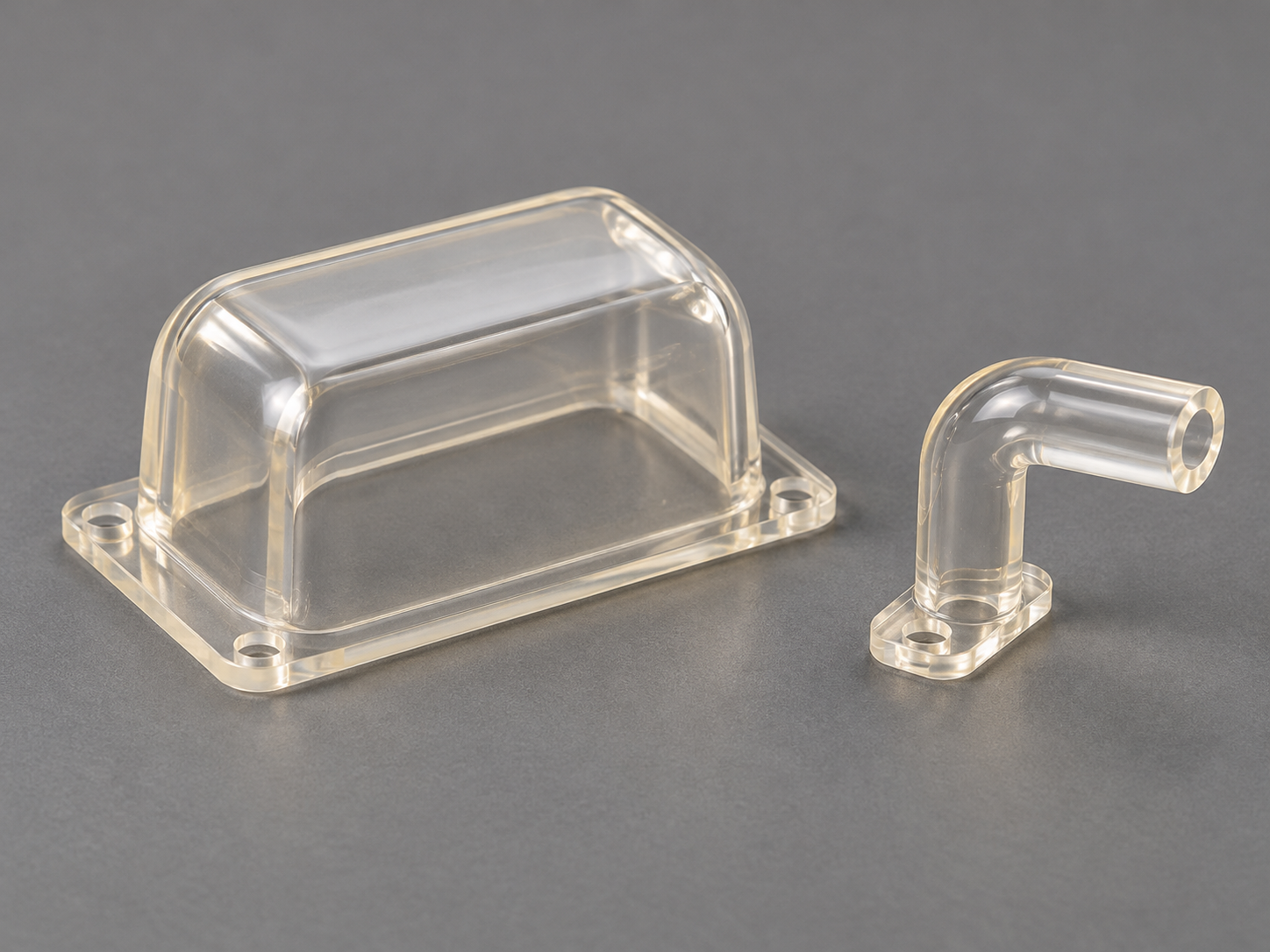
| Transparent covers or light guides | For appearance checks where optical-grade performance is not required | SLA/DLP with proven resin and polishing route for more demanding surfaces | Haze, transmission, yellowing |
| Tough functional prototypes | Only with a qualified resin, cure cycle, and passing test parts | DLP/SLA if their validated engineering resins better match the specification | Impact, creep, repeated deflection |
| Larger resin parts | When the usable LCD build envelope and resolution support the design | Large-format SLA or another process if geometry exceeds LCD limits | Size, orientation, pixel size |
For every row, the final decision should be based on delivered parts produced using the proposed material, orientation, washing, post-curing, and inspection procedure.
How to Verify LCD Resolution and Delivered-Part Quality
An LCD sample should be judged after finishing, not on a screen specification or a freshly printed, uncured part. For fitted or functional geometries, identify critical dimensions and record tolerances before requesting a quote. Ask the supplier to confirm how the part is measured, whether the same process has been run repeatedly, and whether features near different regions of the plate remain within requirements.
Fine details: Measure holes, slots, lettering, edge definition, and thin walls rather than relying on pixel count.
Dimensional fit: Check bosses, assembly clearances, mating edges, and flatness after post-curing.
Visible surfaces: Inspect for support marks, texture, and finishing differences under the intended viewing conditions.
Repeatability: Where quantities matter, request measurements across several parts and build positions.
LCD Resin Compatibility and Post-Processing
Check Wavelength, Exposure, and Resin Qualification
LCD resin compatibility is not guaranteed by a general “resin printable” label. Confirm the machine's working wavelength, the resin's documented exposure requirements, intended layer thickness, and validated wash and UV post-cure conditions. Material datasheets should describe properties in a relevant cured condition. If the part needs toughness, heat resistance, flexibility, or chemical resistance, request evidence for that specific LCD material-process combination.
Functional, Clear, and Specialty LCD Resins
Standard resin may suit visual checks without meeting repeated snap-fit loads. Tough or flexible grades can still introduce changes in stiffness and dimensional stability. Clear resin may produce a translucent or hazy surface unless the geometry and finishing are appropriate; optical clarity should never be inferred from a material name alone. High-temperature and specialty resins require appropriate qualification and use-condition checks.
Cleaning, Support Removal, and Final Inspection
LCD parts require planned resin removal, washing, curing, and support handling. Thin fins, holes, interior passages, and cosmetic faces can be damaged or distorted during these operations. Ask the supplier where supports will contact the part, how enclosed features will be drained, and which dimensions will be inspected in the final delivered condition.
What Does LCD Printing Really Cost?
Screen Maintenance and Exposure Stability
LCD systems may have attractive equipment economics, but LCD screens or masks are operational components. Panel condition, replacement schedules, optical aging, calibration, and downtime can influence consistency and reject rates. Do not compare quotations based only on the nominal machine cost.
Batch Layout, Supports, and Finishing Labor
A dense LCD plate can expose many small parts at once, yet throughput also depends on part height, separation movements, cleaning, cure cycles, support removal, and inspection. Close nesting is only valuable if parts can be separated and finished without damage. Request a quote for the same quantity and delivered condition when comparing LCD with DLP or SLA.
Cost per Accepted LCD Part
Compare the total order cost divided by the quantity of parts that pass inspection. Include reprints, corrective finishing, shipping, and schedule impact where relevant. A cheaper LCD quote is not the better choice if significant numbers of parts miss mating dimensions or require unplanned rework.
When Should You Select LCD—and When Should You Not?
Cost-Sensitive Display Models and Miniatures
LCD is worth evaluating for detailed miniatures, visual prototypes, and display models when printed edge quality and cosmetic finishing meet the requirement. Compare samples at normal viewing distance and agree on acceptable support marks, texture, and color consistency.
Small Electronic Housings and Snap-Fits
Use LCD for these parts only when its resin and post-cure process have been demonstrated on the actual wall, hole, boss, latch, and mating geometry. If repeatability or flex performance is not verified, consider a DLP or SLA option with a qualified material route.
Transparent Covers and Light Guides
An LCD-printed clear part may be adequate for appearance or enclosure checks but not for optical performance. Assess haze, transmission, internal defects, yellowing, surface polish, and support contacts. Move to a validated DLP or SLA finishing route where the LCD solution cannot meet the optical requirement.
Heat-Exposed or Load-Bearing Components
The LCD process is not a substitute for a suitable material. Confirm the actual service temperature, loading mode, and material data in the final cure state. If no LCD resin is qualified for those needs, choose a better-validated alternative rather than selecting LCD on resolution or cost alone.
Questions to Ask Before Ordering LCD Parts
Which LCD machine, light wavelength, and qualified resin grade will be used?
What physical pixel size applies to the usable build area, and what finished features have been measured?
How is exposure uniformity checked across the platform, and when was the mask or screen last serviced?
What orientation, support, washing, and UV post-curing steps are included?
What is the tolerance and inspection plan for the critical dimensions?
What quantity, lead time, and cost apply to accepted finished parts rather than raw prints?
Common LCD Selection Mistakes
Equating pixel count with precision: Cure spread, calibration, orientation, resin, and finishing also determine finished detail.
Choosing solely on low unit price: Screen upkeep, rework, inspection, and rejects can change the actual cost.
Assuming every LCD resin is functional: Mechanical, clear, heat-resistant, and specialty grades need application-specific validation.
Assuming all whole-layer systems produce identical results: LCD and DLP differ in optics and maintenance and should be checked against actual samples.
Comparing incomplete quotations: Normalize support removal, washing, post-curing, finishing, and inspection scope.
Frequently Asked Questions
How does LCD differ from DLP and SLA 3D printing?
LCD uses a liquid-crystal mask to shape light into each layer; DLP projects a digital image; SLA traces the layer with a laser. What matters for an LCD order is whether its system and qualified resin can meet the finished-part requirements.
Can LCD achieve fine details on small components?
It can, but physical pixel size, light uniformity, exposure tuning, resin cure behavior, and post-processing determine the result. Check samples of your smallest functional features.
Is LCD always cheaper than DLP or SLA?
No. Compare the cost per accepted, finished part, including supports, washing, curing, screen maintenance, rejects, reprints, and inspection.
Is LCD suitable for functional snap-fit housings?
Only when the chosen material, orientation, cure cycle, and printed samples meet the dimensions and repeated-deflection requirements. Otherwise, a validated DLP or SLA process may be more suitable.
When should LCD be replaced by DLP or SLA?
When representative LCD parts cannot consistently meet the required tolerance, cosmetic finish, material performance, build size, or delivery economics—and another qualified process can.
Conclusion
LCD should be selected for what the available LCD production system can demonstrably deliver: suitable feature detail, repeatable finished dimensions, compatible resins, manageable finishing, and a competitive cost per accepted part. Its layer-wide mask exposure makes it relevant to small, detailed batches, but neither low machine cost nor a high pixel count is enough to qualify a functional component. Use DLP or SLA as the comparison baseline when LCD falls short on a defined requirement, and validate the decision with representative finished samples.
Explore AIHFabs LCD printing services and compare available material and process options before ordering.
References




コメントを残す