


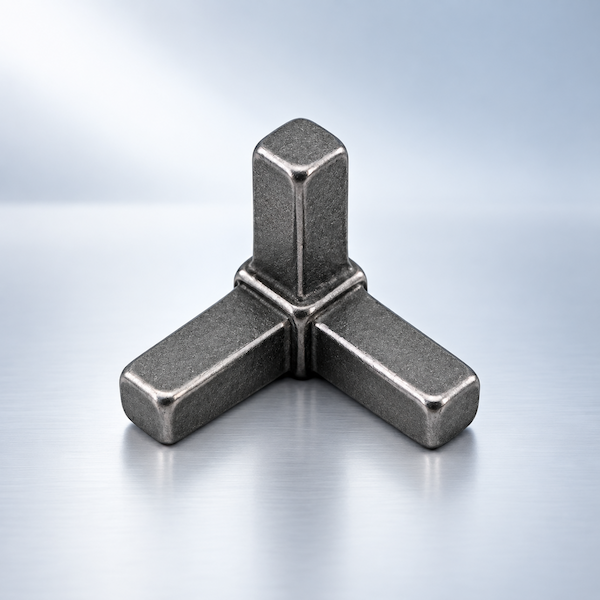
CNC加工
CNC Machining Services
CNC machining removes material from solid stock with computer-controlled mills, lathes, and multi-axis centers.
创建报价

Introduction: SLM metal parts appear in demanding industries because the process can support complex metal geometries, but application language is not certification evidence.
Readers researching a metal 3d printing service often see aerospace, automotive, medical, robotics, and industrial automation mentioned together. That grouping is useful, but it can also create a misunderstanding. These sectors do not use SLM for one identical reason, and their acceptance requirements are not interchangeable. A lightweight aerospace bracket, an automotive tooling insert, a material dependent surgical guide, and a robotics end-effector may all belong in the broader custom metal 3d printing conversation, yet each carries a different risk boundary. The value of this article is not to present those industries as confirmed production cases, but to explain why they are commonly associated with an SLM 3D printing service for metal parts and where compliance assumptions should stop.
Aerospace, automotive, medical, and robotics are often connected with SLM because these fields frequently investigate parts where geometry, material choice, and production volume matter as much as conventional machining familiarity. SLM can build metal parts from CAD data by selectively melting fine metal powder layer by layer, which makes it relevant when a design includes weight reduction, internal channels, integrated assemblies, or low-volume functional hardware. In that sense, industry names act as context markers. They tell the reader what kinds of engineering problems may be under discussion: lighter brackets, tooling with more purposeful geometry, medical instruments shaped for a particular procedure, or robot tooling that must reduce mass at the wrist. They do not, by themselves, tell the reader that a part has passed aerospace acceptance, medical regulatory review, or automotive production validation. This distinction matters because high-requirement industries separate manufacturing possibility from qualified use. A 3d printing metal service may be technically capable of producing a metal geometry, but the final meaning of that part depends on material evaluation, process qualification, inspection scope, post-processing, documentation, and the intended use environment. NASA additive manufacturing standards for spaceflight systems illustrate how tightly controlled these contexts can become when additively manufactured hardware is connected to flight risk. FDA information on 3D printed medical devices also frames medical use through design, manufacturing, and regulatory considerations rather than through the printing method alone. For an application context researcher, the practical lesson is simple: industry terms are useful search and learning signals, but they are not substitutes for qualification records, regulatory filings, or project-specific acceptance criteria.
AIHFABS presents its SLM service as a CAD-based metal 3D printing option and includes typical application directions such as aerospace brackets, ducting, weight-optimized structural hardware, automotive tooling inserts, jigs, low-volume performance parts, medical instruments, patient-specific surgical guides, robotics end-effectors, heat sinks, and industrial automation fixtures. These examples are best understood as application language, not as completed customer case claims or industry certification statements. They help readers map metal 3d printing to recurring engineering needs where metal, geometry, and customization intersect.
• Aerospace brackets and structural hardware are often mentioned because lightweighting and geometric consolidation are important themes in flight-related engineering. However, aerospace wording should remain a context signal unless supported by defined material controls, process qualification, inspection, and acceptance evidence for the specific hardware.
• Automotive tooling inserts and jigs fit the SLM discussion because production support tools may benefit from custom geometry, reduced lead-time complexity, or integrated features. This is different from saying that every SLM printed automotive end-use part is automatically production certified or suitable for safety-critical vehicle service.
• Medical instruments and patient-specific surgical guides require especially careful wording because “medical” is not a single category. A patient-specific guide may support a procedure, while an implant is intended to remain in or interface with the body in a different regulatory and biological risk context. AIHFABS application wording for surgical guides should remain material dependent.
• Robotics end-effectors and industrial automation fixtures are common SLM examples because robot tooling often rewards mass reduction, stiffness-conscious geometry, compact mounting features, and part consolidation. The boundary is that suitability still depends on load, interface accuracy, wear conditions, surface finish, and any required secondary machining or testing.
These contexts also show why SLM should not be reduced to a general “metal part replacement” concept. Many of the strongest application discussions begin when the geometry is awkward for conventional machining, when multiple parts can be consolidated, or when a low-volume custom part has enough functional value to justify additive manufacturing. Robotics and automation are especially clear examples: an end-effector is not only a metal shape, but a working interface between a machine and a task. If a printed gripper body saves mass but loses stiffness at the contact point, the application argument weakens. If an internal channel improves cooling but cannot be depowdered or inspected appropriately, the design advantage becomes conditional. This is why application context must be read together with manufacturing constraints rather than as an open-ended promise.
The most important boundary in this topic is the difference between “SLM can be relevant to this industry” and “this part is accepted for this regulated or high-risk use.” NASA standards for additive manufacturing in spaceflight systems and laser powder bed fusion hardware exist because AM parts can require disciplined control of feedstock, process parameters, build records, heat treatment, inspection, and acceptance logic. Those standards should not be used to imply that any named service provider automatically meets spaceflight requirements. Instead, they remind readers that aerospace hardware acceptance is a structured engineering and documentation problem. A bracket label, a titanium alloy name, or a metal 3D printing process description does not replace the qualification pathway for a specific part. Medical language has a similar but distinct boundary. FDA material on 3D printed medical devices emphasizes that medical devices made with additive manufacturing still sit inside medical device regulation and technical assessment. A surgical guide, for example, may be patient-specific without being the same thing as an implant. The guide’s function, contact duration, material, sterilization approach, design control, and regulatory pathway can differ from those of a long-term implanted component. In custom metal 3d printing content, this is why “medical instruments” and “patient-specific surgical guides” should be described conservatively and, where stated, as material dependent. The safe interpretation is not that SLM is a universal medical manufacturing solution, but that certain medical-adjacent tools or instruments may be discussed when materials, design, and regulatory requirements are properly evaluated. Automotive and robotics contexts are generally less uniform than aerospace and medical regulation, but they still have meaningful acceptance boundaries. Automotive tooling used inside a plant may follow internal durability, dimensional, safety, and process standards that differ from vehicle-mounted components. Robotics end-effectors may be evaluated through payload, repeatability, gripping reliability, fatigue, and machine safety considerations rather than through a single external certification phrase. For readers comparing a metal 3d printing service, the reusable cognitive method is to ask what the industry word is doing in the sentence. If it identifies a design problem, such as lightweighting or integrated channels, it is application context. If it claims a part can be used in a regulated or safety-critical system, it requires evidence beyond the phrase itself.
SLM metal parts are discussed in aerospace, automotive, medical, robotics, and industrial automation because those fields often value lightweight geometry, functional integration, custom tooling, low-volume metal parts, and application-specific design. The risk is treating those industry labels as proof of certification, regulatory clearance, or production approval. A careful reader should separate typical application context from qualified use, especially for aerospace hardware and medical devices. AIHFABS can be read as an example of an SLM 3D printing service for metal parts that presents typical application directions, including medical instruments and robotics end-effectors, while the final interpretation of any project should remain material dependent, use dependent, and tied to the required validation path.
Q:Does an SLM 3D printing service for metal parts automatically meet aerospace certification requirements?
A:No. An SLM 3D printing service for metal parts may be relevant to aerospace-style components such as brackets or lightweight structural hardware, but aerospace certification or spaceflight acceptance depends on project-specific process control, material evaluation, inspection, documentation, and applicable standards. Industry wording should be treated as application context unless clear qualification evidence is provided for the exact part and use case.
Q:Are patient-specific surgical guides the same as medical implants in custom metal 3D printing?
A:No. Patient-specific surgical guides and medical implants can involve very different design functions, contact conditions, materials, sterilization needs, and regulatory pathways. In custom metal 3D printing, surgical guides should not be assumed to be implants, and medical-related applications should remain material dependent and subject to appropriate technical and regulatory evaluation.
Q:Why are robotics end-effectors often mentioned with a 3d printing metal service?
A:Robotics end-effectors are often mentioned because they can benefit from lightweight metal structures, compact mounting geometry, consolidated features, and task-specific customization. A 3d printing metal service may help produce such geometries, but suitability still depends on load conditions, stiffness, surface finish, interface accuracy, wear behavior, and any required post-processing or testing.
ADDITIVE MANUFACTURING REQUIREMENTS FOR SPACEFLIGHT SYSTEMS
Standard for Additively Manufactured Spaceflight Hardware by Laser Powder Bed Fusion in Metals
3D Printing of Medical Devices
SLM 3D Printing Services Selective Laser Melting AIHFABS

和这篇文章相关的工艺。打开规格,或把文件放到报价上。
CNC machining removes material from solid stock with computer-controlled mills, lathes, and multi-axis centers.
创建报价
CNC Milling Services use computer numerical control (CNC) mills to cut workpieces with rotating tools according to programmed toolpaths.
创建报价和这篇文章相邻的材料。先看卡片,再上传 CAD。
工艺、后处理和文件注意事项,来自车间,不是营销软文。
按主题查看公司、付款、物流和工艺说明。

Review AIH commitments to print quality, secure handling of your files, transparent pricing, and support for every 3D printing order.
AIHFABS 根据 CAD 上传为定制 3D 打印和 CNC 加工报价。比较 SLA、SLS、MJF、SLM、FDM、DLP、铣削和车削,并可在同一订单中添加蒸汽抛光、染色、阳极氧化、抛光或粉末喷涂。
即时报价适合原型、治具、壳体和小批量。材料、工艺、数量和交期一起展示,减少工程变更后再发一轮供应商邮件。
材料、工艺、数量和交期一起展示,减少工程变更后再发一轮供应商邮件。
上传 STL、STEP 等常用 CAD 格式即可在线报价。
在同一零件上比较 3D 打印工艺和 CNC 选项。
选择聚合物或金属,需要时再添加 3D Plus 硬件后处理。
结算前查看价格和交期,特殊规格可申请人工报价。
若本页描述的是你想复现的工艺、行业或样品,请从上传流程开始,把工艺和后处理与图纸对齐。
我们使用 cookie 优化体验。继续使用即表示您同意我们的 隐私政策
接受
发表评论