
Impression 3D
Frittage laser sélectif (SLS)
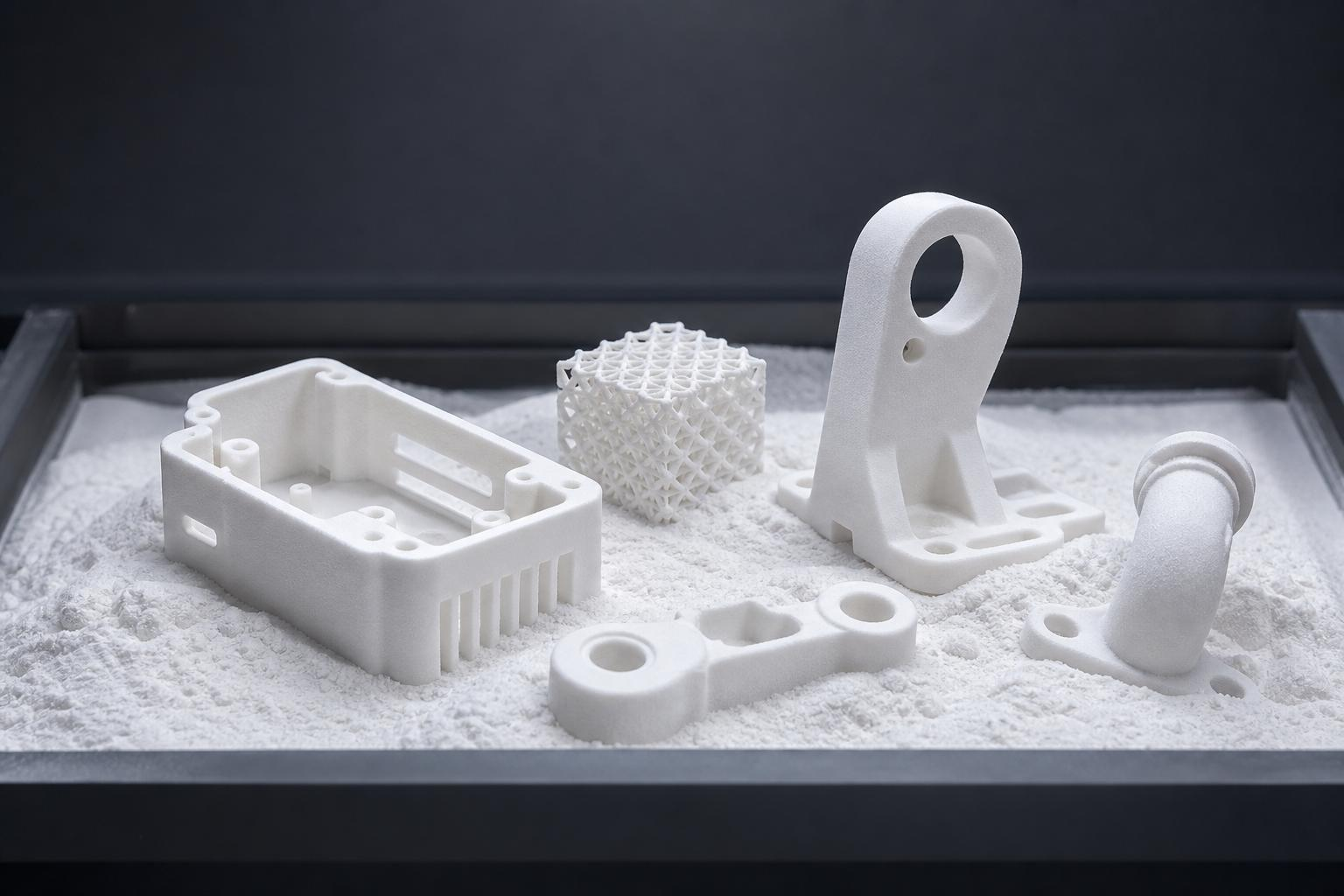
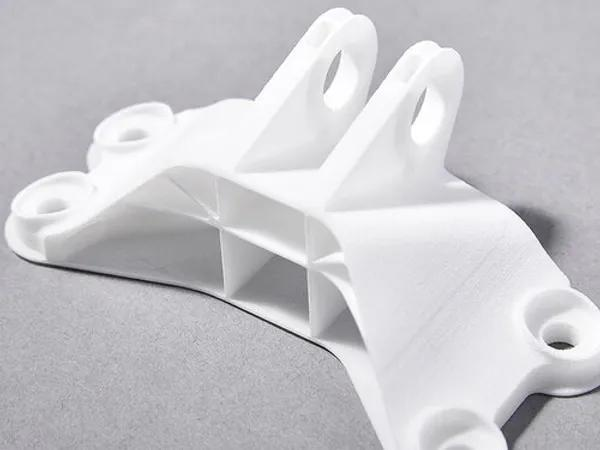
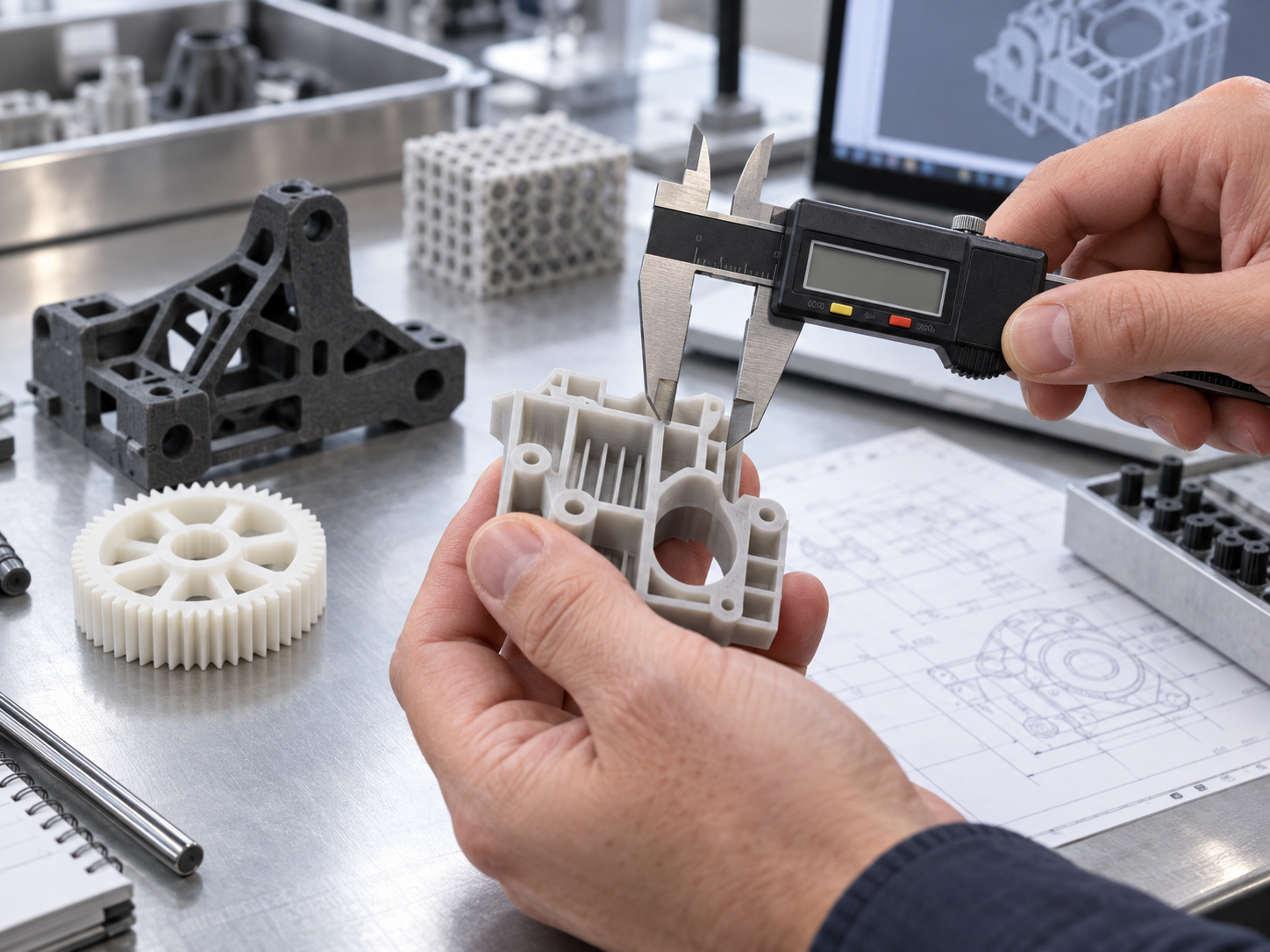
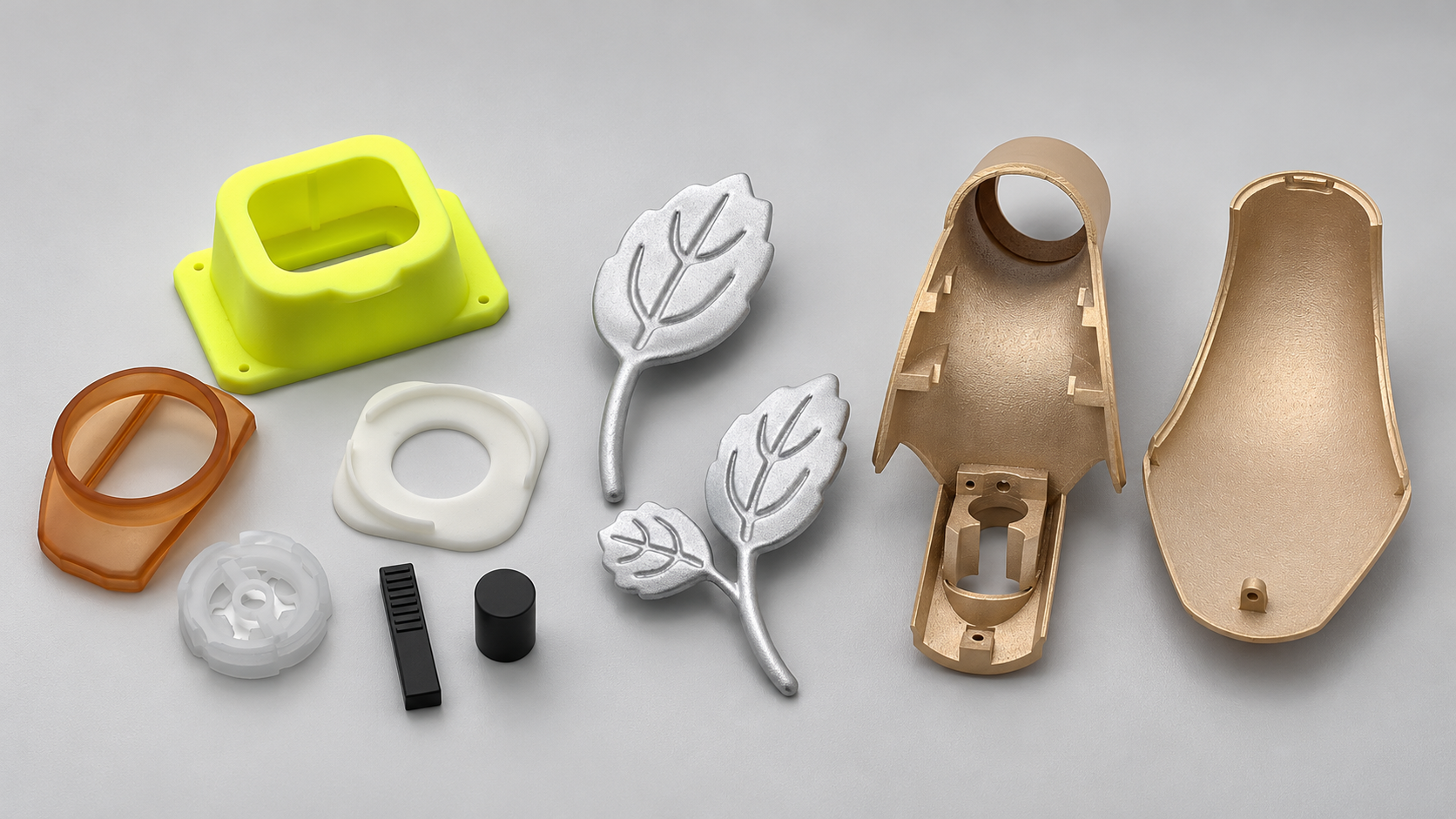
AIHFABS SLS 3D printing services fuse engineering-grade SLS plastics into durable, self-supporting parts.
Créer un devis
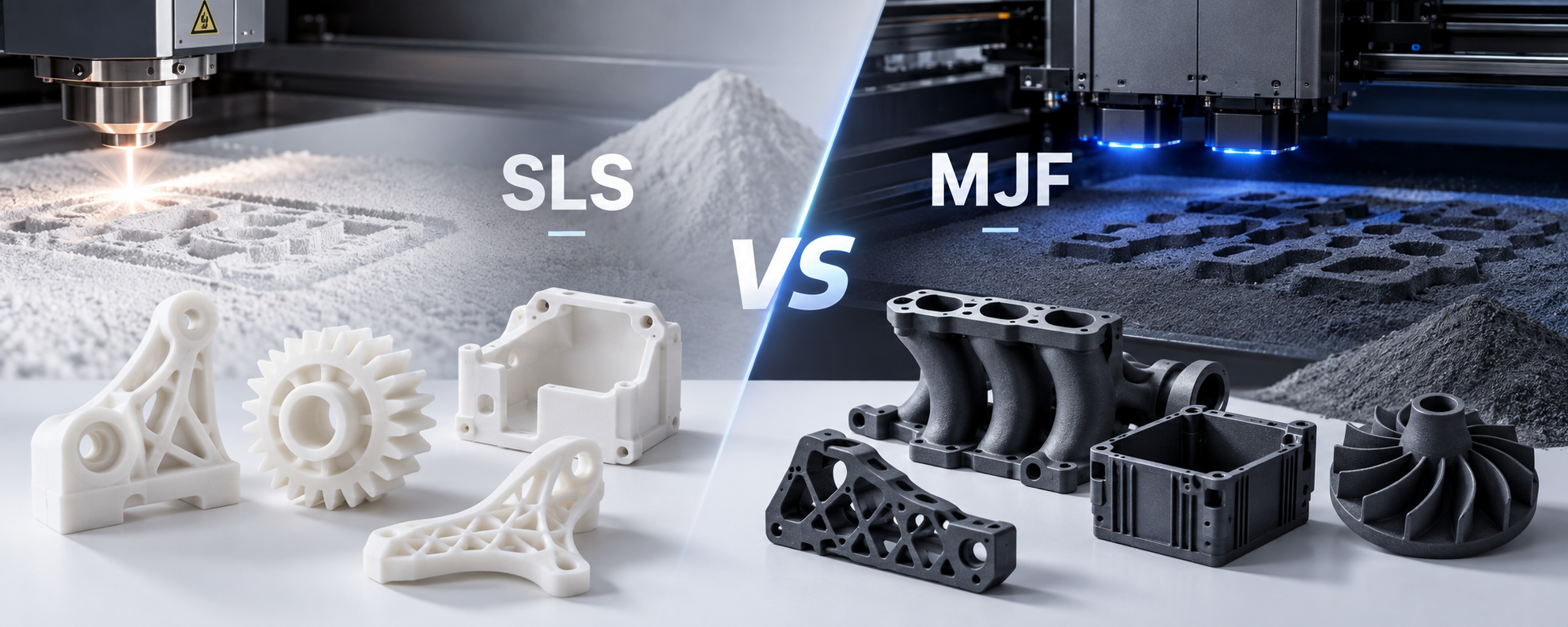
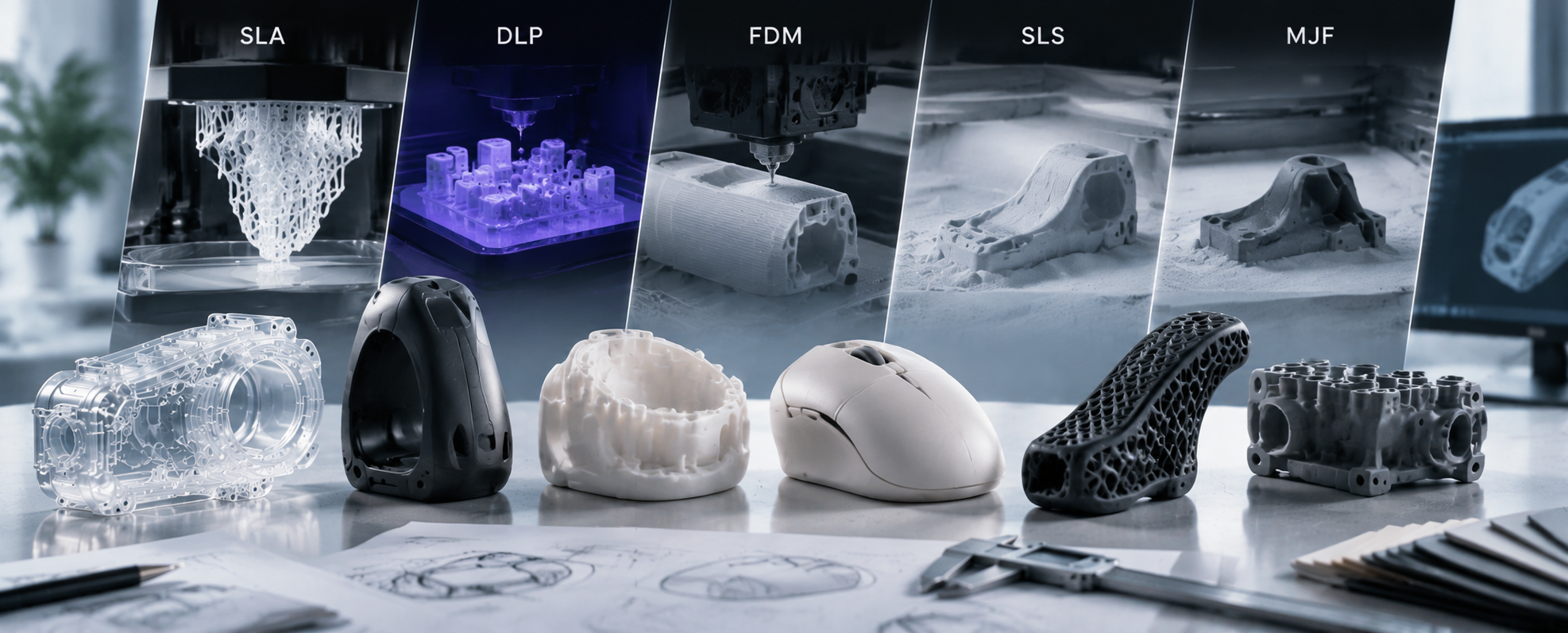
In modern manufacturing, industrial 3D printing has moved well beyond rapid prototyping into full-scale production of custom and short-run end-use functional parts. When it comes to production-grade nylon components, Selective Laser Sintering (SLS) and Multi Jet Fusion (MJF) stand out as the two most dominant Powder Bed Fusion (PBF) technologies in the industry.
While both processes produce durable, high-strength functional parts without the need for support structures, subtle differences in surface finish, dimensional consistency, production speed, and cost-efficiency can significantly impact your project's success. This guide provides a comprehensive side-by-side technical comparison of SLS and MJF to help engineers and procurement teams select the optimal nylon 3D printing service for their application.
Although SLS and MJF are both powder bed technologies that support toolless manufacturing and 3D nesting (printing parts freely without support structures), their underlying thermal fusion mechanisms differ fundamentally:
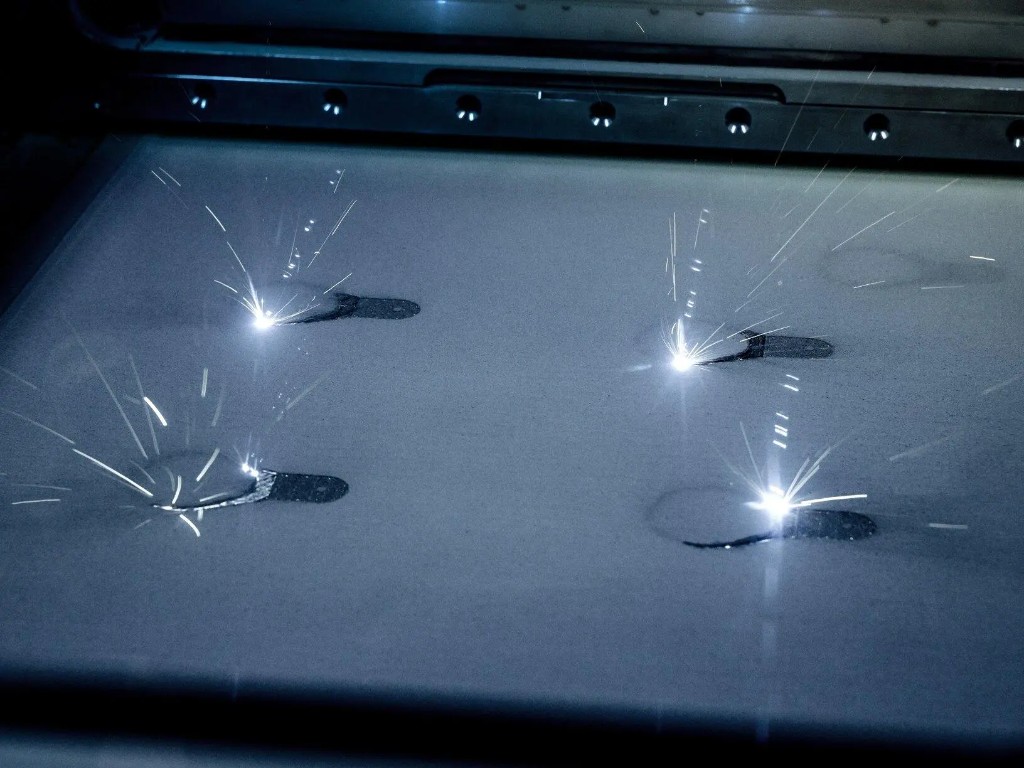
Selective Laser Sintering (SLS): Utilizes a high-power CO₂ or fiber laser to trace the cross-section of a part point-by-point. The laser melts and sinters polymer powder layers sequentially inside a heated build chamber.
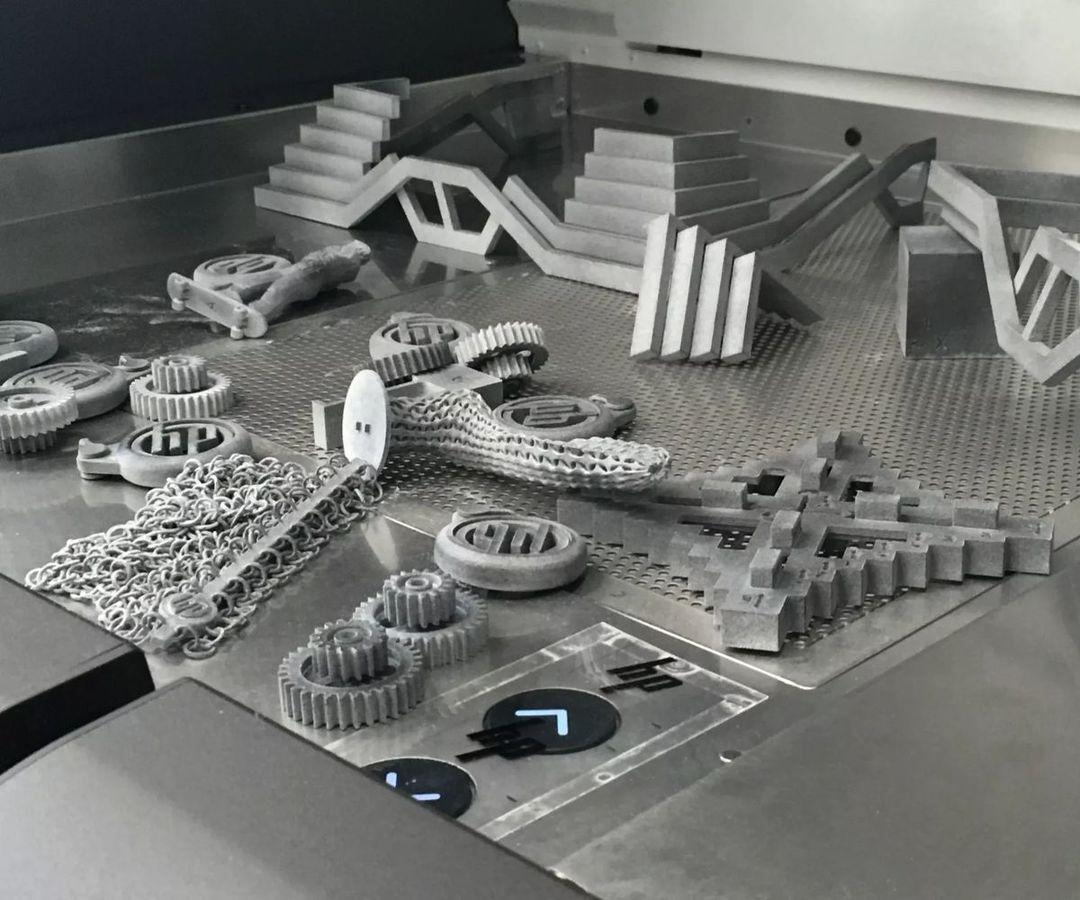
Multi Jet Fusion (MJF): Employs an inkjet array printing head that passes across the powder bed, depositing a Fusing Agent (to absorb heat) where the part is formed, and a Detailing Agent (to restrict melting) around the contours. A sweeping infrared light lamp then passes over the entire bed, fusing the area line-by-line in a single pass.
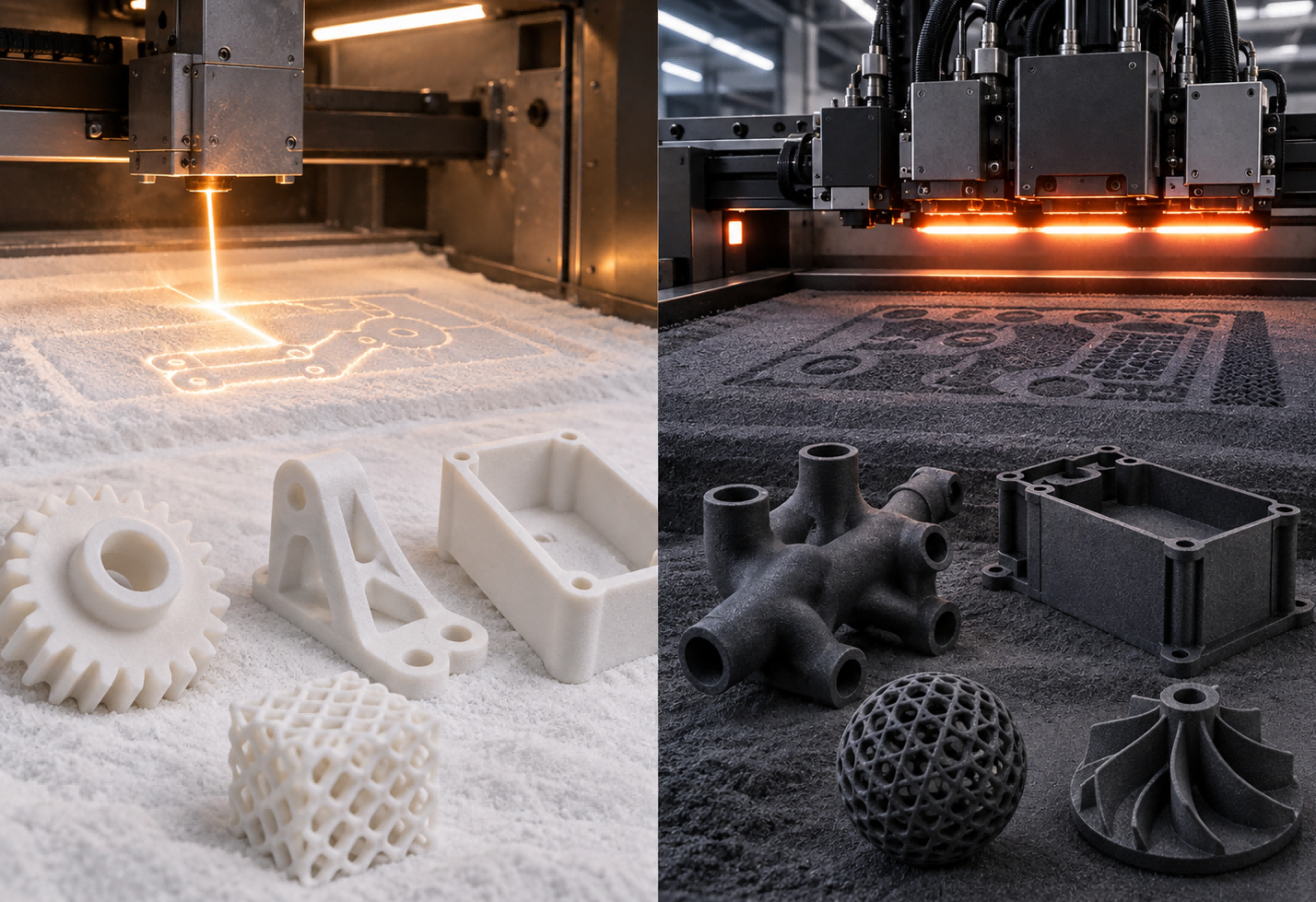
SLS: Offers a broader, more open-material ecosystem. Beyond standard PA12 and PA11, SLS extensively supports carbon-fiber-reinforced nylon, glass-filled nylon (PA12-GF), flame-retardant nylons, and flexible elastomers like TPU.
MJF: Features a tightly optimized material palette focused heavily on PA12, PA11, TPU, and PA12 Glass Beads. MJF materials are engineered to achieve exceptional density, low porosity, and highly uniform isotropic properties along all three axes (X, Y, Z).
 B. Dimensional Accuracy & Feature Resolution
MJF: Thanks to the precision detailing agent applied around boundaries, MJF achieves sharper edges, finer feature details, smaller minimum wall thicknesses (~0.8 mm), and tight dimensional tolerances (±0.2 mm).
SLS: Standard minimum wall thickness typically starts at 1.0 mm with a dimensional accuracy around ±0.3 mm. However, SLS manages thermal stress distribution exceptionally well on large, flat surfaces, minimizing localized warping.
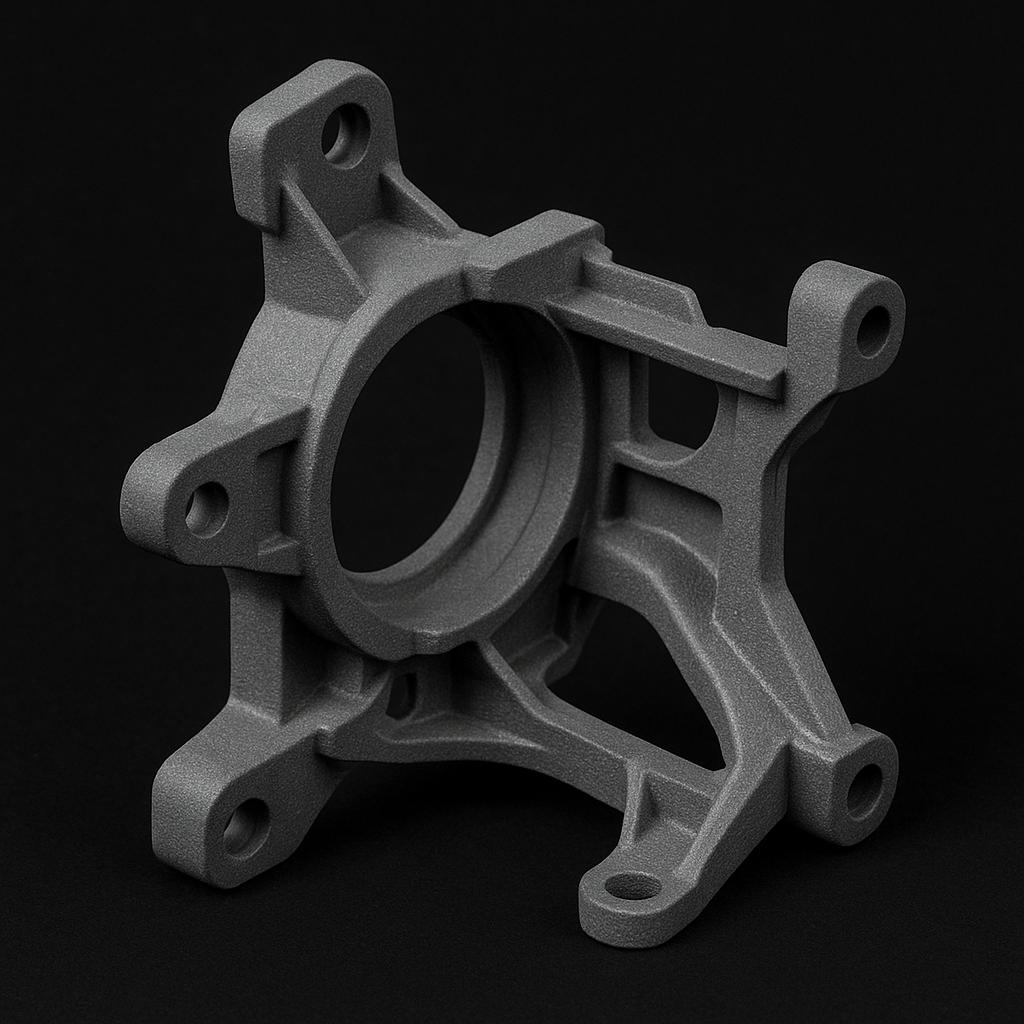
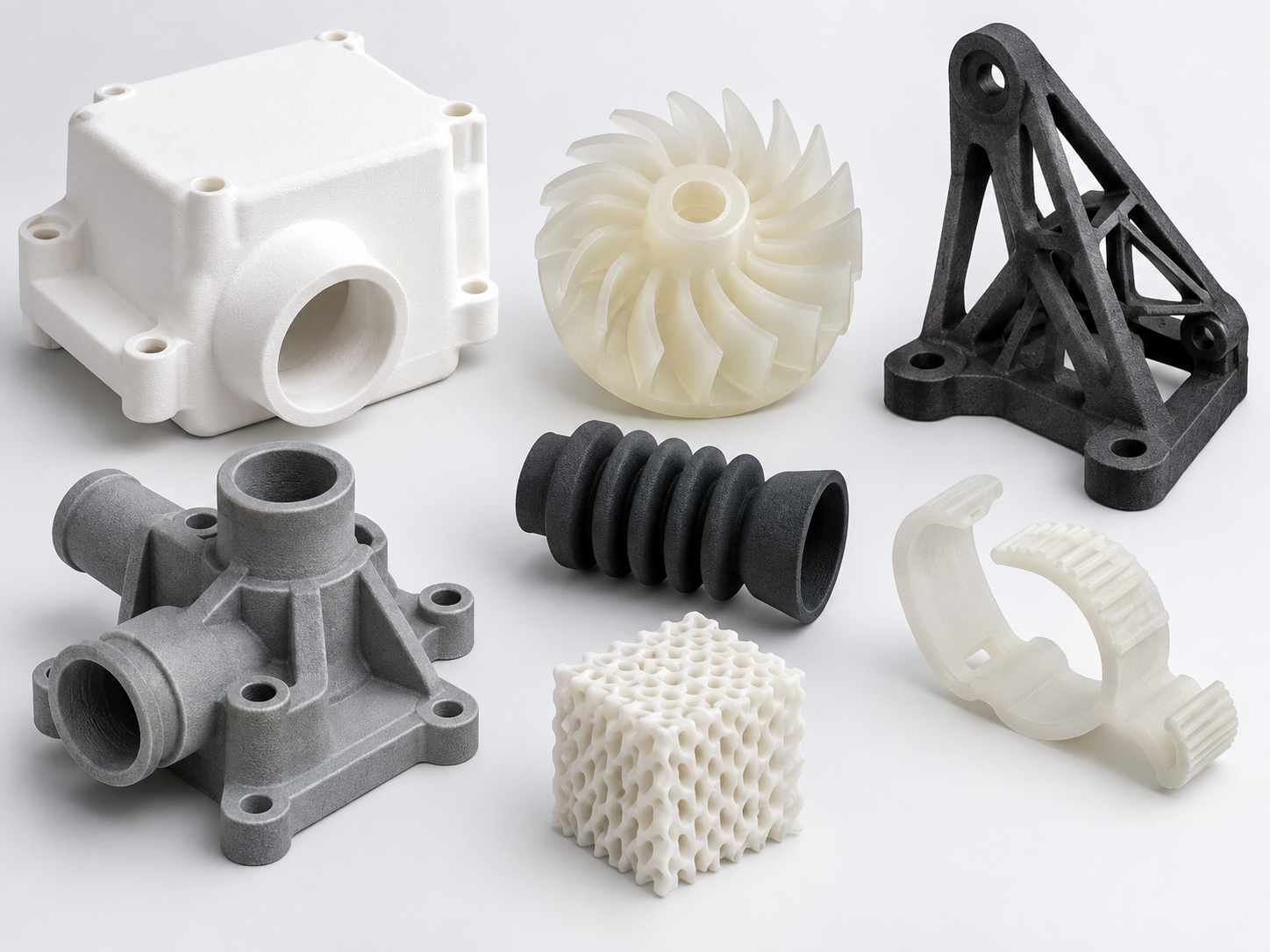
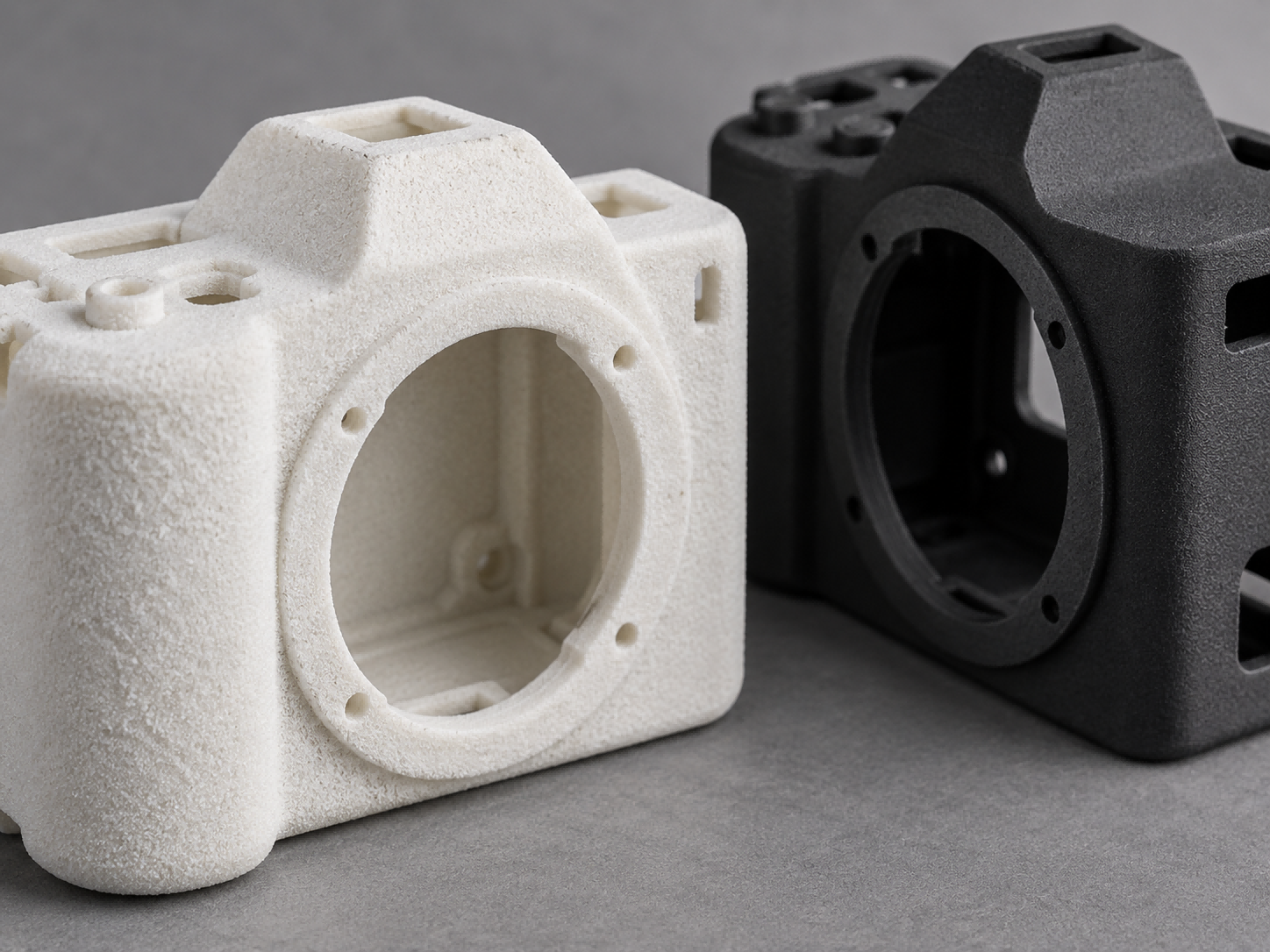
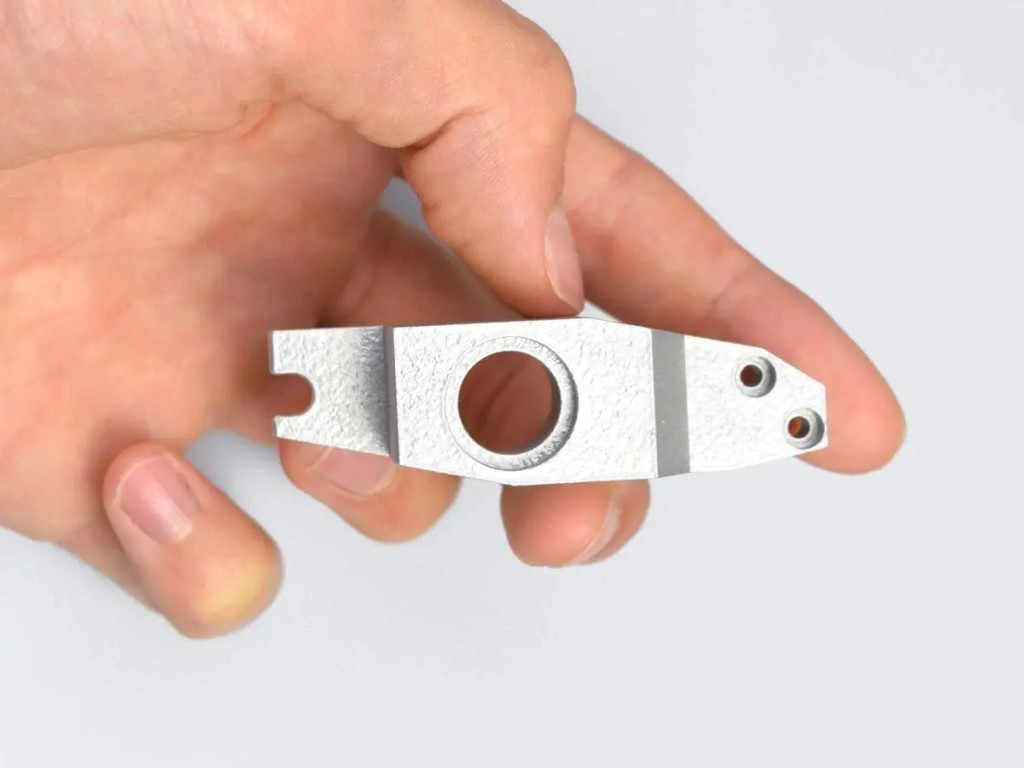
Raw Surface Texture: Raw SLS parts present a white or off-white uniform matte finish with a slight sugar-like granularity. Raw MJF parts feature a dark gray, fine speckled matte texture.
Dyeing & Post-Processing: For vibrant, custom color dyeing (red, blue, yellow, etc.), SLS's white base provides an ideal palette. For deep black or dark gray production finishes, MJF's natural dark tone accepts black dye perfectly for a uniform, premium look.
 D. Production Throughput & Cost Mechanics
MJF: Offers significantly faster area-based printing speeds. For high-density nested builds and mid-to-high batch production runs (10 to 1,000+ units), MJF delivers superior turnaround times (typically 3–5 days) and lower per-unit costs. Furthermore, MJF uses a fresh-to-recycled powder mix ratio of approximately 20/80, greatly reducing raw material waste.
SLS: Offers flexible turnaround for low-volume production (1 to 100 units) with typical lead times of 3–7 days, making it ideal for specialized geometries or single-part prototype runs.
Note: Specifications are based on general production standards and may vary depending on part geometry, orientation, and post-processing treatments.
Follow this step-by-step logic to determine whether SLS or MJF best fits your project parameters:
Step 1: Evaluate Material Requirements
——Need specialized composites (Carbon-filled, Flame-retardant, PA12-GF)? ──> Choose SLS
—— Using standard PA12, PA11, or TPU? ──────Proceed to Step 2
Step 2: Define Core Performance Metrics
—— Require maximum Z-axis strength, air/watertightness, or crisp micro-details? ─> Choose MJF
——Require large-format structural dimensions or custom color dyeing? ─────Choose SLS
Step 3: Assess Volume & Lead Time Constraints
——Prototype or low-volume run (1–10 parts)? ─────Choose SLS
—— Mid-to-large batch production (50–1,000+ parts) needing fast turnaround? ───── Choose MJF
Answer: Yes. Both technologies eliminate upfront tooling costs and operate without support structures, allowing high-density 3D nesting inside the build chamber. SLS is ideal for highly customized or lower-volume runs (1–100 parts), while MJF provides unparalleled scalability and unit-cost economics for runs between 10 and 1,000+ parts.
Answer: For very small quantities (1–5 units), SLS startup costs are often lower. However, as order volumes increase into dozens or hundreds of parts, MJF's higher printing speeds and 80% powder recyclability drastically reduce per-part costs, making it significantly cheaper at scale.
Answer: MJF typically delivers shorter lead times (3–5 days versus 3–7 days for SLS) because its line-by-line sweeping infrared light process prints entire layers faster than point-by-point laser scanning, significantly shortening build cycles.
Answer: Raw SLS parts have a powdery, slightly grainy white finish, whereas raw MJF parts have a smoother, dark gray matte texture. Both technologies can undergo secondary post-processing—such as media blasting, bead blasting, or vapor smoothing—to achieve injection-molded-quality surfaces.

Un procédé lié à cet article. Ouvrez la fiche, ou mettez le fichier sur un devis.
AIHFABS SLS 3D printing services fuse engineering-grade SLS plastics into durable, self-supporting parts.
Créer un devis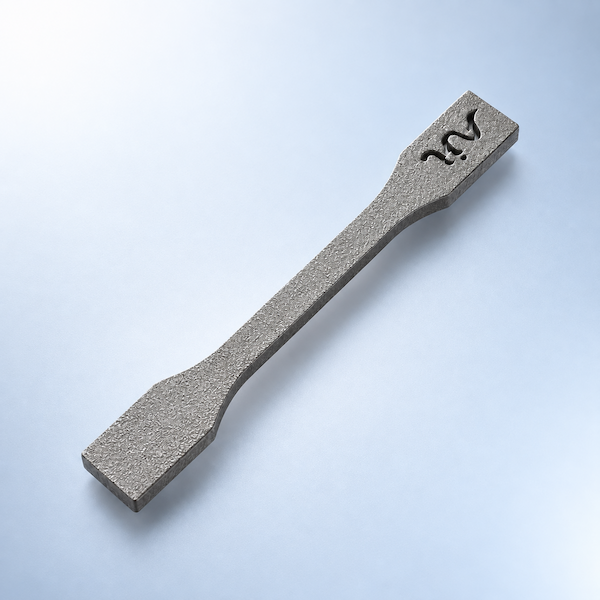
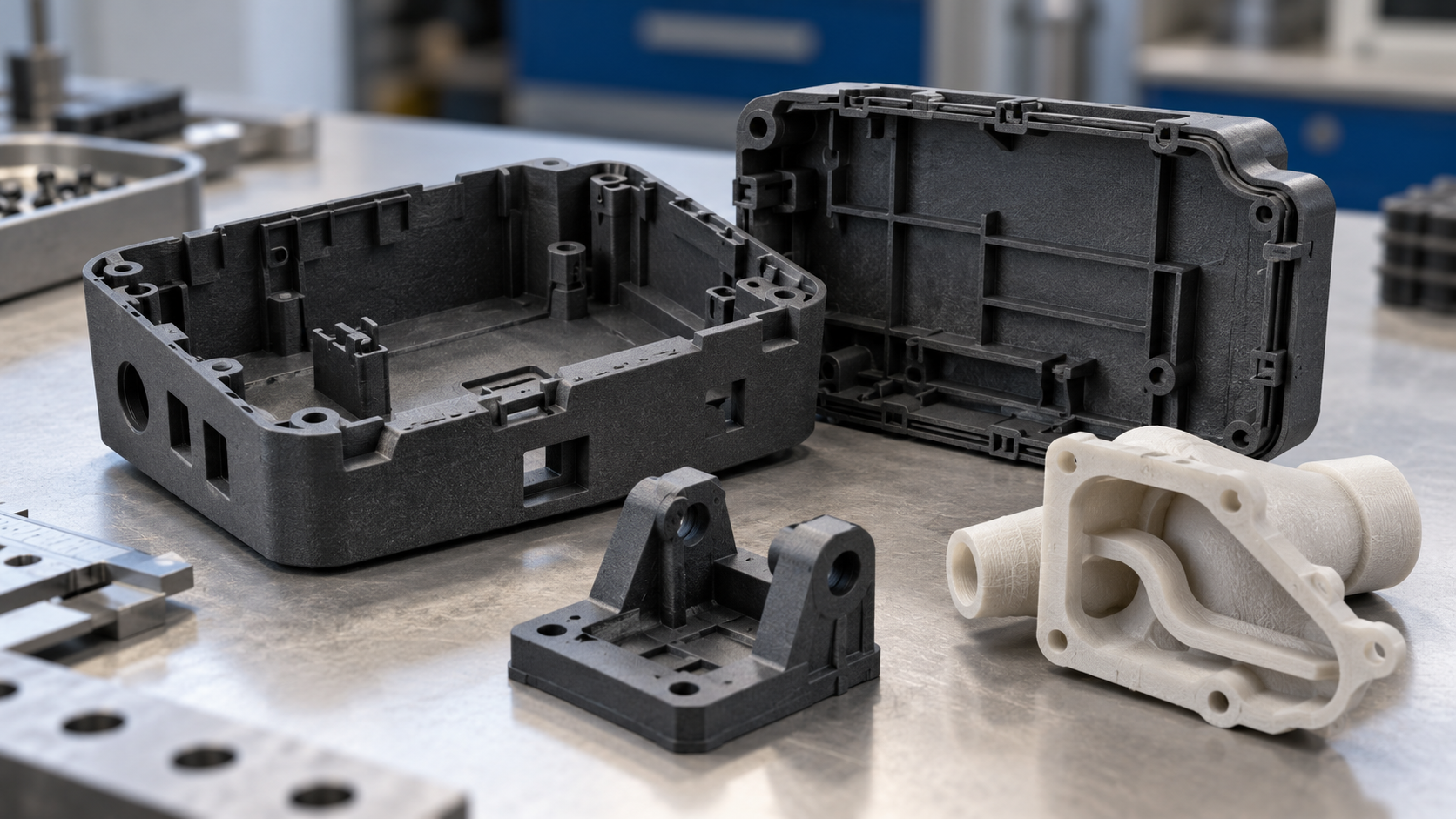
Multi Jet Fusion (MJF) applies fusing and detailing agents across a powder bed, then uses infrared energy to fuse each layer.
Créer un devisDes matériaux à côté de cet article. Consultez la carte, puis téléversez le CAD.
Notes d'atelier sur procédé, finition et fichiers.
Réponses entreprise, paiement, expédition et procédés par thème.
Questions about 3D printing processes, materials, MOQ, samples, and custom projects.
Production lead times, shipping options, and order tracking.
AIHFABS chiffre impression 3D et usinage CNC à partir d’un upload CAO. Comparez SLA, SLS, MJF, SLM, FDM, DLP, fraisage et tournage, puis ajoutez lissage vapeur, teinture, anodisation, polissage ou thermolaquage à la même commande.
Le devis instantané convient aux prototypes, gabarits, boîtiers et petites séries. Matière, procédé, quantité et délai s’affichent ensemble.
Matière, procédé, quantité et délai s’affichent ensemble, pour éviter un nouveau tour de mails fournisseurs à chaque modification.
Téléversez STL, STEP et formats CAO courants pour un devis en ligne.
Comparez technologies d’impression 3D et options CNC sur la même pièce.
Choisissez polymères ou métaux, puis ajoutez une finition hardware 3D Plus si besoin.
Vérifiez prix et délai avant paiement, ou demandez un devis manuel.
Si cette page décrit un procédé, un secteur ou une pièce à reproduire, partez de l’upload et alignez technologie et finition sur votre plan.

Nous utilisons des cookies pour personnaliser votre expérience. En utilisant ce site, vous acceptez notre Politique de confidentialité
Accepter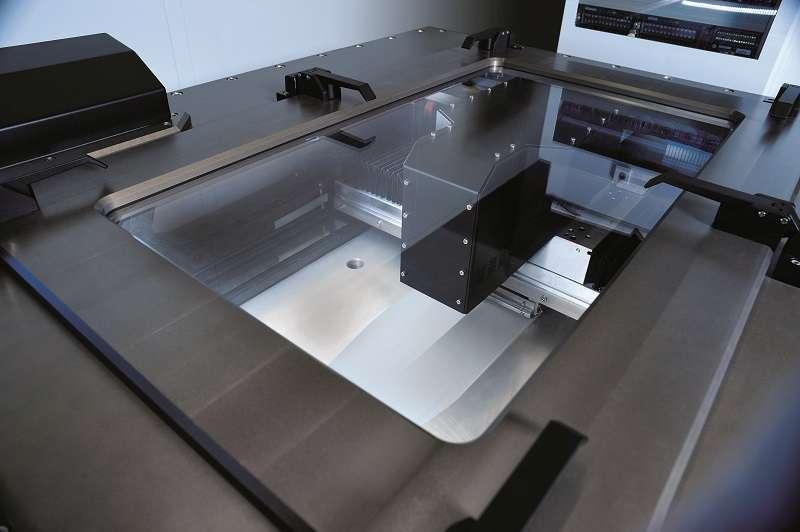

Laisser un commentaire