Design details: Metal Turbine Blade with Cooling Holes
Rows of small openings cover a curved blade-like surface above a locating root. The sample illustrates the combination of fine surface features and a larger structural interface in one metal additive form.
Hole continuity and internal access need more than an external visual check. Material traceability, heat treatment, internal inspection and operating qualification must be defined separately before any turbine application.
Features to review on a similar design
- Define inspection of small-hole continuity
- Specify root datums and machined interfaces
- Establish material and operating qualification requirements
Metal additive manufacturing review
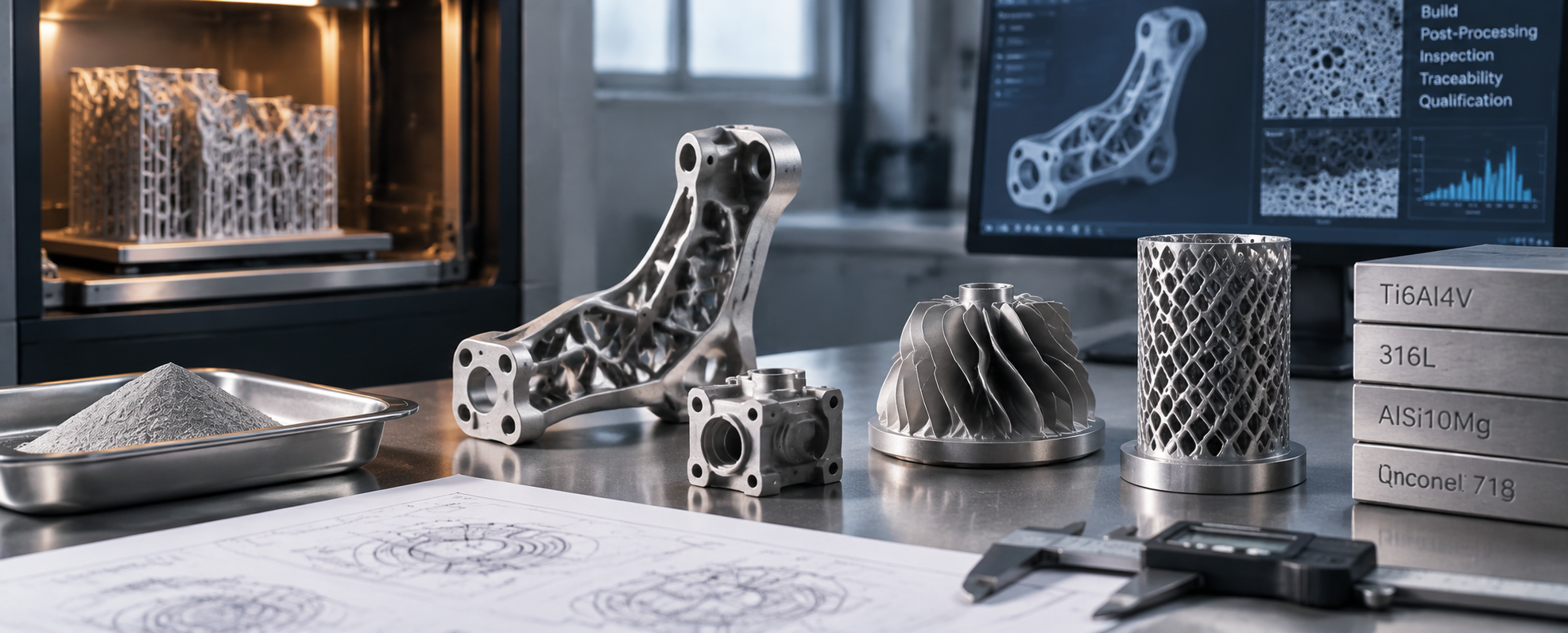
Metal laser powder-bed fusion can produce curved passages and open structures that are difficult to machine from a solid block. A production plan must also address support removal, powder evacuation, stress relief or other required heat treatment and secondary machining. Choose the alloy from the operating environment and specify critical datums and inspection methods. Surface appearance alone cannot confirm alloy, density, leak tightness or qualification for an aerospace or pressure application.
Explore process capabilities and material optionsSandblasting considerations
Blasting can create a more even matte surface on accessible metal areas. Specify protection for precision bores, threads and sealing faces. Internal passages need their own cleanliness and inspection plan because a uniform exterior does not establish an equally finished interior.
Explore surface finishing optionsPlan a similar custom part
Upload a STEP file for solid geometry or a high-resolution STL/3MF mesh for sculptural forms. Include overall dimensions, quantity, intended use and the faces or details that matter most. Add a drawing for mating interfaces and a color or finish reference for visual models. AIHFabs can review the geometry and manufacturing options before production.
Upload your CAD file Discuss geometry and finish requirements