Lead time
From 48 hours express; standard 72 hours / 5 days

3D-Druck
Industrial nylon parts with isotropic strength and fast throughput.
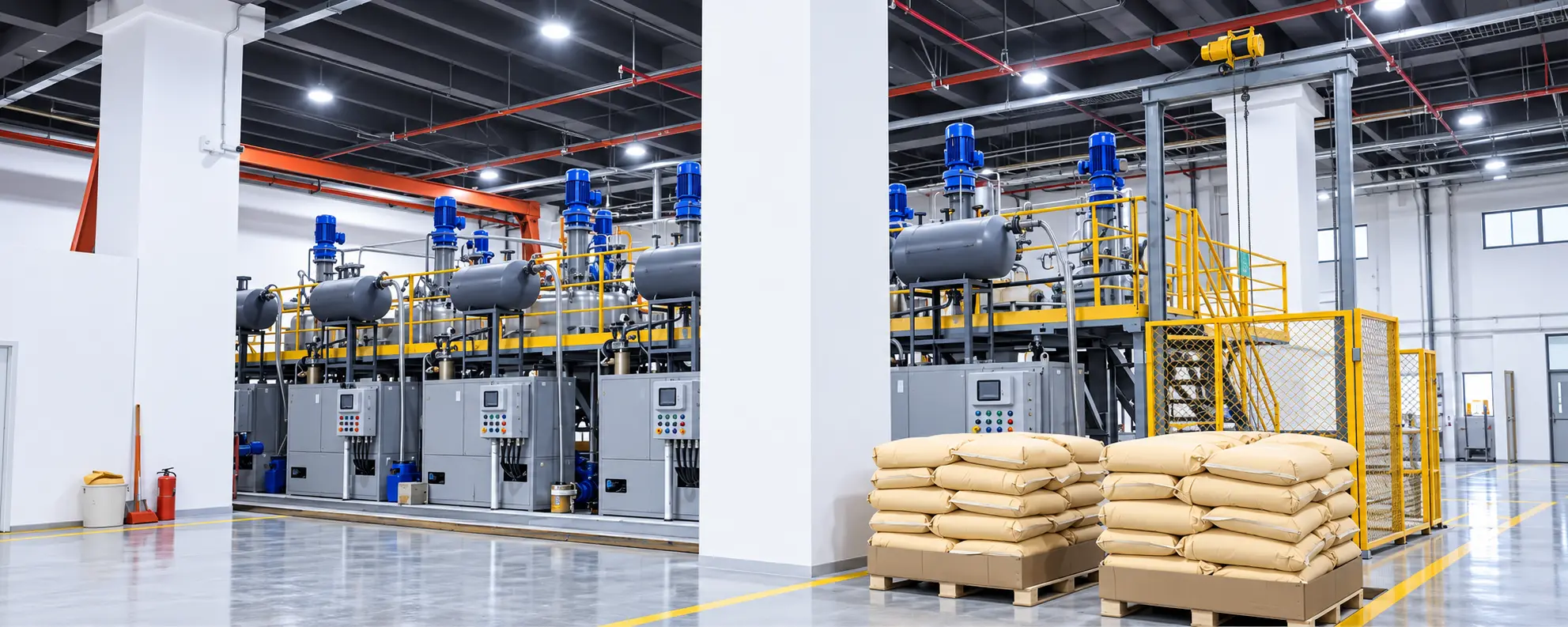
Multi Jet Fusion (MJF) applies fusing and detailing agents across a powder bed, then uses infrared energy to fuse each layer. The result is durable PA12 or TPU parts with fine feature definition and mechanical properties suited to serial production.
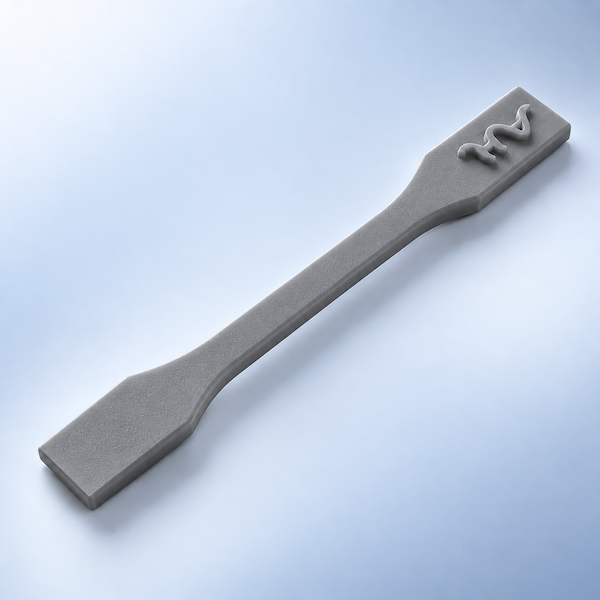
Multi Jet Fusion jets fusing and detailing agents onto a nylon powder bed, then an infrared pass melts the slice. Parts come out dense and fairly isotropic, which is why MJF is a common choice for clips, enclosures, and short-run end-use plastics.
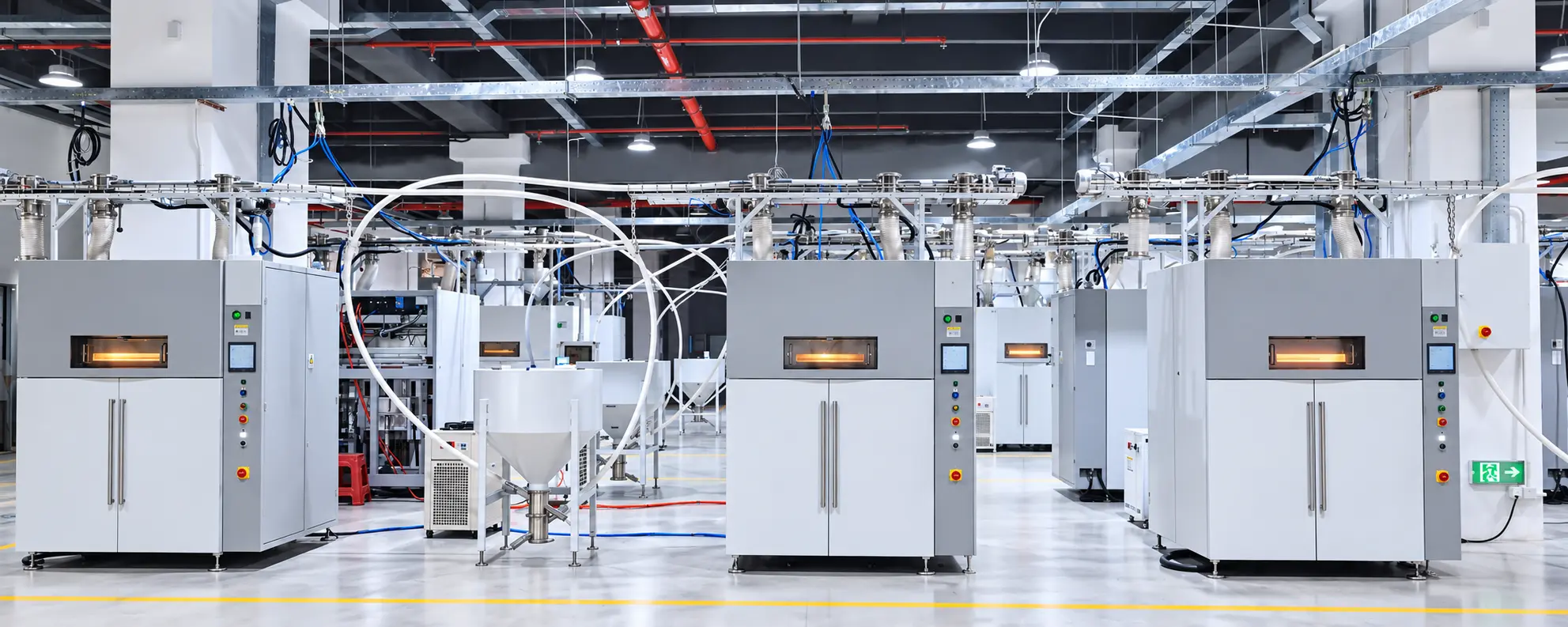
AIHFABS nests many part numbers in one cake to drop unit cost. Dye and vapor smooth are the usual finish steps; inserts are added when the same hole will be assembled more than once.
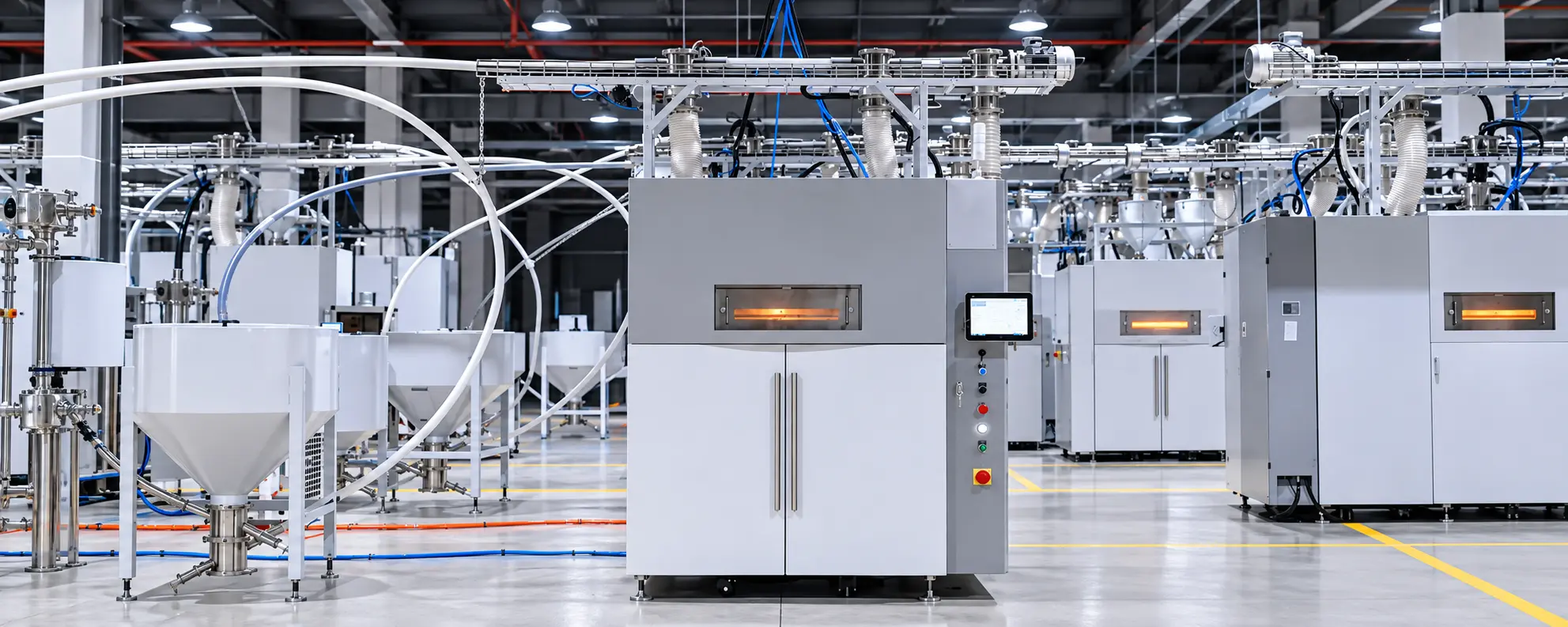
The listed envelope is the planning box. Instant quote still depends on nest density and finish.
From 48 hours express; standard 72 hours / 5 days
±0.3 mm or ±0.3%
380 × 284 × 380 mm
Fine grain; dyeing and vapor smoothing available
Powder bed — no separate support structures
PA12 is the workhorse. TPU and glass-bead filled PA12 are quoted when flex or stiffness needs them.
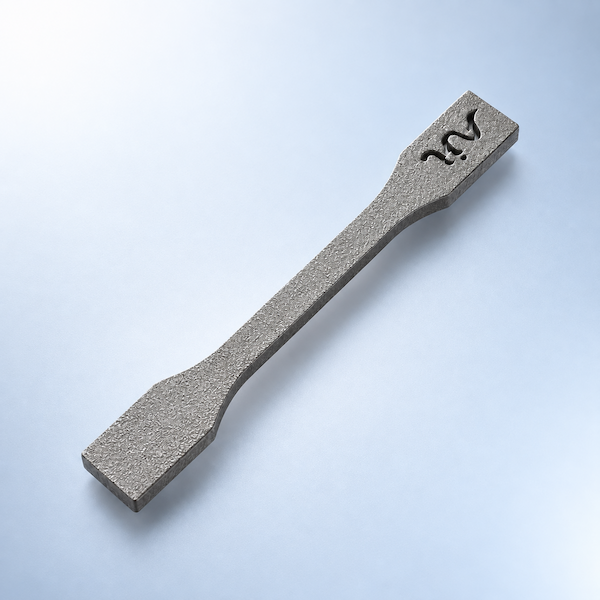
Natural MJF gray is fine-grained. Black dye is the usual customer-facing step.
Fine as-fused grain, typically gray PA12. Good for internals and shop trials.
Immersion dye for a uniform dark skin that hides the open grain.
Chemical smooth for a less chalky feel on grips and consumer-facing covers.
MJF and SLS share the no-support nylon idea. FDM is cheaper for bulky mock-ups; SLA is smoother for show models.
| Verfahren | Lieferzeit | Toleranz | Preis |
|---|---|---|---|
| Selektives Laserschmelzen (SLM)Metal | From 5 business days (express options where available) | ±0.3 mm or ±0.3% (whichever is greater), tighter after machining | Instant quote · typical metal part from $90 |
| Stereolithographie (SLA)Resin | Quoted with your CAD upload | Instant quote · typical resin part from $18 | |
| Digitales Lichtverfahren (DLP)Resin | From 48 hours | ±0.2 mm on supported geometry | Instant quote · typical resin batch from $20 |
| Flüssigkristallanzeige (LCD)Resin | From 48 hours | ±0.2 mm on supported geometry | Instant quote · typical resin part from $16 |
| Selektives Lasersintern (SLS)Plastic powder | From 48 hours express; 72 hours / 5 days standard tiers | ±0.3 mm or ±0.3% | Instant quote · typical nylon part from $28 |
| Multi Jet Fusion (MJF)Plastic powder | From 48 hours express; standard 72 hours / 5 days | ±0.3 mm or ±0.3% | Instant quote · typical PA12 part from $25 |
| Fused Deposition Modeling (FDM)Thermoplastic filament | From 24–48 hours depending on size | ±0.5 mm or ±0.5% on FDM-appropriate geometry | Instant quote · typical prototype from $12 |
A carriage jets fusing and detailing fluids onto the powder surface.
Infrared energy fuses the selected regions; the bed lowers and new powder is deposited.
Nested parts share one build for efficient manufacturing lots.
Parts are cooled, depowdered, and finished with dye, tap, or vapor polish as specified.
We pack the cake for a stable fuse and a sane cool-down. Escape holes and even walls are checked in DFM.
Depowder, blast, then dye or vapor smooth only if the order lists them. Thread inserts are fitted after the cake, not printed as a hope.
Uniform walls and a powder exit keep both strength and cosmetics predictable.
| Feature | Recommended practice |
|---|---|
| Walls | Keep thickness even on large PA12 panels to limit sink and warp. |
| Threads | Specify inserts or helicoils when the joint will be assembled often. |
| Nesting | Combine part numbers in one cake when you can — that is how unit cost drops. |
| Escape holes | Open closed volumes so powder can leave after the fuse. |
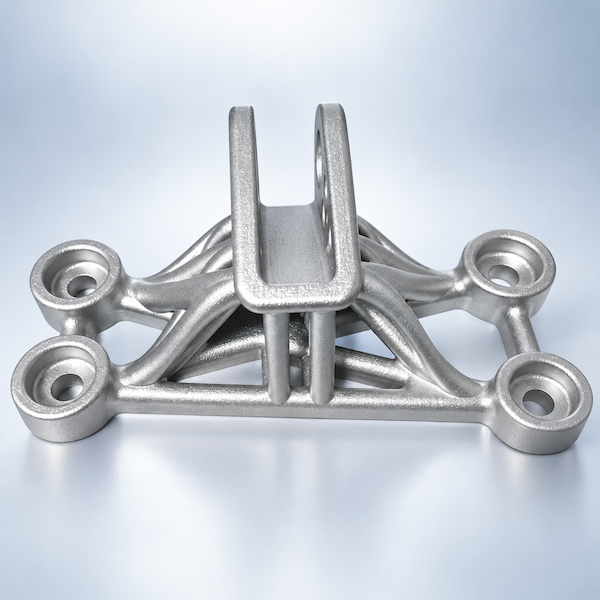
Selective Laser Melting (SLM) is a powder-bed metal additive process. A high-power laser scans each cross-section of your CAD model, melting metal powder that solidifies into a dense part.
Prozessdetails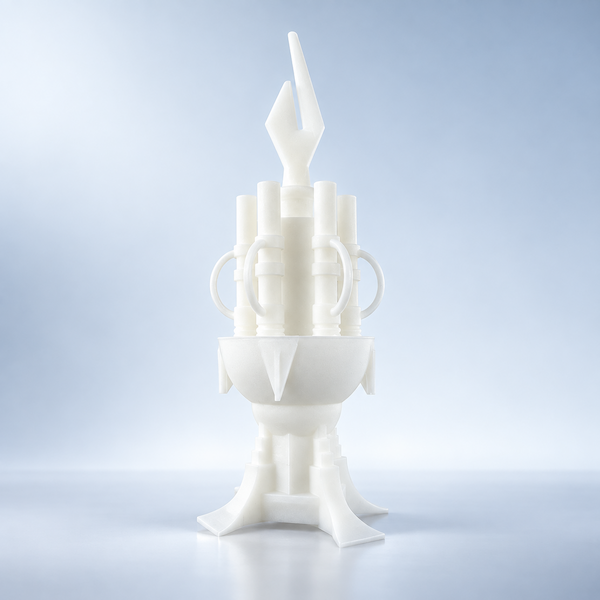
Stereolithography (SLA) cures liquid photopolymer with a precision UV laser, building parts layer by layer.
Prozessdetails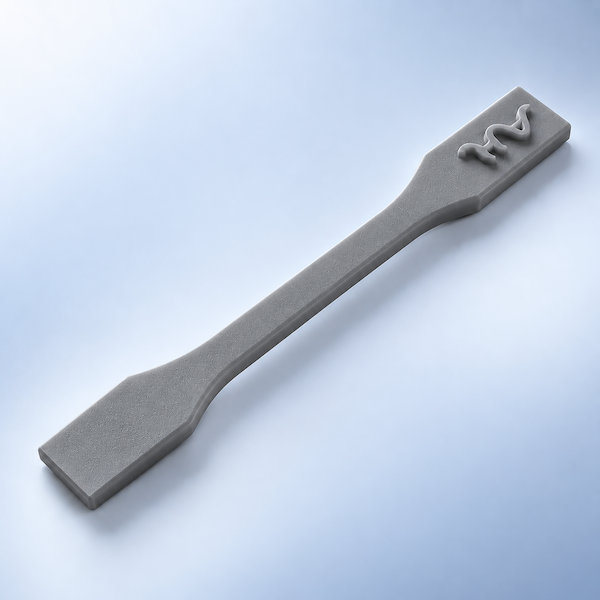
Digital Light Processing (DLP) solidifies an entire layer of photopolymer at once using a projected image.
ProzessdetailsBoth make functional PA12. MJF is often a bit more isotropic and faster on dense nests; we pick the cell from the file, not from a slogan.
±0.3 mm or ±0.3% on typical MJF geometry.
Yes, flexible TPU grades for grips, gaskets, and living features — confirm the durometer on the quote.
No separate support trees. Powder holds the part; you still need escape holes.
Express from 48 hours; standard around 72 hours or 5 days depending on the cake queue.
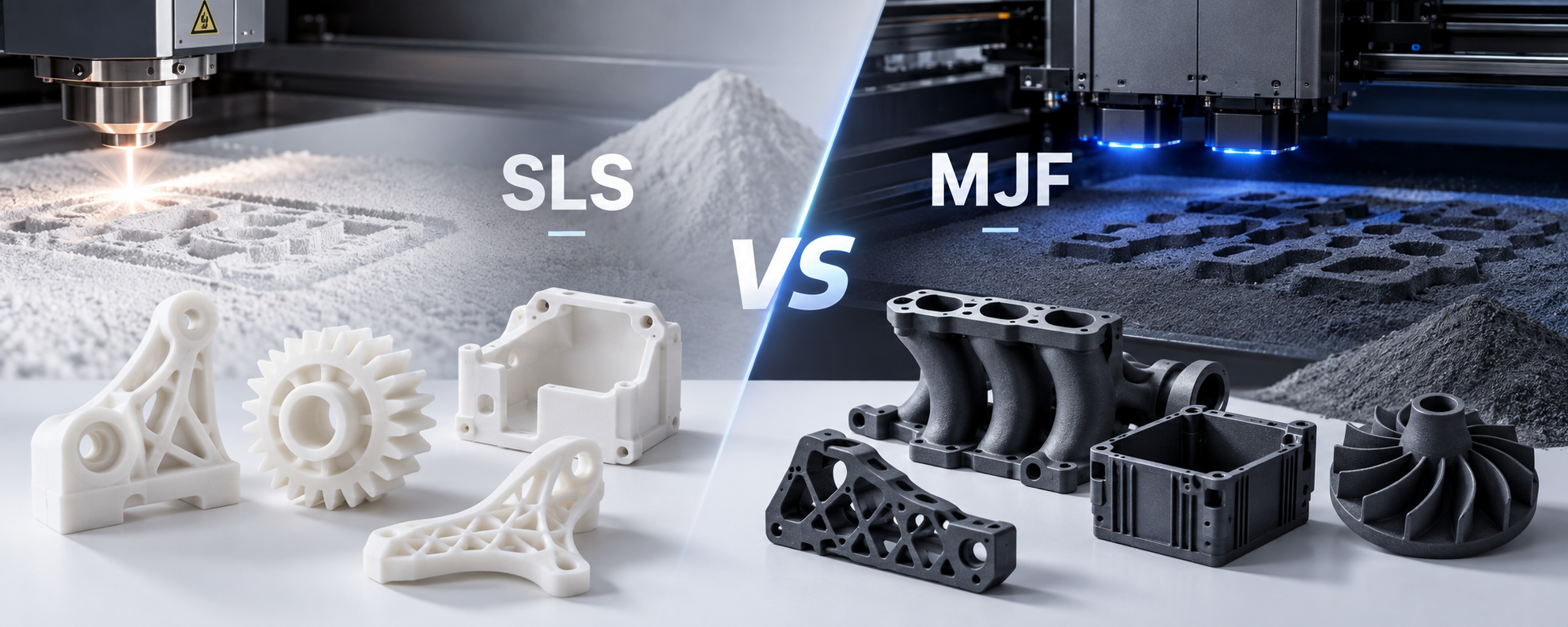
Technical comparison of SLS and MJF nylon 3D printing for end-use parts. Learn differences in surface finish, dimensional accuracy, material options, cost, and ideal production vol
Prozessdetails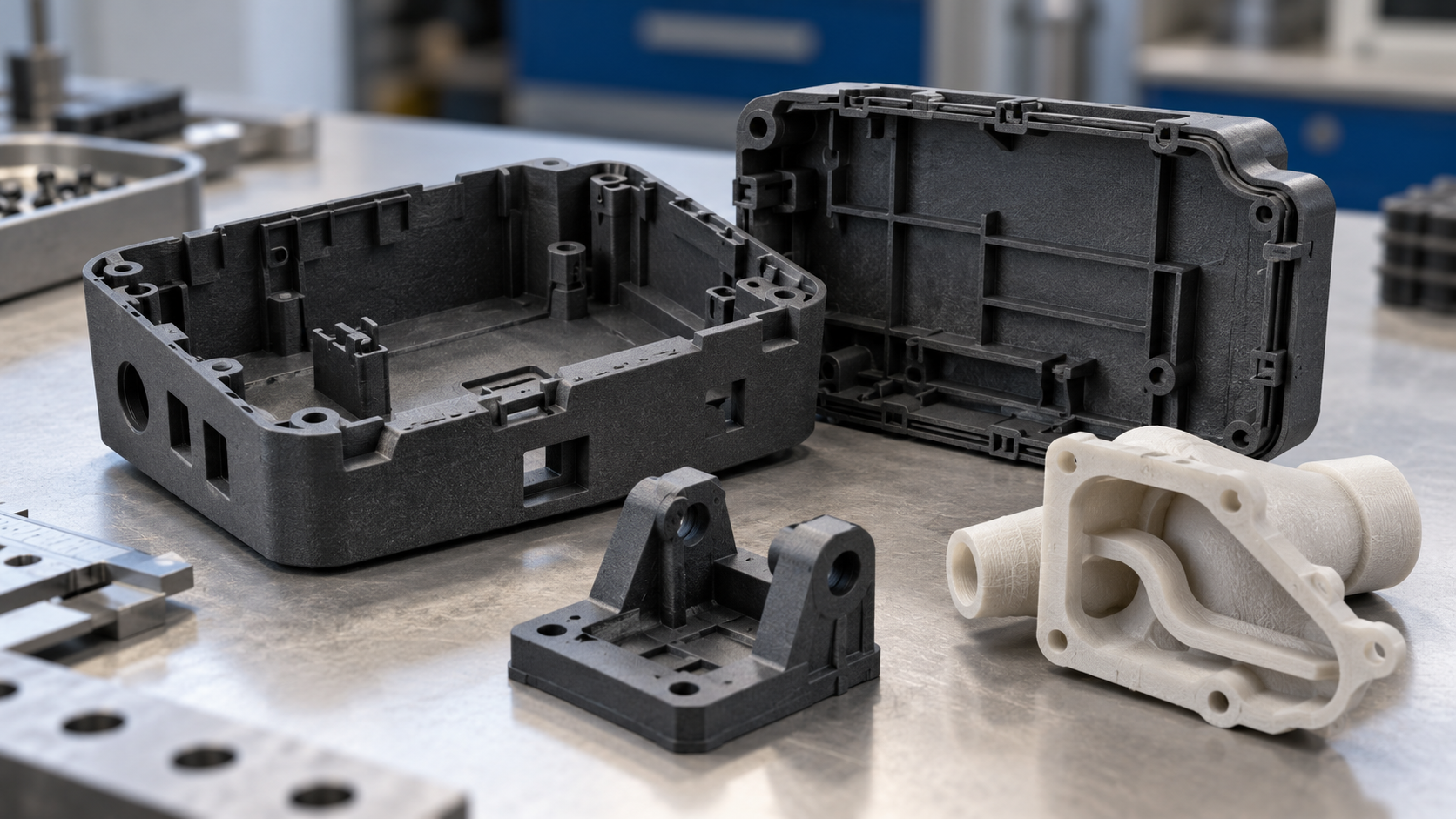
Explore SLS nylon 3D printing for functional parts, including snap-fit design, PA11 vs PA12, tolerances, powder removal, and finishing for reliable assembly.
Prozessdetails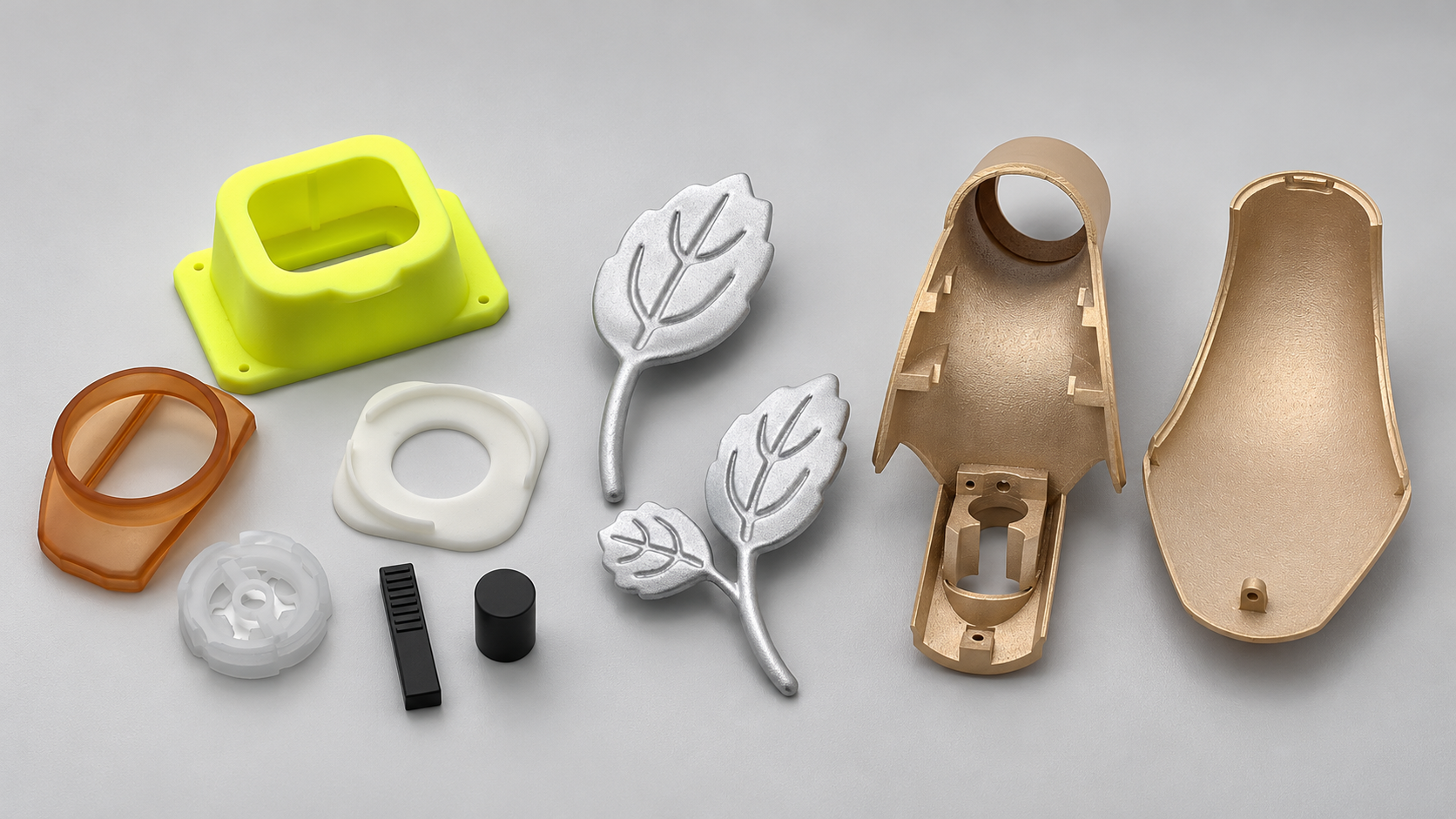
Compare SLA with DLP, LCD, FDM, SLS, MJF, SLM, and CNC machining. Shortlist processes by material, geometry, finish, cost, and your part's intended use.
Prozessdetails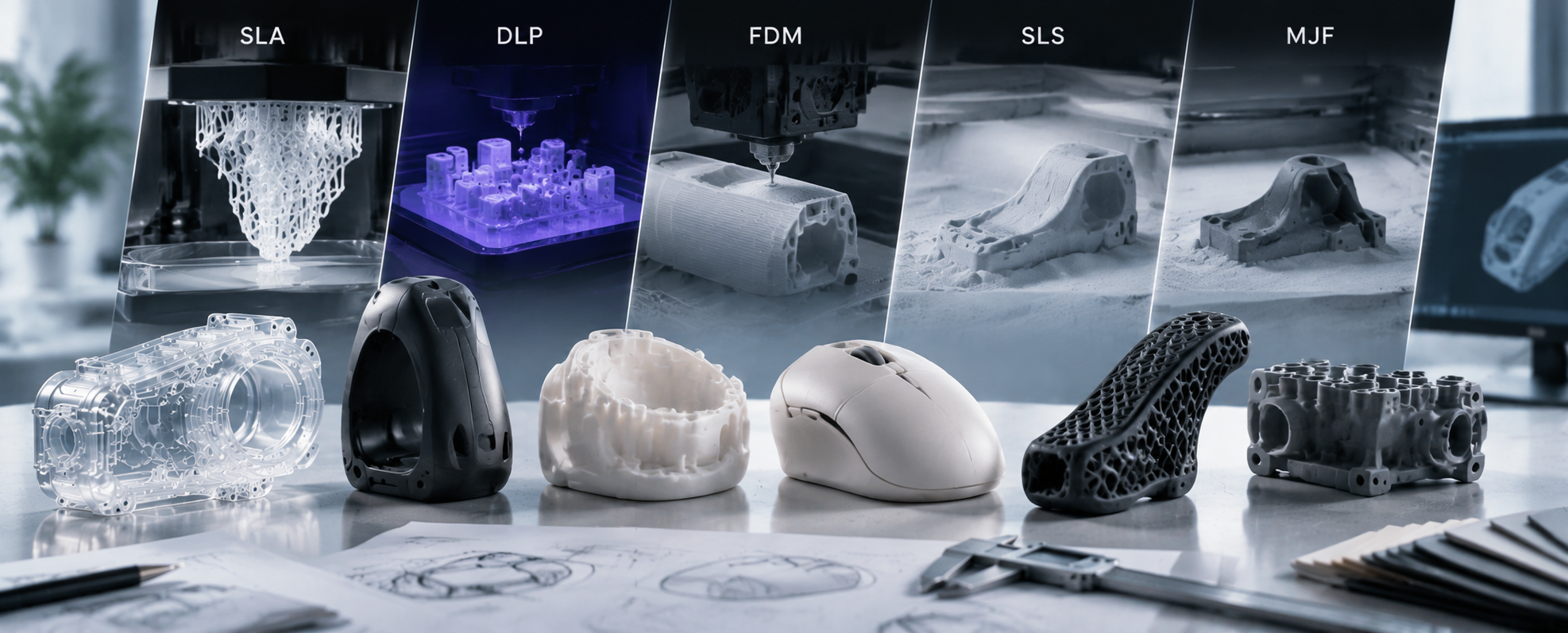
Learn how to choose the right 3D printing process for cosmetic prototype parts. Compare SLA, DLP, FDM, SLS, and MJF for surface quality, detail, fit, and finishing.
Prozessdetails
Step-by-step guide to uploading STL and STEP files for instant resin 3D printing quotes. Learn file preparation, unit settings, wall thickness, orientation, and how to read quote r
ProzessdetailsUse these process-specific checks when preparing your model, drawing and quote request. The confirmed quotation and approved drawing define the requirements for your part.
Choose the exact supported grade for stiffness, impact behavior and service environment. Avoid assuming that all PA12 parts share identical properties across processes. Thin walls, ribs and abrupt mass changes need review for cooling behavior and dimensional stability.
Build packing and orientation are manufacturing decisions that can affect the schedule and part behavior. Define cosmetic faces and the required color before selecting dyeing or smoothing. Leave access for powder removal in ducts and internal volumes.
Confirm grade, color, surface treatment and finished-part tolerances. For repeat orders, keep the approved revision and acceptance sample, and identify fit-critical dimensions that need measurement.
AIHFABS kalkuliert kundenspezifischen 3D-Druck und CNC aus einem CAD-Upload. Vergleichen Sie SLA, SLS, MJF, SLM, FDM, DLP, Fräsen und Drehen und fügen Sie Dampfglätten, Färben, Eloxieren, Polieren oder Pulverbeschichten derselben Bestellung hinzu.
Sofortangebote eignen sich für Prototypen, Vorrichtungen, Gehäuse und Kleinserien. Werkstoff, Verfahren, Menge und Lieferzeit stehen zusammen.
Werkstoff, Verfahren, Menge und Lieferzeit stehen zusammen, damit Konstruktionsänderungen keine neue Lieferantenrunde auslösen.
STL, STEP und gängige CAD-Formate für ein Online-Angebot hochladen.
3D-Drucktechnologien und CNC am gleichen Teil vergleichen.
Polymere oder Metalle wählen und bei Bedarf 3D-Plus-Hardware-Finish hinzufügen.
Preis und Lieferzeit vor dem Checkout prüfen oder ein manuelles Angebot anfordern.
Beschreibt diese Seite ein Verfahren, eine Branche oder ein Musterteil, starten Sie mit dem Upload und stimmen Sie Technologie plus Finish auf Ihre Zeichnung ab.
Wir verwenden Cookies, um Ihre Erfahrung zu personalisieren. Mit der Nutzung stimmen Sie unserer Datenschutzrichtlinie
Akzeptieren