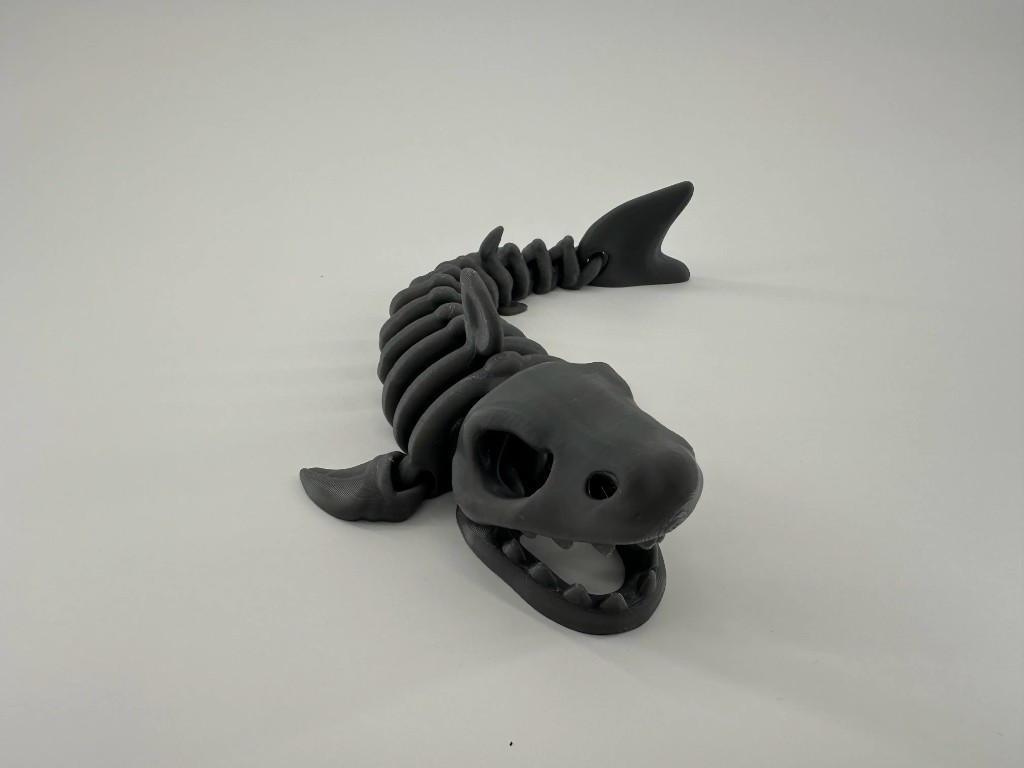
Design details: Articulated Shark Skeleton Model
The photographed display model has a broad skull, an open jaw, exposed curved ribs and a tail made of repeated segments. Its body is arranged in a curve, showing how the rib sections follow the spine toward the tail fin. The open structure makes the spaces between neighboring ribs and links an important part of the appearance.
For a similar articulated shark, review the head-to-body connection, the gaps between ribs and the narrowing links near the tail separately. A clearance that works at one joint may still allow adjacent ribs to collide elsewhere. Check the complete model through its intended poses, including the fins and jaw, rather than evaluating each link in isolation.
Features to review on a similar design
- Check clearances between neighboring links
- Remove residue from the rib and joint openings
- Assess small-feature handling and packaging
SLS polymer design review
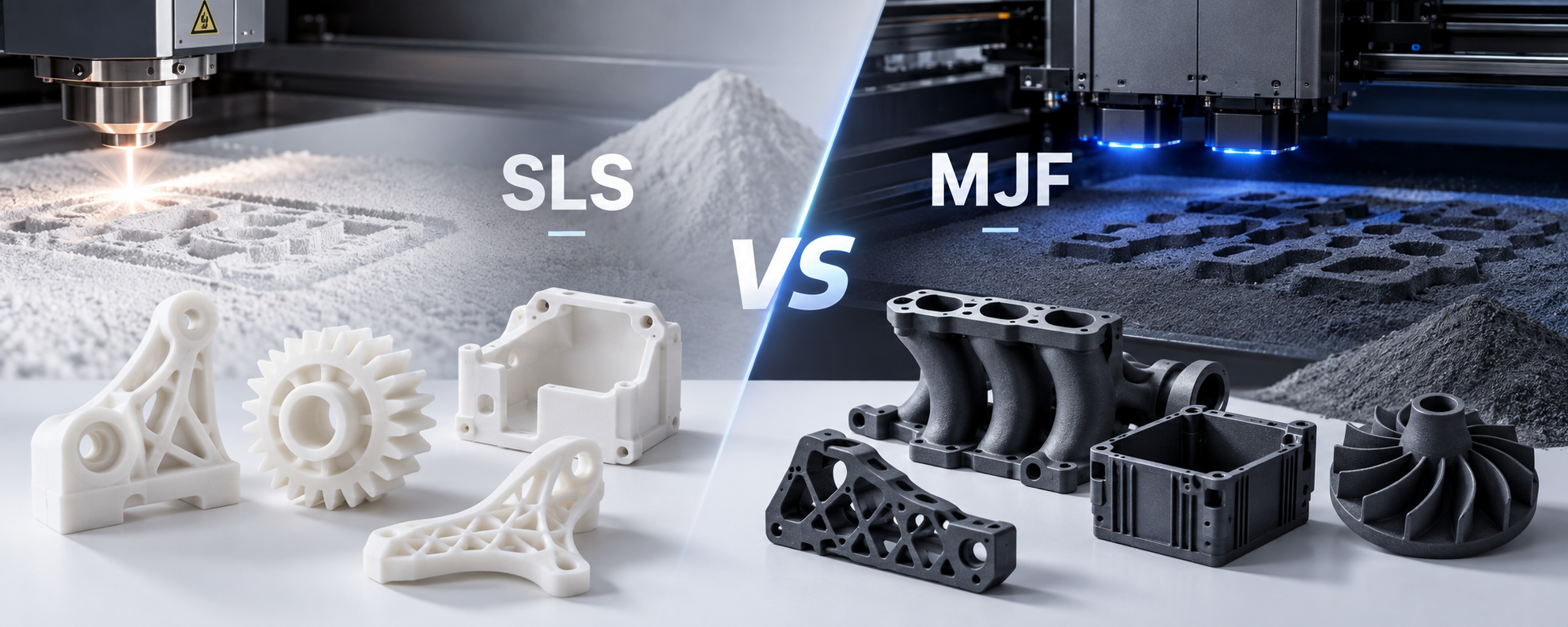
This gallery entry is catalogued under Selective Laser Sintering (SLS). For a similar shark skeleton, powder-bed printing is worth evaluating because surrounding powder supports the open ribs and interlocking shapes during the build. The model still needs accessible paths for removing powder from each link and from the skull. Whether the joints can be printed together or require separate assembly depends on the supplied geometry, scale, material and validated clearance. The photograph does not establish the original build method, exact polymer grade or minimum usable joint gap.
Explore process capabilities and material optionsDyeing considerations
Dyeing is the finish listed for this gallery entry. For a similar dark display model, remove residual powder from the rib openings and joint recesses before finishing. Agree on a color reference and check the final appearance in both the exposed ribs and recessed skull areas. After the full cleaning and finishing sequence, inspect the links again for retained residue, rubbing and restricted motion. A dark finish alone does not identify the material or demonstrate the range of movement.
Explore surface finishing optionsQuestions about this model
Can a shark skeleton model be printed with working joints?
Interlocking joints can be considered for powder-bed printing, but usable motion depends on the actual gap, scale, orientation and cleaning access. Review the CAD model and validate a representative joint before committing to the complete skeleton. This photograph is a visual reference, not a motion test.
What material and dimensions were used for this sample?
The published entry lists SLS and dyeing, but does not specify a material grade, overall dimensions or measured joint clearances. For your own model, choose these from the intended handling, size and manufacturing review rather than inferring them from the photo.
What should be checked before making a similar model?
Check the thin ribs, the connections beside the head, the tail links and access for cleaning each opening. Define the required poses and appearance, then evaluate the finished sample for collisions and restricted joints. Include these requirements with your model when requesting a quote.
Plan a similar custom part
To request a similar articulated display, upload your own design or a model you are authorized to manufacture. Include the overall length, quantity, desired color and whether the jaw, body and tail need to move. Supply the intended assembled position and joint geometry, not just a photograph of the outside. Ask for a review of the smallest rib sections, powder-removal access and print-in-place versus separate-assembly options before confirming the process.
Upload your CAD file Discuss geometry and finish requirements