
3D Printing
Liquid Crystal Display (LCD)
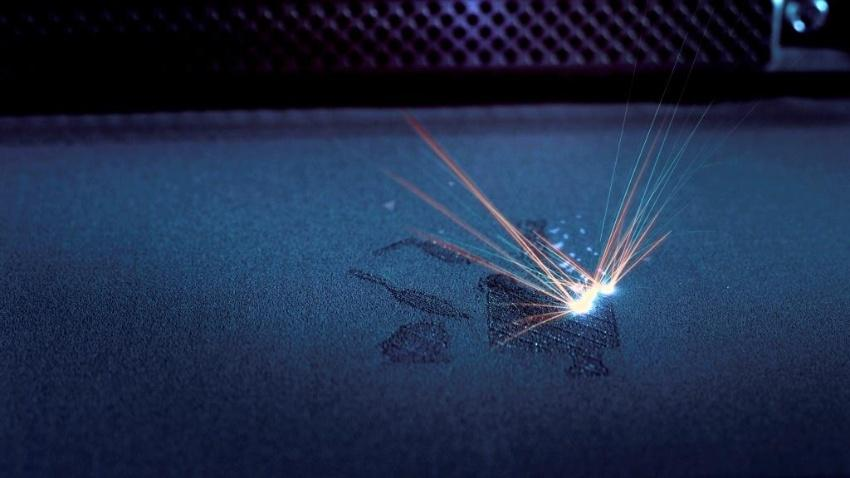
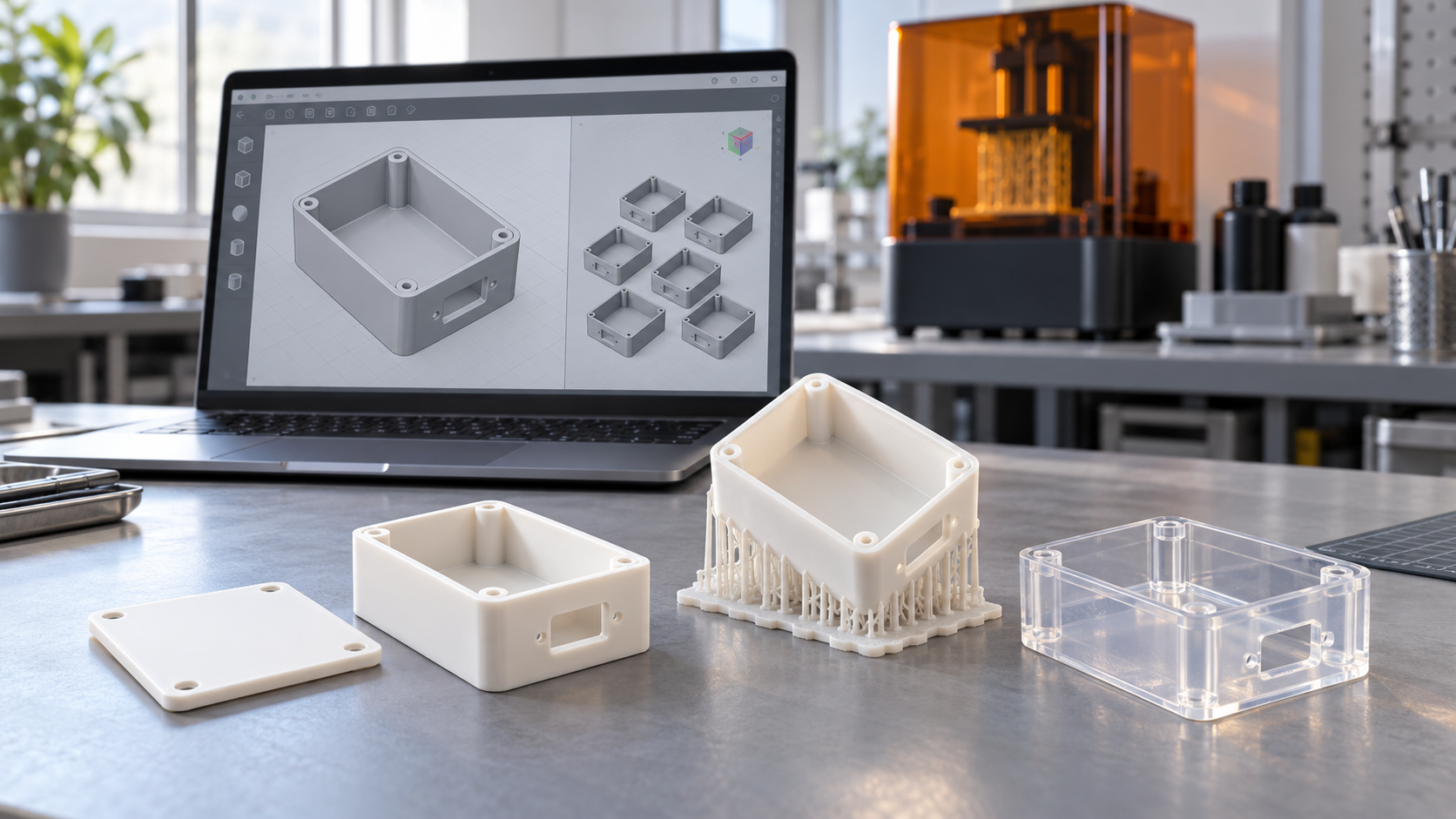
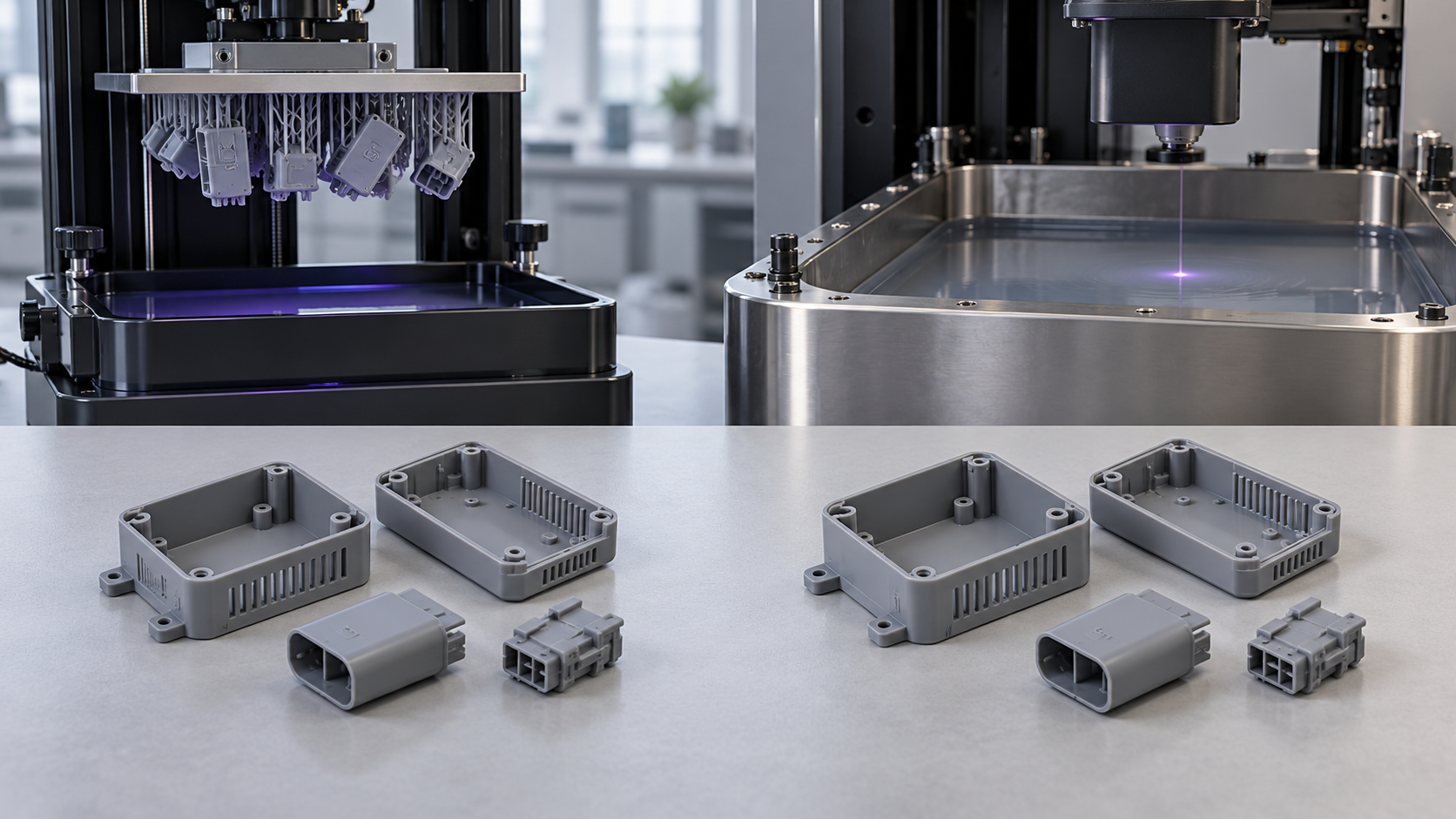
Liquid Crystal Display (LCD) printing — also called MSLA — cures a full layer of photopolymer at once.
Create a quote
The miniature industry — spanning tabletop gaming, collectible figurines, architectural scale models, and diorama production — has undergone a seismic shift thanks to 3D printing. But the technology is only half the equation. The material you choose can make or break a miniature, dictating everything from surface fidelity and paint adhesion to drop resistance and long-term archival stability.
In this guide, we break down the most important materials used in miniature production today, compare their mechanical and aesthetic properties, and help you match the right material to the right application.
Unlike functional engineering prototypes where tensile strength dominates the conversation, miniature production demands a unique balance of properties:
· Surface smoothness — Layer lines, pixel artifacts, and surface roughness directly affect paint quality
· Dimensional accuracy — A 28mm tabletop miniature that prints at 29mm creates assembly nightmares
· Mechanical resilience — Gaming miniatures endure repeated handling, transport, and occasional drops
· Post-processing compatibility — Not all materials accept primers, washes, and clear coats equally
· UV stability — Display pieces must resist yellowing and embrittlement over years of shelf life
Industry Insight: Material selection is not about chasing the highest spec on a datasheet — it's about matching material properties to the end-use scenario, production volume, and post-processing workflow.
Photopolymer resins remain the dominant material class for high-detail miniature production, particularly when paired with SLA, DLP, and LCD-based resin printers. Here's how the major resin categories compare:
Standard grey resin is the workhorse of the miniature world. It offers:
· Exceptional detail capture down to 0.1–0.2mm features
· Smooth surface finish with minimal post-processing
· Low shrinkage rates (typically under 2%)
· Excellent compatibility with primers and acrylic paints
· Cost-effective for prototyping and small-batch production
Best for: Display figurines, architectural models, concept prototypes, and one-off commissions.
Limitation: Standard resins tend to be brittle. A thin sword or antenna on a gaming miniature may snap under moderate stress.
Tough resins are formulated to mimic the mechanical behavior of ABS or polypropylene. They deliver:
· Significantly higher impact resistance and elongation at break
· Better resistance to chipping during handling
· Slightly higher cost per liter compared to standard resins
Best for: Gaming miniatures that will be handled frequently, terrain pieces with thin protruding features, and production runs where breakage rates must be minimized.
These specialized resins burn out cleanly at high temperatures, leaving no ash residue. While primarily designed for lost-wax casting in precious metals, they also serve a niche in miniature production:
· Ultra-high dimensional accuracy
· Smooth wax-like surface
· Ideal for creating master patterns for silicone mold making
Best for: Master patterns for resin casting, jewelry-scale miniatures, and ultra-fine detail work.
Flexible resins offer Shore A hardness values ranging from 30A to 80A, enabling:
· Bendable capes, cloaks, and fabric-like elements
· Shock-absorbing bases for display pieces
· Gasket and seal components for modular terrain systems
Best for: Specialty display pieces, mixed-media projects, and components requiring elasticity.
While resin dominates the fine-detail space, FDM (Fused Deposition Modeling) filaments still play a critical role — particularly for terrain, large-scale models, and functional gaming accessories.
PLA is the most accessible FDM material for miniature production:
· Easy to print with minimal warping
· Biodegradable and low-odor during printing
· Accepts primer and paint well after light sanding
· Ideal for terrain tiles, building shells, and base structures
Recommended settings for miniatures: 0.1–0.15mm layer height, 0.2mm nozzle for enhanced detail, tree supports to minimize contact scarring.
PETG bridges the gap between PLA's ease of use and ABS's durability:
· Approximately 40% higher torsional strength than PLA
· Superior moisture and chemical resistance
· Better layer adhesion for structural terrain pieces
Best for: Outdoor terrain, modular gaming boards, and functional accessories that must withstand repeated assembly and disassembly.
ABS delivers industrial-grade toughness but comes with trade-offs:
· High impact resistance and thermal stability
· Acetone vapor smoothing can eliminate layer lines entirely
· Requires enclosed heated chamber and proper ventilation due to styrene emissions
Best for: Functional mechanical components, large-scale architectural models requiring post-smoothing, and production environments with proper safety infrastructure.
Nylon excels in applications demanding wear resistance and flexibility:
· Outstanding abrasion resistance for interlocking terrain connectors
· Natural slight flexibility prevents brittle fracture
· Excellent for snap-fit assemblies in modular systems
Best for: Mechanical terrain connectors, hinge-based display cases, and wear-prone gaming accessories.
SLS-printed nylon parts offer:
· No support structures required — ideal for complex organic geometries
· Uniform mechanical properties in all directions
· Slightly grainy surface texture that accepts paint well
· Industrial-grade durability for end-use production
As of 2026, benchtop SLS systems have brought this technology within reach of small studios, with entry-level industrial machines starting around $18,500.
PolyJet technology enables simultaneous deposition of multiple materials with different properties — rigid, flexible, transparent, or rubber-like — in a single print job. This opens possibilities for:
· Miniatures with integrated translucent elements (gemstones, magical effects)
· Mixed-hardness assemblies without post-assembly bonding
· Full-color figurines for pre-painted product lines
Limitation: Extremely high material and machine costs restrict this to established production studios.
Property | Standard Resin | Tough Resin | PLA | PETG | SLS Nylon |
Detail Resolution | ★★★★★ | ★★★★★ | ★★★☆☆ | ★★★☆☆ | ★★★★☆ |
Impact Resistance | ★★☆☆☆ | ★★★★☆ | ★★☆☆☆ | ★★★☆☆ | ★★★★★ |
Surface Finish | ★★★★★ | ★★★★☆ | ★★★☆☆ | ★★★☆☆ | ★★★☆☆ |
Paint Adhesion | ★★★★★ | ★★★★☆ | ★★★★☆ | ★★★☆☆ | ★★★★☆ |
Cost per Unit | ★★★☆☆ | ★★☆☆☆ | ★★★★★ | ★★★★☆ | ★★☆☆☆ |
UV Stability | ★★★☆☆ | ★★★★☆ | ★★☆☆☆ | ★★★★☆ | ★★★★★ |
When selecting a material for your miniature production pipeline, consider these four axes:
1. End-use context — Is this a display piece, a handled gaming miniature, or a production master?
2. Scale and geometry — Fine 28mm figures demand resin; large terrain favors FDM or SLS
3. Production volume — Prototyping favors standard resin; batch production may justify engineering resins or SLS
4. Post-processing capacity — Do you have UV curing stations, wash-and-cure setups, vapor smoothing chambers, or sanding infrastructure?
Key Takeaway: There is no single "best" material for miniatures. The optimal choice emerges from the intersection of your application requirements, production scale, equipment capabilities, and budget constraints.
The material landscape continues to evolve rapidly. Bio-based resins with improved toughness, high-temperature engineering resins, and multi-material PolyJet formulations are all expanding the design space available to miniature producers. Staying current with material developments — and maintaining a diverse material library — is no longer optional for studios competing in today's market.

A process that fits this note. Open the spec, or put the file on a quote.
Liquid Crystal Display (LCD) printing — also called MSLA — cures a full layer of photopolymer at once.
Create a quote
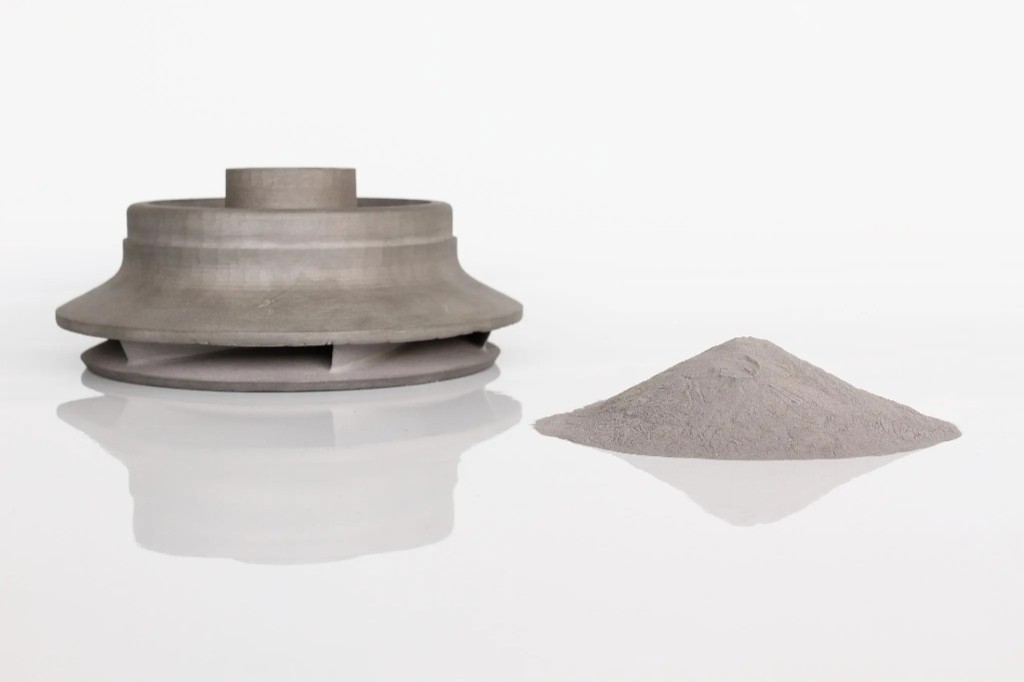
AIHFABS SLS 3D printing services fuse engineering-grade SLS plastics into durable, self-supporting parts.
Create a quoteMaterials that sit next to this article. Check the card, then upload CAD.
Process, finish, and file notes from the shop — not a marketing blog.
Company, payment, shipping, and process answers by topic.
Recommended answers about AIHFABS, technologies, materials, pricing, privacy, and file preparation.
Questions about 3D printing processes, materials, MOQ, samples, and custom projects.
AIHFABS quotes custom 3D printing and CNC machining from a CAD upload. Compare SLA, SLS, MJF, SLM, FDM, DLP, milling, and turning, then add finishing such as vapor smoothing, dyeing, anodizing, polishing, or powder coating in the same order.
Instant quoting is built for prototypes, jigs, housings, and small-batch production. You see material, process, quantity, and lead time together, which keeps engineering changes from turning into a new round of supplier emails.
You can review material, process, quantity, and lead time together, so engineering changes do not turn into another round of supplier emails.
Upload STL, STEP, and other common CAD formats for an online quote.
Compare 3D printing technologies and CNC options on the same part.
Select polymers or metals, then add 3D Plus hardware finishing when needed.
Review price and lead time before checkout, or request a manual quote for special specs.
If this page describes a process, industry, or sample part you want to reproduce, start from the upload flow and match technology plus finishing to your drawing.
We use cookies to personalize your experience. By using this site, you agree to our Privacy Policy
Accept
Leave A Comment