
Machining accuracy
Standard ±0.01 mm; high precision down to ±0.005 mm


Subtractive CNC milling for high-precision parts with complex geometry — from one-off prototypes to production volumes.
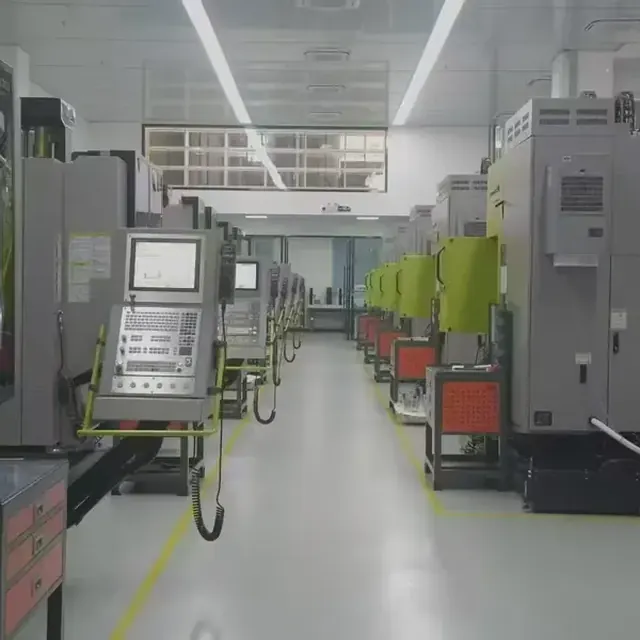
CNC Milling Services use computer numerical control (CNC) mills to cut workpieces with rotating tools according to programmed toolpaths. As a subtractive process, milling produces high-precision parts with complex geometry and is widely used from single prototypes through high-volume production.
| Type | Characteristics | Typical Uses |
|---|---|---|
| 3-Axis Milling | Lowest cost, simple to run; accuracy down to about ±0.05 mm | Basic features such as flats, slots, and holes |
| 4-Axis Milling | Adds a rotary axis for angled features | Medium-complexity parts such as multi-angle holes and cams |
| 5-Axis Milling | Five-axis motion machines multiple faces in one setup | High-precision parts such as turbine blades, impellers, and complex surfaces |
3-axis and 3+2 solutions suit cost-sensitive simple parts; 5-axis targets high-complexity needs in aerospace, medical, and similar industries.
Standard ±0.01 mm; high precision down to ±0.005 mm
Finest finishes down to Ra 0.2 μm
Up to 4000 × 1500 × 600 mm on 5-axis capacity
From about 5 × 5 × 5 mm
Simple parts 1–3 days; complex 3–7 days; batch 5–15 days
After machining, common secondary finishes include:
Improves corrosion resistance and hardness on aluminum; multiple colors available
Uniform matte texture
Thick, durable protective coating
Improves wear resistance and appearance
Ultra-hard vacuum coating
Improves surface smoothness and cosmetics
Passivation, electrophoresis, silk screening, laser engraving, and more
| Industry | Typical Parts |
|---|---|
| Aerospace | Turbine blades, structural parts, brackets, housings |
| Automotive | Engine blocks, gearbox housings, custom components |
| Medical devices | Surgical instruments, orthopedic implants, dental restorations |
| Electronics & telecom | Enclosures, heat sinks, connectors, 5G base-station parts |
| Mold making | Injection molds, die-casting molds, stamping dies |
| Robotics / automation | Joint parts, precision structures, transmission components |
| Energy | Drilling components, wind-turbine parts |
| Comparison | CNC Milling | CNC Turning |
|---|---|---|
| Motion mode | Tool rotates; workpiece is fixed or moves slightly | Workpiece rotates; tool is largely fixed |
| Applicable shapes | Complex prismatic shapes, polyhedra, and contoured surfaces | Cylindrical and rotational parts |
| Typical parts | Housings, brackets, molds | Shafts, sleeves, bolts |
We use cookies to personalize your experience. By using this site, you agree to our Privacy Policy
Accept