Lead time
From 48 hours

3D Printing
Projector-cured resin for crisp details and efficient small-part runs.
Digital Light Processing (DLP) solidifies an entire layer of photopolymer at once using a projected image. Compared with point-by-point laser curing, DLP often delivers faster layer times on compact parts while maintaining high XY resolution.
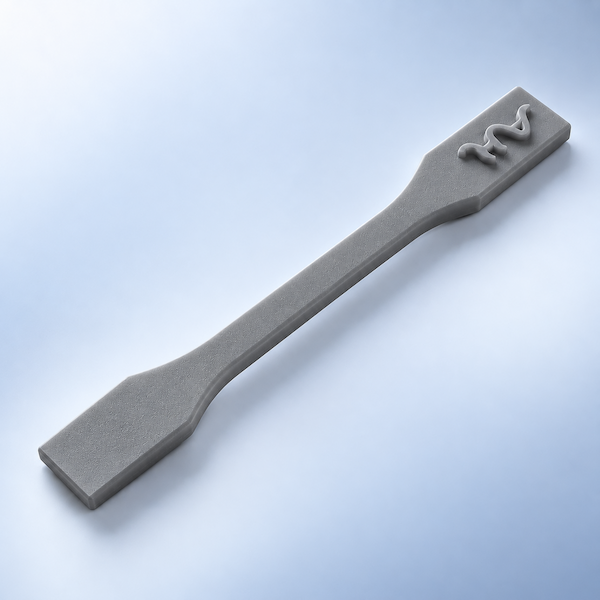
Digital Light Processing cures a whole resin layer in one projected image instead of tracing it with a laser. Compact, detailed parts and small batches therefore leave the vat faster than a point-by-point SLA scan on the same plate.
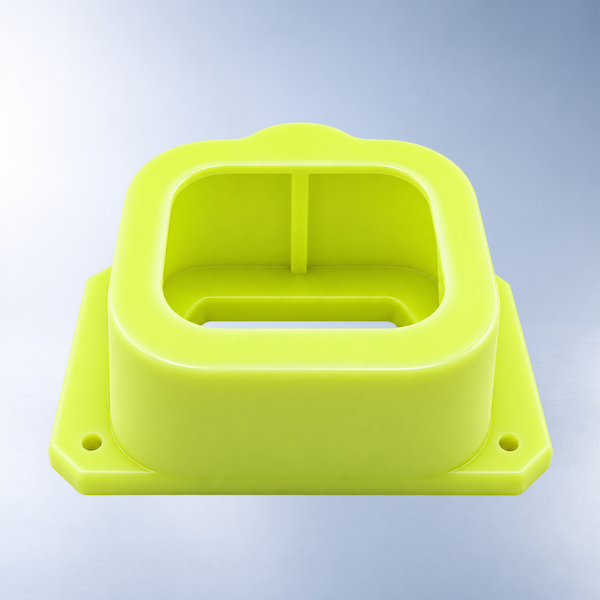
AIHFABS quotes DLP for jewelry-scale detail, small housings, and repeat visual lots. If you need a very large resin platform, SLA may still be the better envelope.
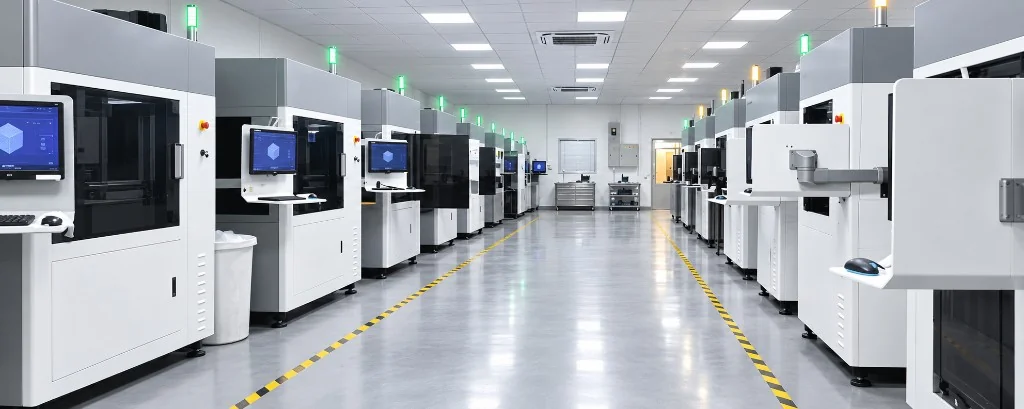
XY sharpness is high; the live envelope depends on the projector cell assigned to the job.
From 48 hours
±0.2 mm on supported geometry
Varies by machine; typical desktop-to-mid format plates
Smooth as-built; vapor polish or coating available
Required on overhangs
High-resolution modeling resins plus tough, flexible, and qualified biocompatible grades.
As-cured skins are already smooth. Tinting and light sanding are the usual extras.
Default deliverable after IPA wash and UV. Support scars dressed on request.
Light sanding on flats and optional tint for presentation models.
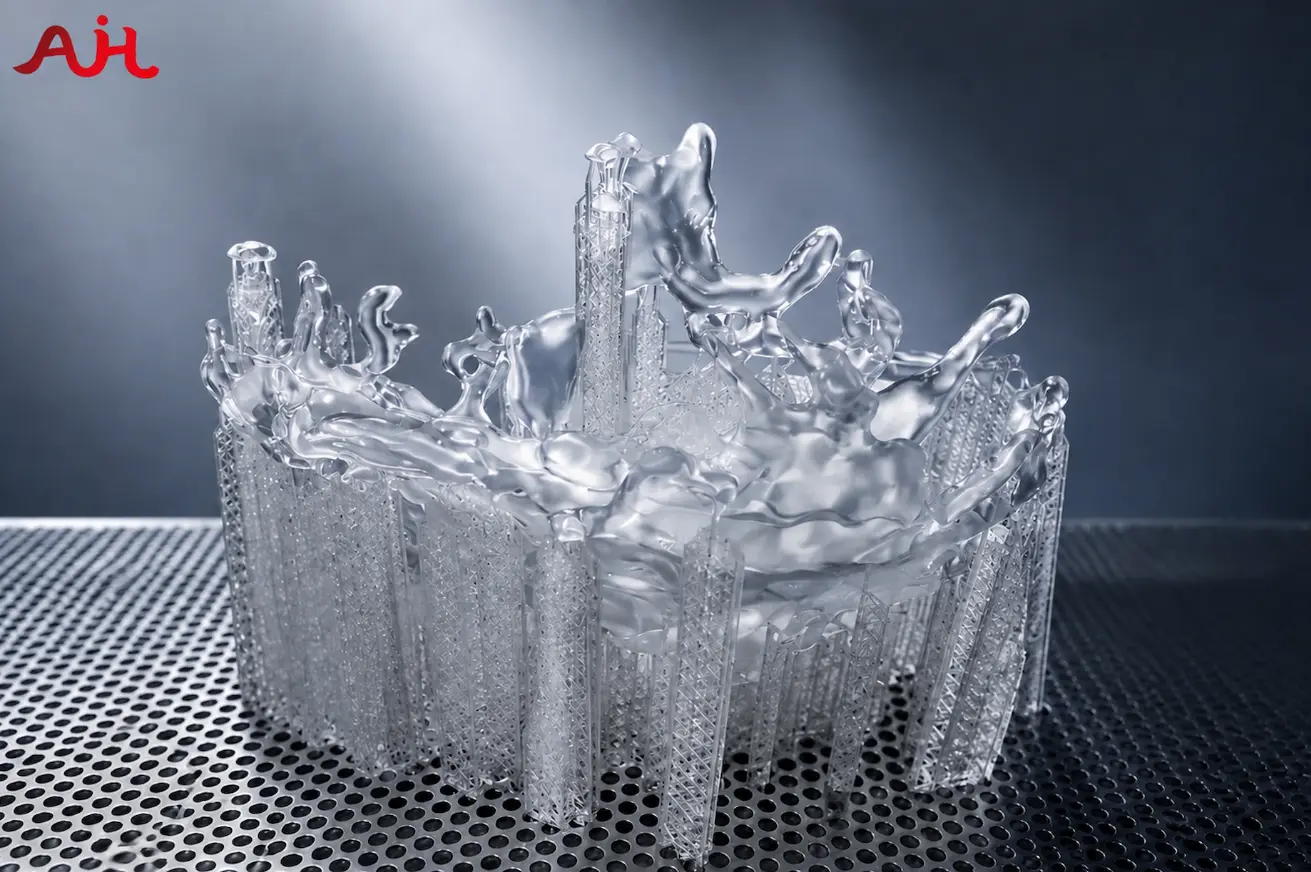
Coat on transparent or high-gloss show parts after the post-cure.
DLP and LCD both flash a full layer. DLP uses a projector; LCD uses a masked LED array.
| Process | Lead time | Tolerance | Pricing |
|---|---|---|---|
| Selective Laser Melting (SLM)Metal | From 5 business days (express options where available) | ±0.3 mm or ±0.3% (whichever is greater), tighter after machining | Instant quote · typical metal part from $90 |
| Stereolithography (SLA)Resin | Quoted with your CAD upload | Instant quote · typical resin part from $18 | |
| Digital Light Processing (DLP)Resin | From 48 hours | ±0.2 mm on supported geometry | Instant quote · typical resin batch from $20 |
| Liquid Crystal Display (LCD)Resin | From 48 hours | ±0.2 mm on supported geometry | Instant quote · typical resin part from $16 |
| Selective Laser Sintering (SLS)Plastic powder | From 48 hours express; 72 hours / 5 days standard tiers | ±0.3 mm or ±0.3% | Instant quote · typical nylon part from $28 |
| Multi Jet Fusion (MJF)Plastic powder | From 48 hours express; standard 72 hours / 5 days | ±0.3 mm or ±0.3% | Instant quote · typical PA12 part from $25 |
| Fused Deposition Modeling (FDM)Thermoplastic filament | From 24–48 hours depending on size | ±0.5 mm or ±0.5% on FDM-appropriate geometry | Instant quote · typical prototype from $12 |
Each slice is projected onto the resin vat, curing a full layer simultaneously.
The build plate rises and fresh resin flows beneath for the next exposure.
Supports anchor delicate features until the green part is washed and UV post-cured.
Optional tinting, sanding, or clear coating completes the visual specification.
Parts are nested for a single exposure time that still holds the smallest feature. Over-packing a plate can soften edges.
Wash, post-cure, and support removal follow the same resin SOP as SLA. Biocompatible grades need a qualified resin note on the PO.
Think in pixels and minimum cure thickness, then nest the lot.
| Feature | Recommended practice |
|---|---|
| Min feature | Stay above the resin’s published minimum; knife edges often fail to cure. |
| Nesting | Small batches share a plate — keep a common Z height when you can. |
| Environment | Tell us about UV, chemicals, or skin contact so we pick a durable grade. |
| Supports | Overhangs need anchors; mark faces that cannot show witness marks. |
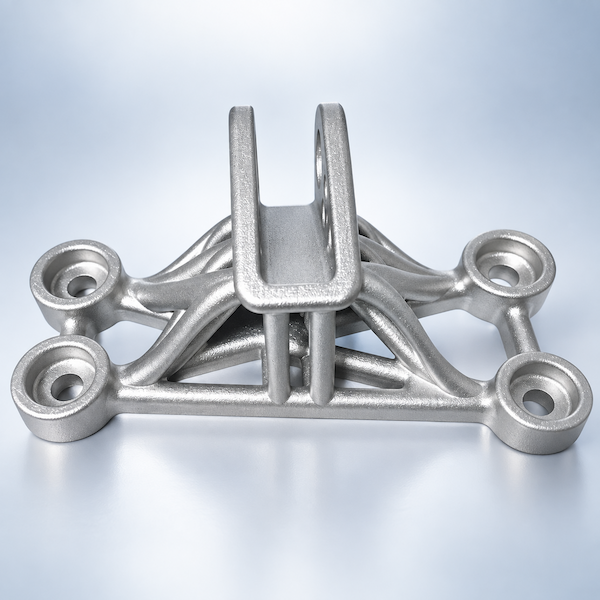
Selective Laser Melting (SLM) is a powder-bed metal additive process. A high-power laser scans each cross-section of your CAD model, melting metal powder that solidifies into a dense part.
Full process details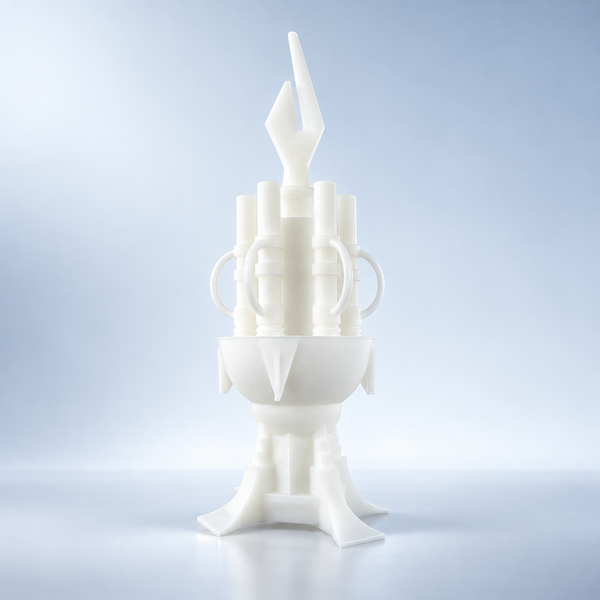
Stereolithography (SLA) cures liquid photopolymer with a precision UV laser, building parts layer by layer.
Full process details
Liquid Crystal Display (LCD) printing — also called MSLA — cures a full layer of photopolymer at once.
Full process detailsSLA draws with a laser. DLP projects a full layer, which is usually faster on dense small-part plates.
Yes — high XY resolution and castable resins are a common DLP route.
About ±0.2 mm on supported geometry, similar to other vat-photopolymer processes.
On project qualification only. Name the standard and the contact type on the quote.
Many DLP lots leave from 48 hours after orientation is approved.
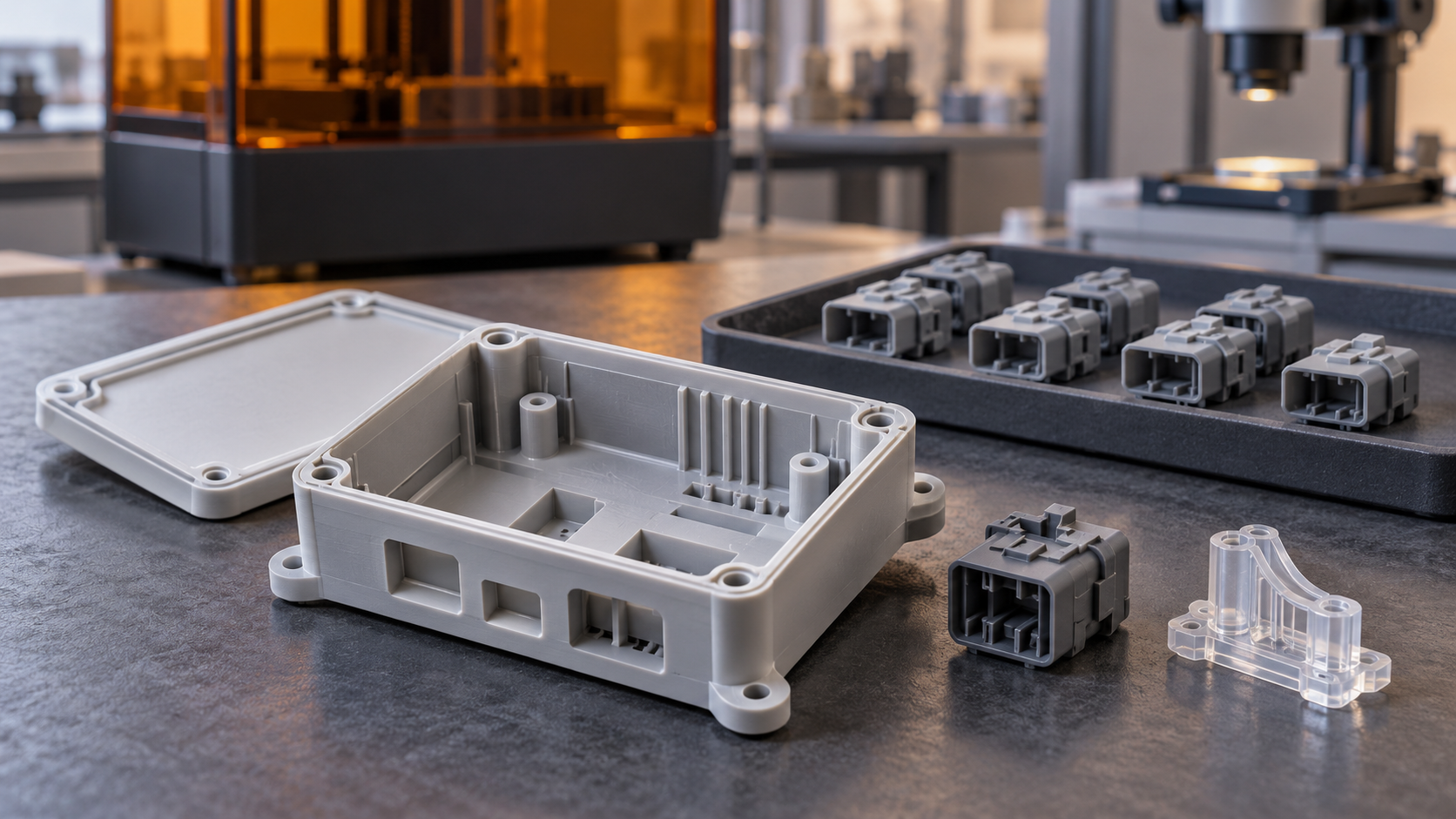
This supplier selection guide compares 5 verification areas and 8 procurement checks for ±0.2 mm DLP resin parts with 48-hour lead-time claims.
Full process details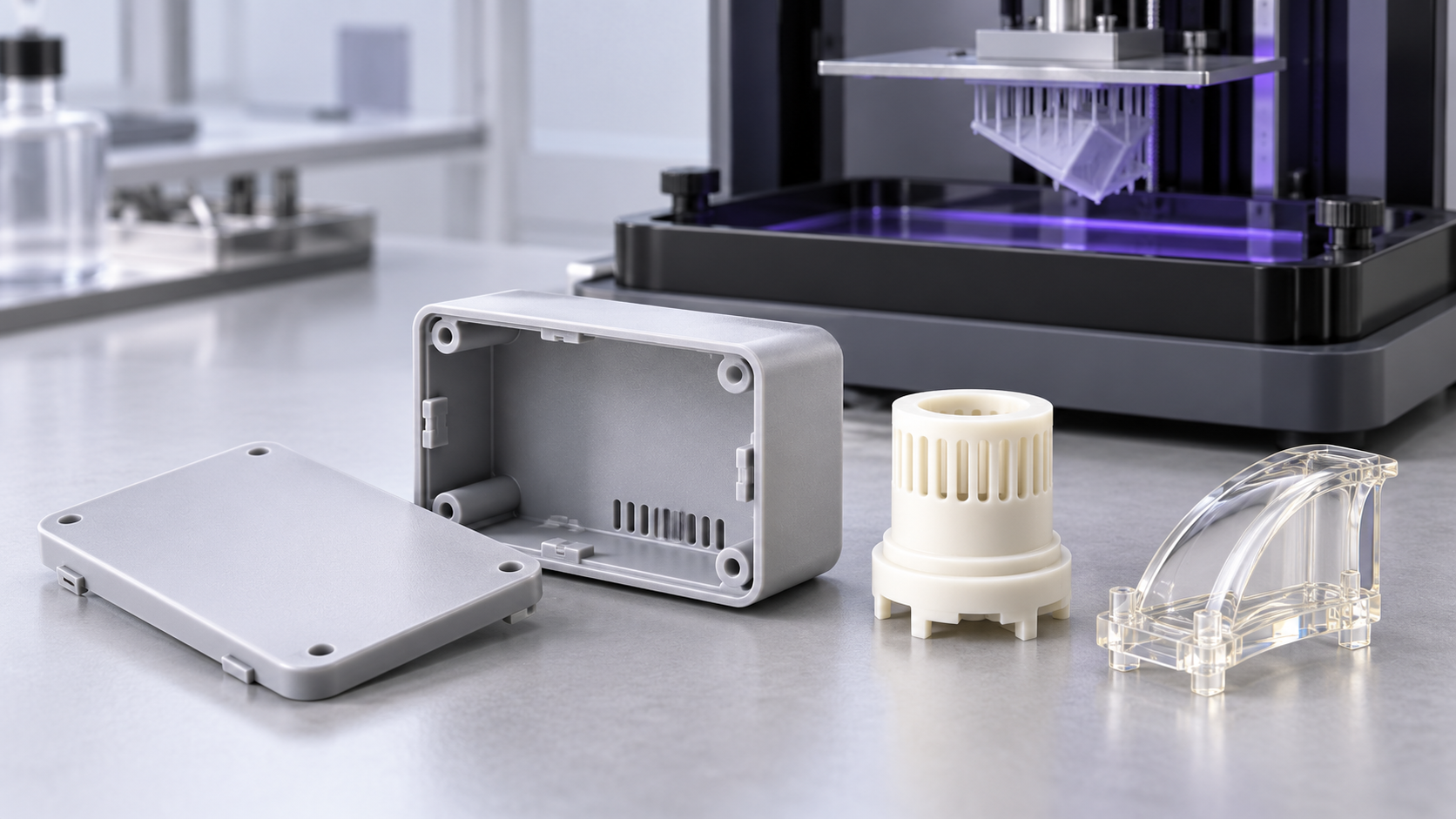
Learn how DLP whole-layer projection creates detailed small resin prototypes, with insights into surface finish, exposure uniformity, and material limits.
Full process details
This in-depth technical comparison examines the two dominant resin-based 3D printing technologies — Stereolithography (SLA) and Digital Light Processing (DLP) — to help industry pr
Full process details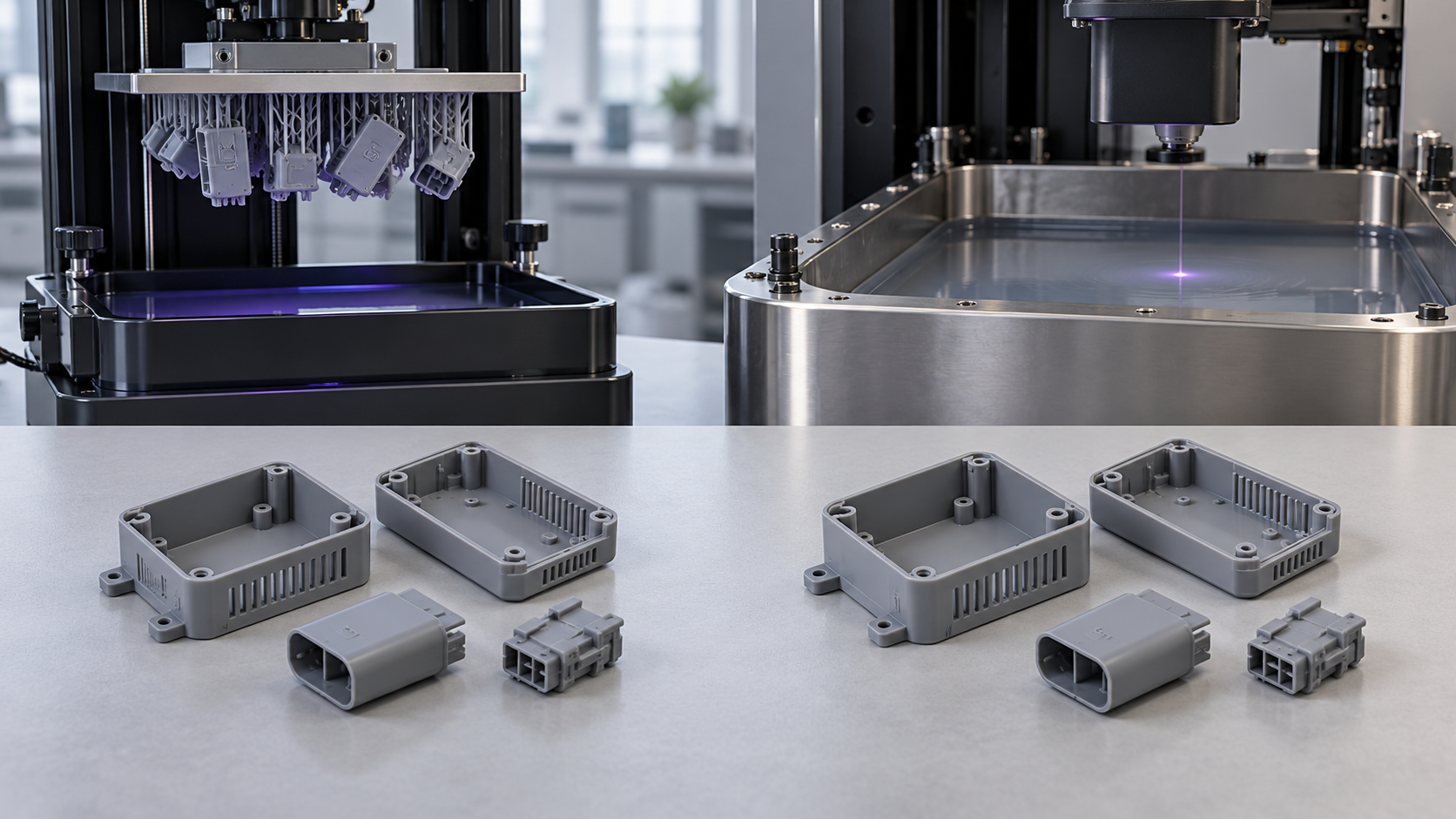
Compare DLP and SLA resin 3D printing for small, detailed prototypes. See how exposure methods, batch layouts, and finishing affect process selection.
Full process details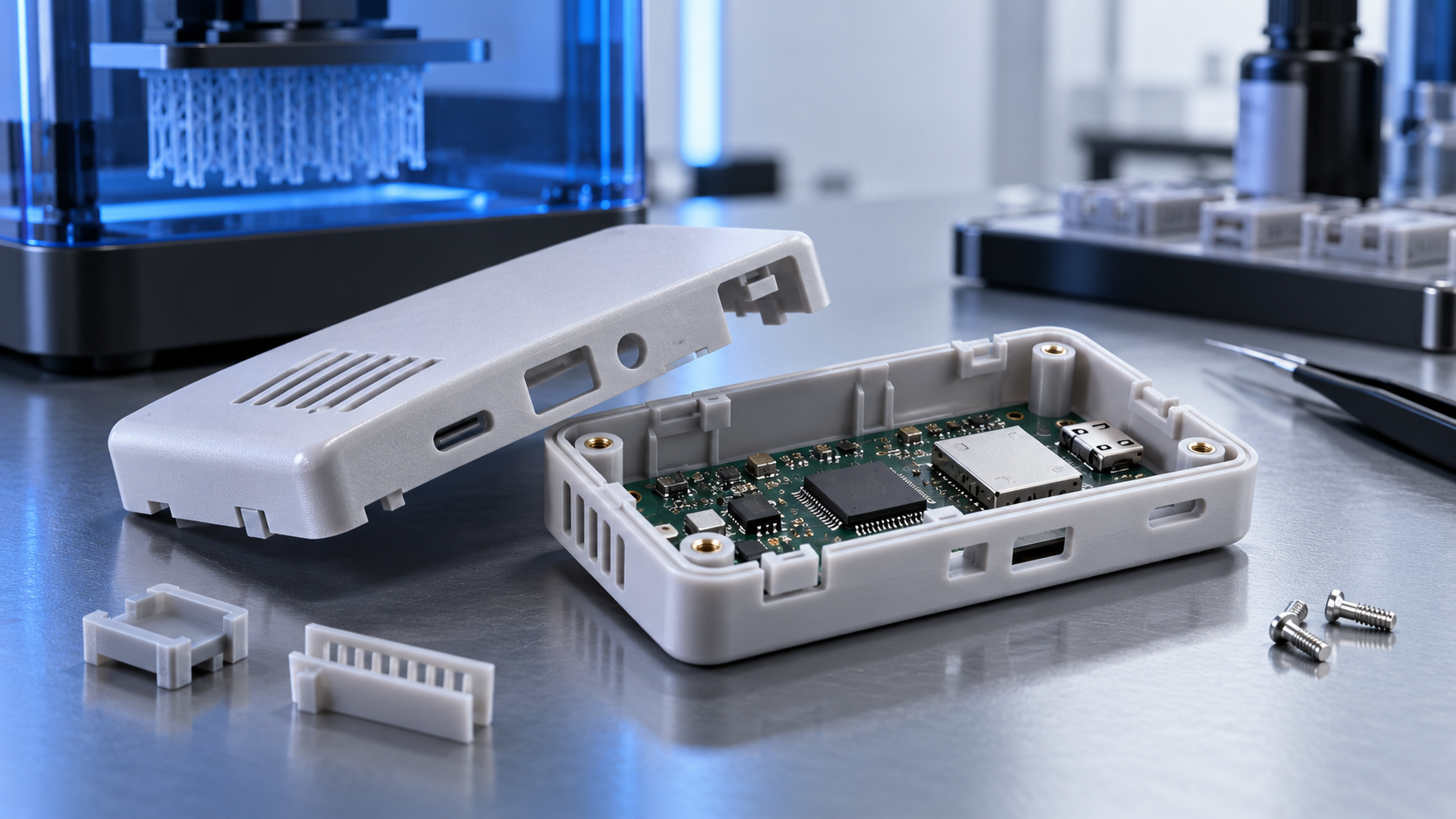
Guide to DLP resin printing precision for compact electronic enclosures and snap-fit prototypes. Learn ±0.2 mm tolerance, material selection, support strategy, and assembly validat
Full process details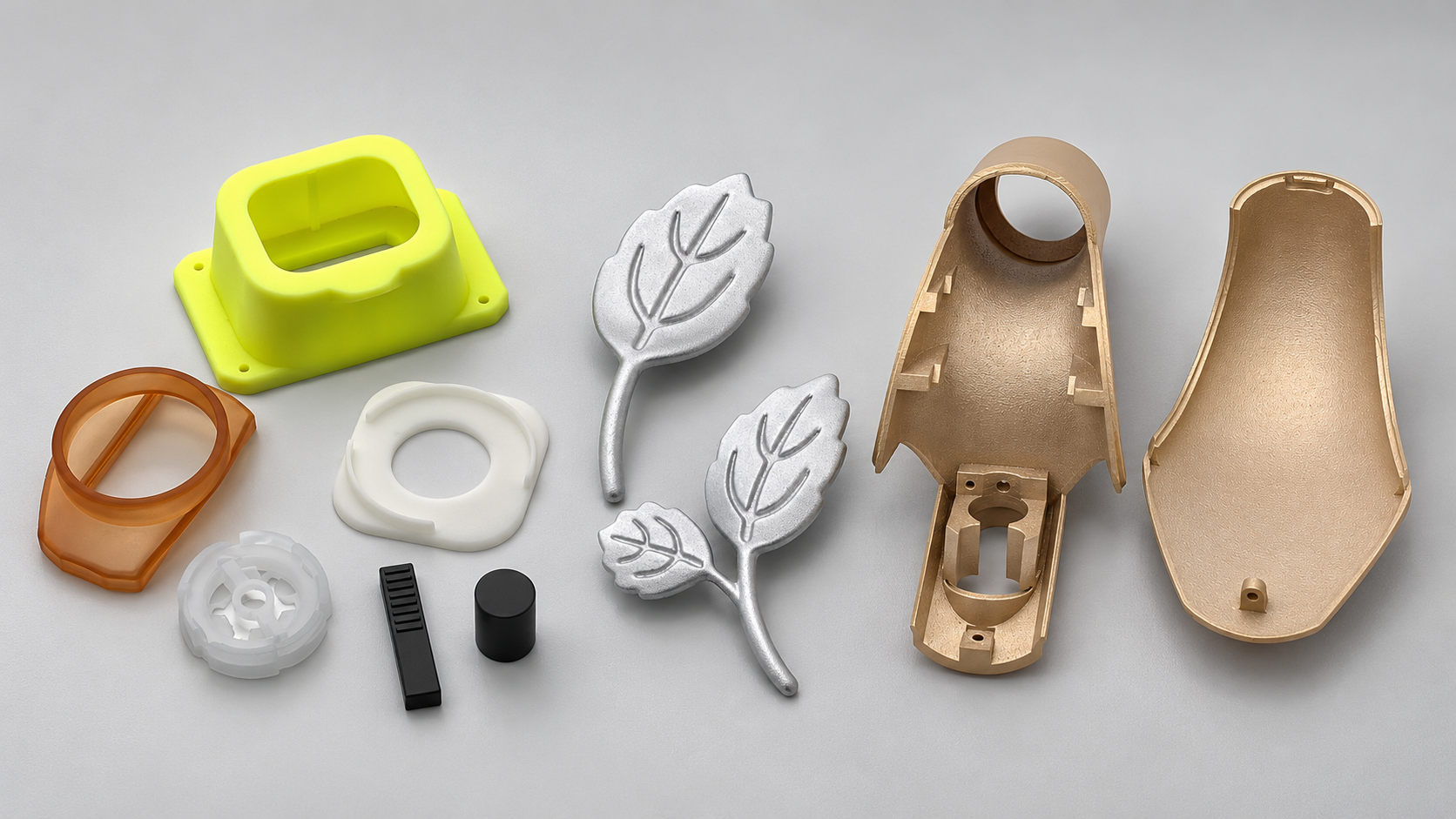
Compare SLA with DLP, LCD, FDM, SLS, MJF, SLM, and CNC machining. Shortlist processes by material, geometry, finish, cost, and your part's intended use.
Full process detailsAIHFABS quotes custom 3D printing and CNC machining from a CAD upload. Compare SLA, SLS, MJF, SLM, FDM, DLP, milling, and turning, then add finishing such as vapor smoothing, dyeing, anodizing, polishing, or powder coating in the same order.
Instant quoting is built for prototypes, jigs, housings, and small-batch production. You see material, process, quantity, and lead time together, which keeps engineering changes from turning into a new round of supplier emails.
You can review material, process, quantity, and lead time together, so engineering changes do not turn into another round of supplier emails.
Upload STL, STEP, and other common CAD formats for an online quote.
Compare 3D printing technologies and CNC options on the same part.
Select polymers or metals, then add 3D Plus hardware finishing when needed.
Review price and lead time before checkout, or request a manual quote for special specs.
If this page describes a process, industry, or sample part you want to reproduce, start from the upload flow and match technology plus finishing to your drawing.
We use cookies to personalize your experience. By using this site, you agree to our Privacy Policy
Accept