Best for
Large sheets and soft materials

CNC Machining
Large-format CNC routing for sheet goods and soft materials — cutting, engraving, drilling, and shaping at speed.
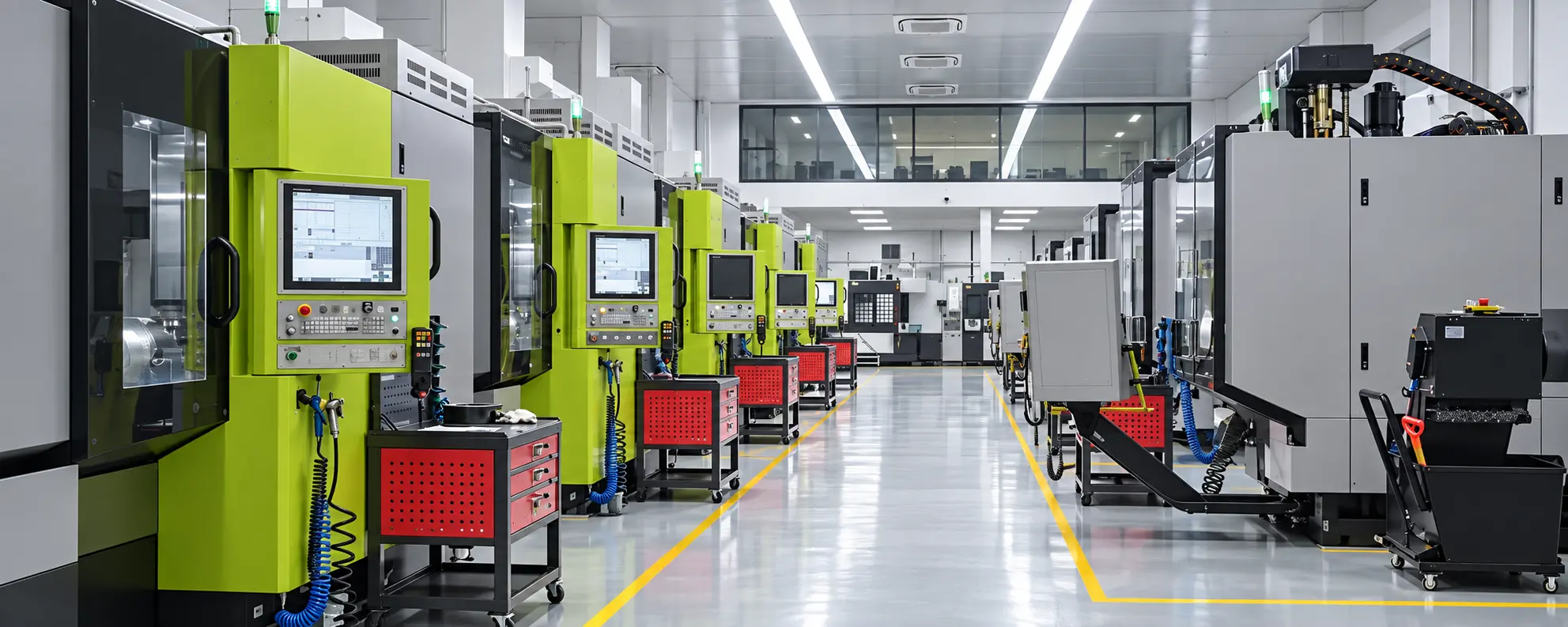
CNC Routing Services use computer numerical control (CNC) routers with high-speed rotating bits to cut, engrave, drill, and shape materials. As a subtractive process, routing is especially strong on large-format panels and soft materials, and is a core method for woodworking, advertising signage, and furniture manufacturing.

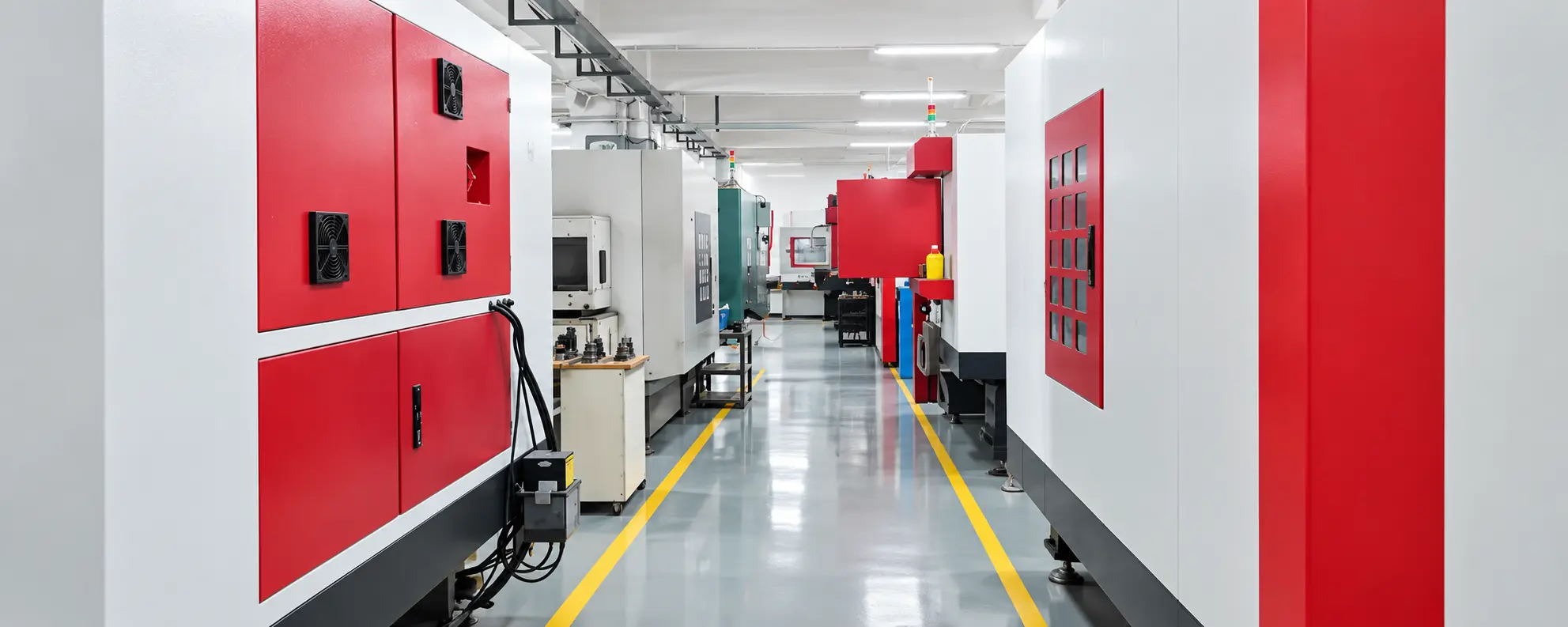
A CNC router is a high-speed spindle on a large table. It cuts, engraves, and drills sheet goods — acrylic, wood, foam, aluminum plate, and many composites — faster than a metal-cutting mill would on the same panel.
AIHFABS quotes routing for signs, furniture parts, enclosure blanks, and nested sheet jobs. Hardened steel and titanium still belong on a mill, not on a router.
Routing is built for area and speed, not for micron metal tolerances.
Large sheets and soft materials
Medium precision (~±0.025 mm class)
About 94%–97% with AI nesting
From 2–4 business days
Hardened steel, titanium — use CNC milling
Sheet plastics, wood-based panels, foam, ACM, and light aluminum plate.
Edges can be left as-cut, flame-polished on acrylic, or painted after sanding.
Cutter texture on the edge. Fine for hidden furniture parts and internal panels.
Acrylic edges can be polished; wood and MDF are sanded before paint or laminate.
Color, vinyl, or laminate applied after the nest is broken out of the sheet.
Use routing for large soft sheets. Use milling when the metal is thick or the tolerance is tight.
| Process | Lead time | Tolerance | Pricing |
|---|---|---|---|
| CNC Machining ServicesMetals & plastics | From 1–5 business days depending on complexity and finish | ±0.05 mm standard; tighter on request with drawing callouts | Instant quote · typical prototype from $45 |
| CNC Milling ServicesMetals & plastics | Simple 1–3 days; complex 3–7 days; batch 5–15 days | ±0.01 mm standard; ±0.005 mm high precision | Instant quote · typical prototype from $40 |
| CNC Turning ServicesMetals & plastics | Simple 1–3 days; complex 7–10 days | ±0.01 mm standard; ±0.001–0.002 mm high precision | Instant quote · typical prototype from $35 |
| CNC Routing ServicesPlastics & composites | From 2–4 business days | Medium precision (~±0.025 mm class) | Instant quote · typical panel job from $30 |
| 5-Axis CNC MachiningMetals & plastics | From 3–7 business days depending on complexity | ±0.02–0.05 mm on critical features when specified | Instant quote · typical prototype from $80 |
| Precision Machining ServicesMetals & plastics | From 3–8 business days (complexity dependent) | ±0.005–0.01 mm; Ra 0.4–1.6 μm; CPK ≥ 1.33 | Instant quote · quoted to drawing / inspection grade |
| Large Part CNC MachiningMetals & plastics | Quoted per project (fixturing and logistics driven) | Around ±0.025 mm on critical features; large spans project-dependent | Project quote · fixturing and logistics driven |
| Swiss CNC MachiningMetals & plastics | From 3–7 business days; faster on repeat batches | ±0.005 mm standard; down to ±0.0025 mm when specified | Instant quote · most economical in batch runs |
Prepare 2D vectors (DXF/DWG/SVG) or 3D models (STL/STEP).
Upload for quote — typically within 12–24 hours.
CAM programming sets toolpaths, feeds, and depths.
Clamp, set tools, machine, then post-process and inspect.
Vectors (DXF/DWG) or solids are nested for yield. Kerf, grain, and tab strategy are set before the sheet is clamped.
First-off profiles are checked against the nest. Cosmetic faces should be marked so the show side stays up.
Design for the cutter diameter and the sheet, not for a 3-axis metal mill.
| Feature | Recommended practice |
|---|---|
| Kerf | Leave room for tool diameter on tight nests and mating profiles. |
| Tabs | Add tabs or onion skins if parts must stay in the sheet during cutting. |
| Grain / fiber | Mark wood grain or composite fiber direction on the drawing. |
| Inside corners | Inside corners will have the bit radius unless you add a dog-bone or T-bone. |
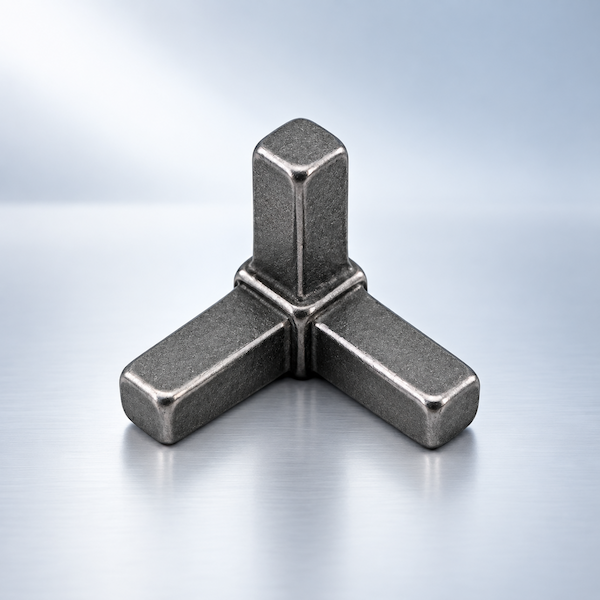
CNC machining removes material from solid stock with computer-controlled mills, lathes, and multi-axis centers.
Full process details
CNC Milling Services use computer numerical control (CNC) mills to cut workpieces with rotating tools according to programmed toolpaths.
Full process details
CNC Turning Services use computer numerical control lathes to remove material while the workpiece rotates at high speed and the cutting tool feeds along a set path.
Full process detailsClean 2D vectors (DXF, DWG, SVG) or a simple solid. Tell us material thickness and which face is cosmetic.
Light plate and ACM, yes. Thick structural aluminum or steel should go to CNC milling.
Plan around a medium-precision class of about ±0.025 mm. Tighter hole patterns belong on a mill.
Yes. Nesting typically recovers about 94–97% of the sheet when the profiles allow it.
Many panel jobs leave in 2–4 business days once material is on the table.
AIHFABS quotes custom 3D printing and CNC machining from a CAD upload. Compare SLA, SLS, MJF, SLM, FDM, DLP, milling, and turning, then add finishing such as vapor smoothing, dyeing, anodizing, polishing, or powder coating in the same order.
Instant quoting is built for prototypes, jigs, housings, and small-batch production. You see material, process, quantity, and lead time together, which keeps engineering changes from turning into a new round of supplier emails.
You can review material, process, quantity, and lead time together, so engineering changes do not turn into another round of supplier emails.
Upload STL, STEP, and other common CAD formats for an online quote.
Compare 3D printing technologies and CNC options on the same part.
Select polymers or metals, then add 3D Plus hardware finishing when needed.
Review price and lead time before checkout, or request a manual quote for special specs.
If this page describes a process, industry, or sample part you want to reproduce, start from the upload flow and match technology plus finishing to your drawing.

We use cookies to personalize your experience. By using this site, you agree to our Privacy Policy
Accept