Cosmetic review
Identify the show faces and expected finish. A polished resin model may be ideal for a design review without representing the final production material.

SOLUTIONS / BUILD / VALIDATE
AIHFABS rapid prototyping
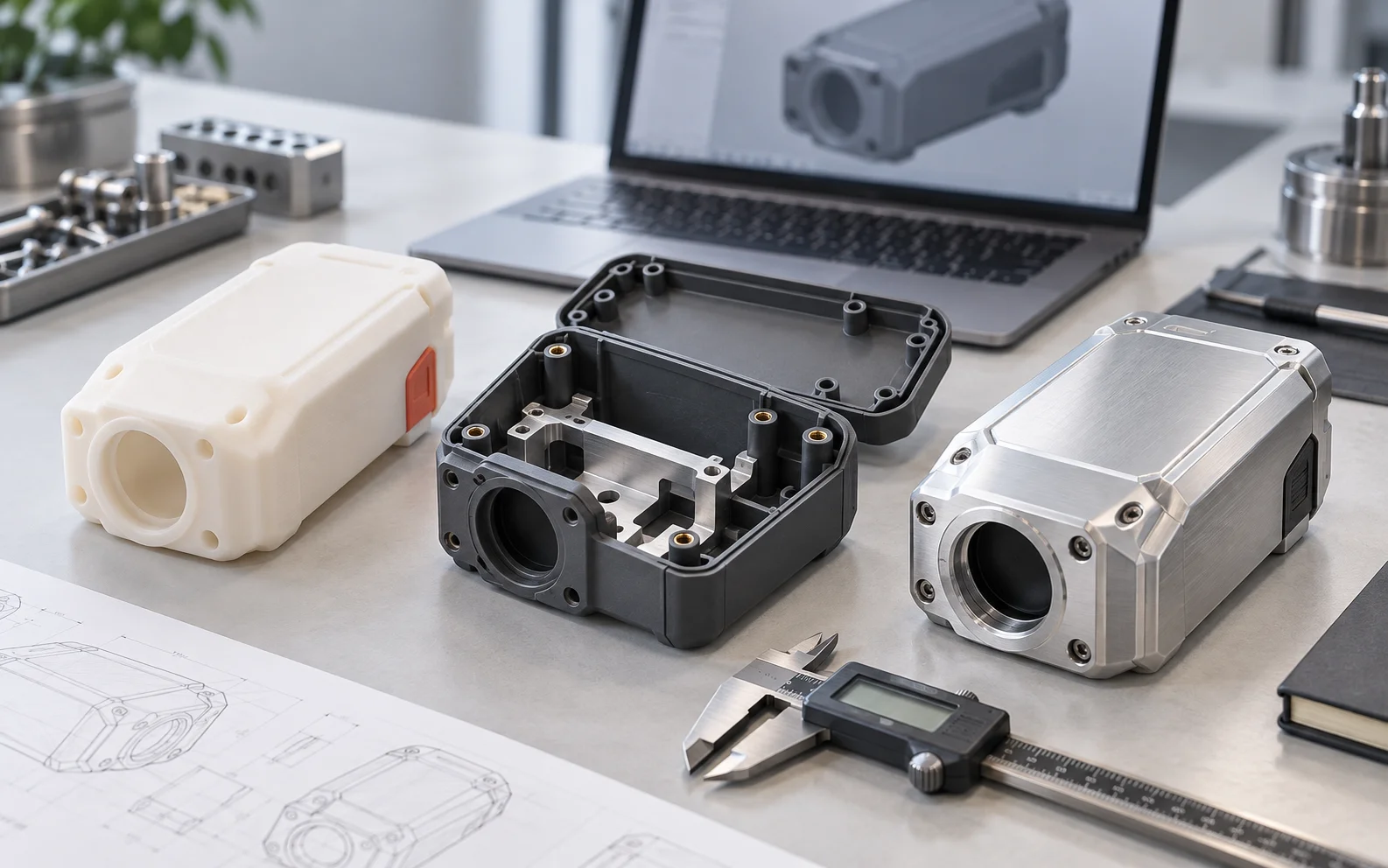
Use AIHFABS to move from a CAD revision to a testable part. Compare appearance models, fit checks and functional prototypes before committing to a production route.
TEST BEFORE YOU COMMIT
A presentation model and a load-bearing test part answer different questions. AIHFABS helps you start with the purpose of the build.
| Test objective | Processes to review | What to validate |
|---|---|---|
| Appearance & presentation | SLA / DLP resin printing | Visible surfaces, small details, color and finishing requirements. |
| Fit & assembly | SLS / MJF nylon or CNC machining | Mating clearances, fastener access and dimensional interfaces. |
| Functional evaluation | CNC, metal printing or a suitable engineering polymer | Material properties, load direction and the actual test environment. |
| Early form studies | FDM printing | Overall size, ergonomics and iteration cost before detailed refinement. |
FROM CAD TO A USEFUL TEST
Keep the decision you need to make visible throughout the prototype order.
Send the model, required quantity and intended test. Add a drawing for critical dimensions and note surfaces that must look right.
Review material, orientation, tool access, supports and finishing. Do not assume that every prototype process produces the same surface or strength.
Check fit with its mating components and record test conditions. Compare the result with the requirement, rather than simply approving the appearance.
Release a new revision for changes. When the design stabilizes, carry the accepted requirements into a pilot or production discussion.
BUILD THE RIGHT SAMPLE
A useful prototype is one you can evaluate against a specific question.
Identify the show faces and expected finish. A polished resin model may be ideal for a design review without representing the final production material.
Describe the load, temperature and contact conditions. Printed orientation and material choice matter when a sample will be stressed or repeatedly assembled.
Save the drawing revision, material and finishing notes with the test outcome. A successful prototype does not automatically qualify a repeat manufacturing process.
FROM THE AIHFABS BLOG
Practical design, manufacturing and project planning guides for your next build.
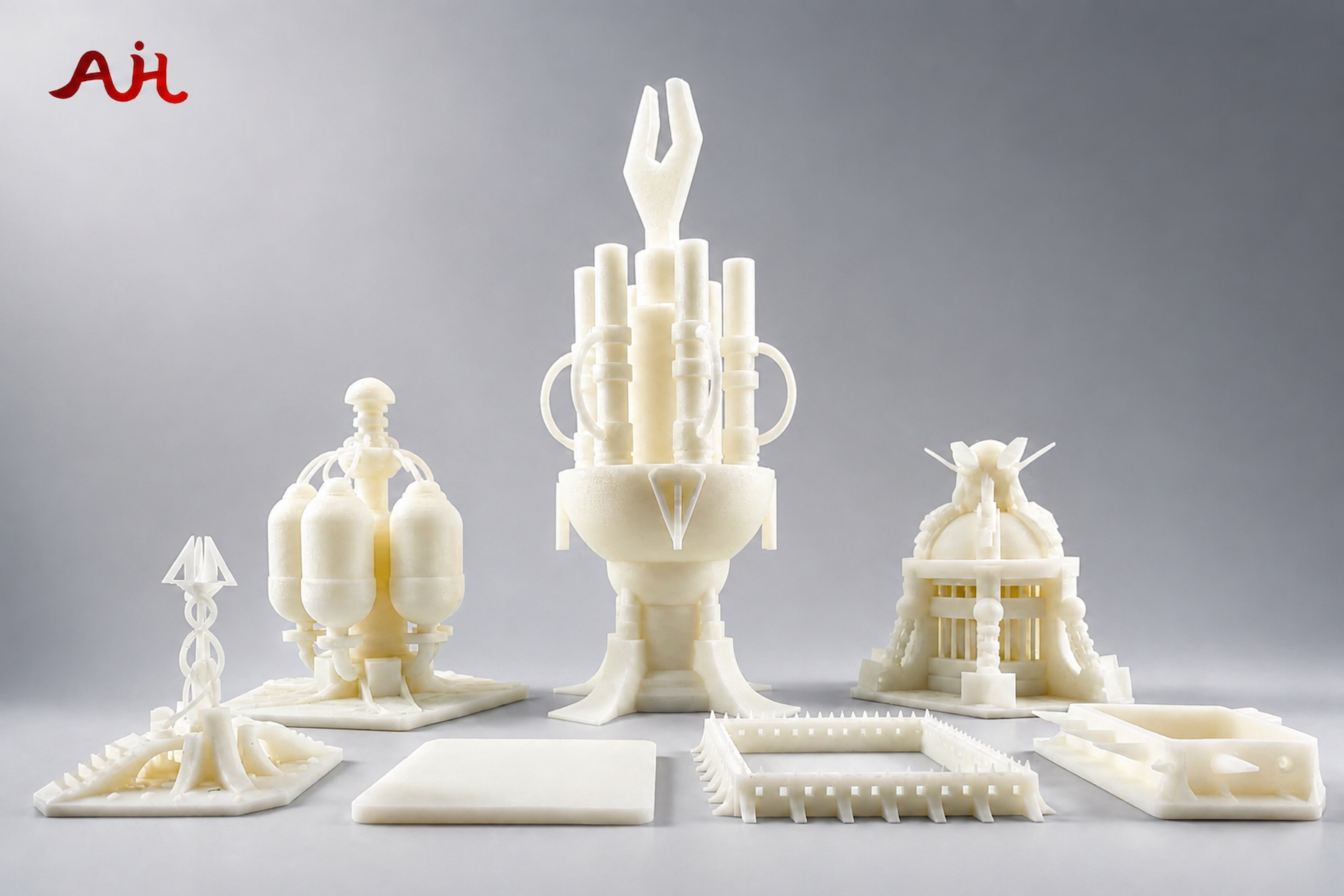
This in-depth technical comparison examines the two dominant resin-based 3D printing technologies — Stereolithography (SLA) and Digital Light Processing (DLP) — to help industry pr
Why this article: Compare resin processes when detail and surface finish drive the prototype.
Read article →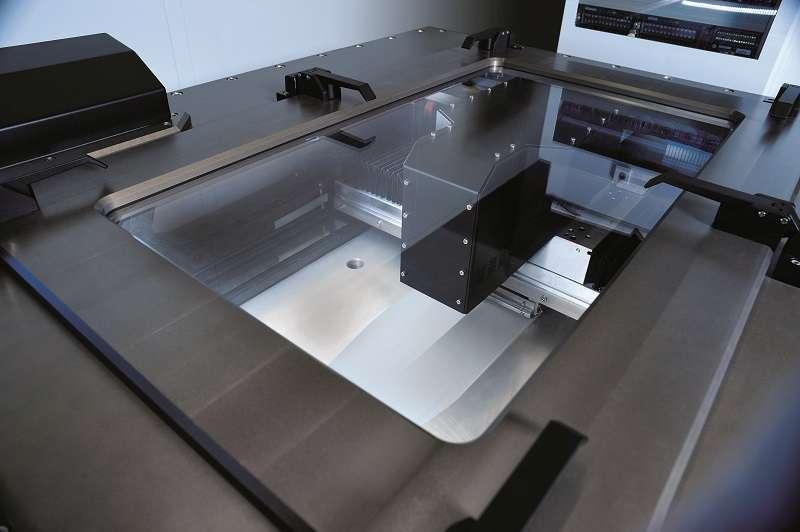
This comprehensive guide explores the most critical material choices for 3D-printed miniature production, covering photopolymer resins (standard, tough, castable, and flexible), FD
Why this article: Review material trade-offs for small, detailed models.
Read article →Upload your model with the material, quantity and deadline for your next test.

We use cookies to personalize your experience. By using this site, you agree to our Privacy Policy
Accept