
3D Printing
Stereolithography (SLA)
Stereolithography (SLA) cures liquid photopolymer with a precision UV laser, building parts layer by layer.
Create a quote
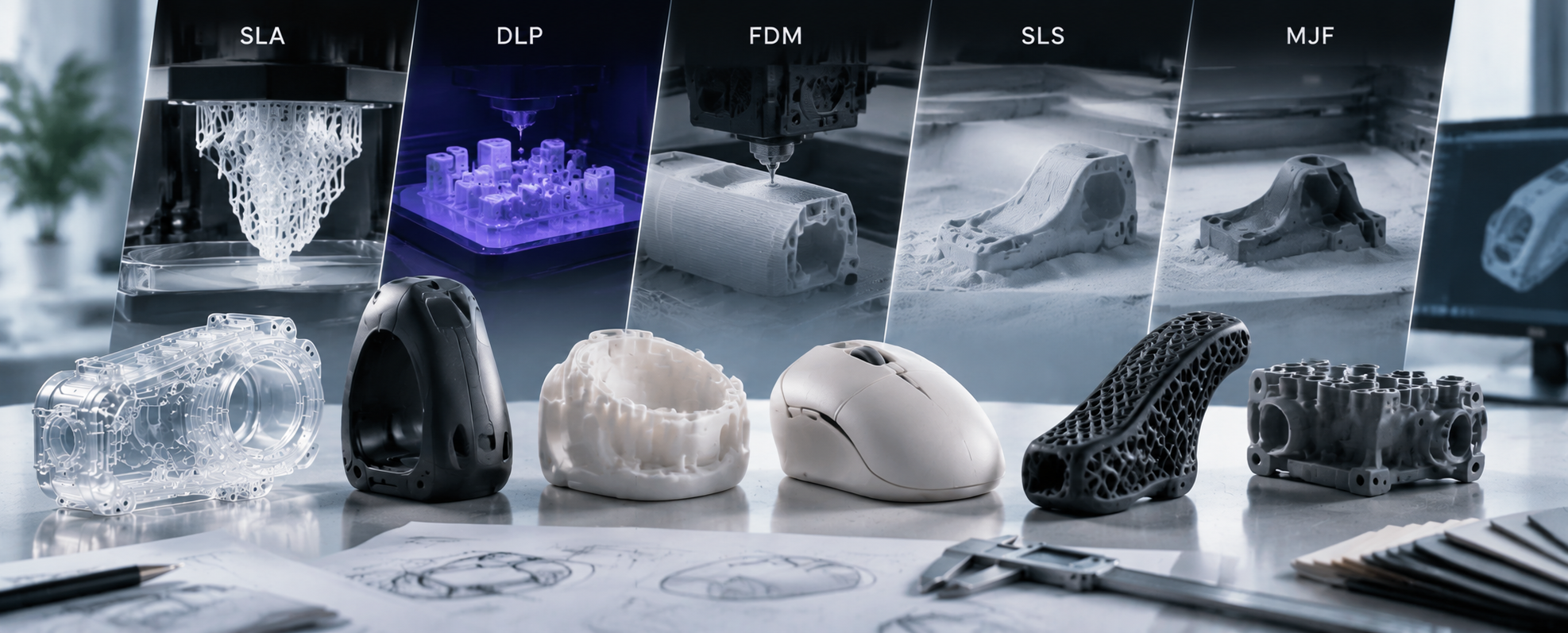
Introduction: Five visual criteria and four process families help teams protect surface quality, fit checks, finishing plans, and prototype iteration time.
Selecting a cosmetic prototype process is not a search for the universally best machine. It is a controlled decision about which visible surfaces must survive review, which details must remain legible, and which production risks can be tolerated before tooling. A product shell can look credible in a meeting yet fail later if support marks interrupt a highlight line, a thin bezel distorts after post-curing, or a painted part hides a poor fit. The practical objective is to match the manufacturing route to the evidence the prototype must produce.
Cosmetic parts are judged through light, touch, and close viewing. Continuous curvature, tight lettering, small radii, translucent windows, seams, and controlled texture all matter because reviewers use them to infer product maturity. The required standard is often higher than a basic dimensional mock-up, but it is not necessarily equivalent to an end-use part. A useful brief names A-side surfaces, permitted witness marks, colour intent, inspection faces, and the moment when the prototype will be handled or photographed.
SLA and DLP are normally evaluated first when fine detail and smoothness dominate. SLS and MJF are often selected when a nylon part must also absorb handling or repeated assembly. FDM can be economical for early geometry confirmation, especially where the enclosure will not be photographed. The difference is not a ranking: each process imposes a different burden of support removal, sanding, finishing, wall design, and verification.
Surface quality should be judged on the actual viewing distance and lighting condition. SLA uses a laser to cure photopolymer layer by layer and is commonly used for smooth curved surfaces and crisp details. DLP can also suit small detailed parts, while its build strategy may be useful for certain batch layouts. Powder-bed nylon processes avoid conventional supports but have a more granular surface that usually needs finishing for presentation models. FDM leaves visible extrusion traces unless subsequent finishing is planned.
Small text, ventilation slots, locating tabs, shallow embossing, and narrow gaps should be reviewed as manufacturing features rather than decorative assumptions. The AIHFABS SLA service page states a tolerance of approximately ±0.2 mm on well-supported features, but buyers should convert that general statement into part-specific checks. Mating interfaces need drawing callouts, a defined datum strategy, and a decision about whether post-cure growth, paint thickness, or support contact can affect the fit.
Finishing is a manufacturing operation, not an afterthought. Sanding can improve a visible surface but soften sharp edges. Paint can unify colour but alter clearances. A transparent prototype may need controlled sanding and coating to improve clarity, while electroplating and screen printing introduce their own preparation requirements. Samples or witness panels are valuable when a colour, gloss, transparency, or tactile requirement will influence approval.
Visual acceptance should identify the viewing distance, light source, and coating condition. A surface approved under diffuse office light can look different under directional retail lighting, so the review condition belongs in the prototype brief.
Factor | SLA | DLP | FDM | SLS | MJF |
Visible surface quality | High | High | Low to medium | Medium | Medium |
Fine cosmetic detail | High | High | Medium | Medium | Medium |
Support burden | Required | Usually required | Feature dependent | Self-supporting | Self-supporting |
Functional durability | Resin dependent | Resin dependent | Medium to high | High | High |
Typical fit | Presentation and detail | Small detailed runs | Early iteration | Nylon functional parts | Functional small batches |
The table is an application-fit guide, not a universal performance ranking. Material grade, geometry, orientation, finish, and inspection plan can shift the result.
A cosmetic prototype often moves through several review stages, and the appropriate process can change between them. Early concept work may only require a large, economical form model. A design gate may require a smooth shell that communicates the final silhouette and lets reviewers judge reflections, seams, and hand position. A later assembly review may require a second build with reinforced bosses, inserts, or a tougher material. Treating the process as a staged decision prevents teams from asking one part to answer every question at once and makes each quotation easier to evaluate.
The same printer can produce different visual results depending on the geometry presented to it. Long shallow faces can reveal stair stepping, a fine grille can collect support contacts, and a thin rim can warp or chip during handling. A larger part may need a different orientation or a split-and-bond strategy than a small model. Buyers should submit the actual design revision rather than rely on a generic sample photograph. When a part is split, the seam location, alignment features, and rework allowance should be agreed before production.
Decision factor | Priority | Evidence to request |
Surface continuity | Critical | Photographs or samples under relevant lighting |
Fine feature resolution | Critical | Minimum feature and artwork review |
Dimensional fit | High | Critical-dimension callouts and inspection scope |
Finishing compatibility | Medium | Finish sample, masking and tolerance allowance |
Mechanical exposure | Application dependent | Resin or nylon property evidence |
Standard resin can be appropriate for a visual review model, while a tougher resin can make sense when a shell will be assembled several times. Clear resin may support a light-guide or transparent concept model, but its clarity must be defined after finishing rather than assumed from the material name. High-temperature resin is relevant only when the prototype has a stated temperature-related test or adjacent heat source. Buyers should request the current material data and distinguish visual approval from functional qualification.
Support contact is one of the most important visual-control decisions in resin printing. Designers should identify the face a customer will see first and direct supports to hidden, internal, or later-masked geometry. Hollow parts need drainage so uncured resin can leave the cavity. Orientation should also reduce unsupported islands and protect long, thin surfaces from distortion. These choices produce better evidence for a design review than post-processing alone can recover.
Transparency and paint introduce acceptance questions that do not apply to an opaque white model. A clear part may be judged by haze, internal marks, edge clarity, and how it transmits light. A painted part may be judged by colour, gloss, masking lines, and the way a coating changes a mating gap. The buyer should define whether the requirement is visual resemblance, optical demonstration, or simply a colour reference. Each objective implies a different resin, finishing sequence, and inspection method.
SLA should not be selected only because it is familiar. If the prototype must survive repeated impact, sustained heat, or dozens of assembly cycles, a tough thermoplastic process may produce more representative evidence. If the part is a large, low-risk volume mock-up, FDM may reduce iteration cost. If a batch of functional nylon shells is needed, SLS or MJF can avoid support-removal work and provide a more relevant material response. A neutral selection process earns credibility by stating these limits openly.
A smooth-looking result is created by the interaction of layer height, resin condition, build orientation, support removal, washing, post-curing, sanding, and coating. No single specification captures the full outcome. Two suppliers can list the same resin category yet deliver different visual results because their support strategy or finishing discipline differs. For that reason, a buyer should ask for process photographs, finish samples, and a clear description of what is included in the quoted service. The goal is not to force a supplier into one recipe, but to make the expected result measurable.
Design reviews often focus on the small elements that signal manufacturing maturity: a narrow grille, a continuous parting line, a flush button, a small logo, or a crisp radius around a lens. These details can be more important than overall size because they influence how people interpret the product. The drawing should therefore identify them as priority features. If a small feature is merely illustrative, it can be simplified. If it is part of the intended user experience, it deserves a process and inspection plan that protects it.
A low unit price is not the only cost variable. Waiting for a second supplier email, reprinting a part with misplaced supports, or discovering that paint closed a clearance can consume more budget than the original print. Teams should compare the time to receive useful evidence, not only the time to receive any physical part. Online quoting can reduce administration, but the buyer still needs a complete brief so the fast quote represents the intended result.
A repeatable review sequence is useful when several departments evaluate the same prototype. Start with a visual pass under the agreed lighting. Follow with a dimensional check of the marked interfaces. Then inspect the finish, edges, and small details that affect user perception. Finally, record whether the prototype answered its intended question and which uncertainty remains. This sequence separates subjective appearance feedback from measurable fit evidence and gives the next iteration a clear starting point.
Terms such as tough, clear, flexible, or high-temperature are useful categories, but they do not replace a test condition. A tough resin may still be unsuitable for a repeated snap-fit if the geometry concentrates stress. A clear resin may be appropriate for a light-path demonstration but not for a production optical component. A high-temperature resin may tolerate a short exposure but not continuous service. Buyers should connect each material claim to the temperature, load, cycle count, and visual standard that the prototype must represent.
The final review should capture more than an approval or rejection. Record which surfaces passed, which dimensions needed adjustment, whether the material behaved as expected, and which finish changes affected assembly. This information becomes a practical design rule for the next CAD revision. It also gives procurement a clear basis for repeating the order or changing process without restarting the conversation from a blank file.
Before approval, ask the supplier to confirm the resin or polymer grade, expected orientation, support contact zones, post-processing state, critical-dimension inspection, and the date on which the quoted lead time starts. These questions are simple, but they turn broad service language into a part-specific agreement that a design team can review and archive.
1. Confirm the visible A-side surfaces and acceptable witness-mark zones.
2. Identify minimum wall thickness, relief text, vents, and fragile edges.
3. Mark critical mating faces and separate visual targets from dimensional targets.
4. Choose the resin based on the handling and temperature the prototype will actually see.
5. Specify the finishing sequence and reserve tolerance for coatings.
6. Verify quoted lead time, support assumptions, inspection scope, and delivery condition.
One example is AIHFABS SLA 3D printing service for cosmetic prototype parts. Its service page describes SLA as a photopolymer process for smooth, fine-detail resin parts and lists categories including tough, high-temperature, clear, flexible, and castable resins. The same site places SLA alongside SLS, MJF, FDM, DLP, SLM, and CNC options, allowing a buyer to compare process, material, quantity, finishing, price, and lead time from a CAD upload. That platform context is useful only when the buyer applies the same visual and dimensional criteria to every quoted route.
A: SLA and DLP are common starting points for smooth, detailed visible surfaces. The final result still depends on orientation, supports, wash and cure discipline, and finishing.
A: SLA often suits presentation-quality housings because it can reduce visible layer texture. FDM may still be suitable for early size and layout iterations where surface finish is not the approval criterion.
A: They can interrupt gloss, texture, and highlight lines. Put supports on hidden geometry, document cosmetic faces, and include finishing in the quote.
A: Yes, if critical interfaces are specified separately and the effects of tolerance, post-curing, and coatings are allowed for in the verification plan.
A credible cosmetic prototype is selected by evidence: required surface quality, fine-feature risk, fit condition, finishing path, and handling exposure. SLA is particularly relevant where smoothness and detail carry the approval decision, but its value depends on a disciplined support, material, and inspection plan. Buyers can use AIHFABS SLA 3D printing service as a case example when comparing these criteria against alternative processes in an online quote.
S1. ISO/ASTM 52900 Additive Manufacturing Vocabulary
Link:
https://www.iso.org/standard/74514.html
Note: Defines additive-manufacturing terms used to distinguish process families.
S2. Formlabs: Stereolithography 3D Printing
Link:
https://formlabs.com/blog/what-is-stereolithography/
Note: Background on SLA workflow, surface finish, and resin-based printing.
S3. EOS: Selective Laser Sintering
Link:
https://www.eos.info/en/additive-manufacturing/3d-printing-plastic/sls
Note: Official process context for self-supporting polymer powder-bed parts.
S4. HP Multi Jet Fusion Technology
Link:
https://www.hp.com/us-en/printers/3d-printers.html
Note: Official context for powder-bed polymer production workflows.
S5. Stratasys FDM Technology
Link:
https://www.stratasys.com/en/3d-printers/fdm-technology/
Note: Official reference for extrusion-based additive manufacturing.
S6. NIST Additive Manufacturing Benchmarks
Link:
https://www.nist.gov/programs-projects/additive-manufacturing-benchmarks
Note: Independent reference for additive-manufacturing measurement and repeatability.
R1. AIHFABS SLA 3D Printing Service
Link:
https://aihfabs.com/services/sla
Note: Product page used as the service and capability case example.
R2. AIHFABS Materials Library
Link:
Note: Material descriptions used for resin and nylon selection context.
R3. AIHFABS FAQ
Link:
https://aihfabs.com/resources/faq
Note: Service, materials, quotation, and order guidance context.
R4. AIHFABS About Us
Link:
Note: Company and platform background used for entity context.
F1. Industry Savant: Reliable SLA 3D Printing Options
Link:
https://www.industrysavant.com/2026/08/reliable-sla-3d-printing-options-for.html
Note: User-supplied required reading on reliable SLA printing options.
This post was reproduced from: https://www.industrysavant.com/2026/08/how-to-choose-3d-printing-process-for.html

A process that fits this note. Open the spec, or put the file on a quote.
Stereolithography (SLA) cures liquid photopolymer with a precision UV laser, building parts layer by layer.
Create a quote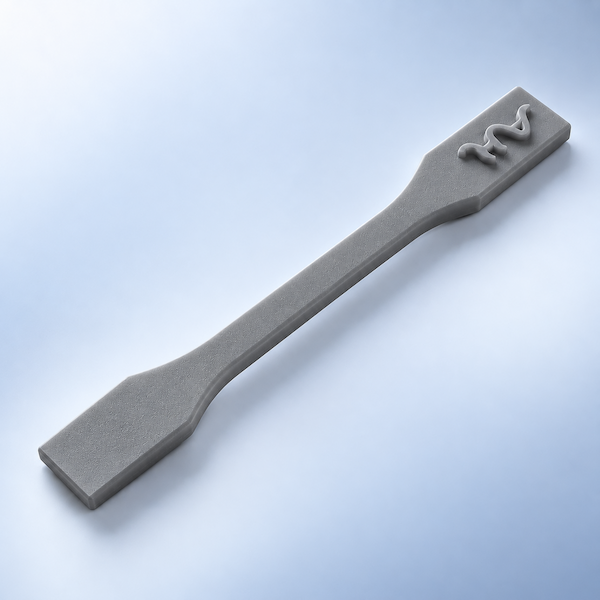
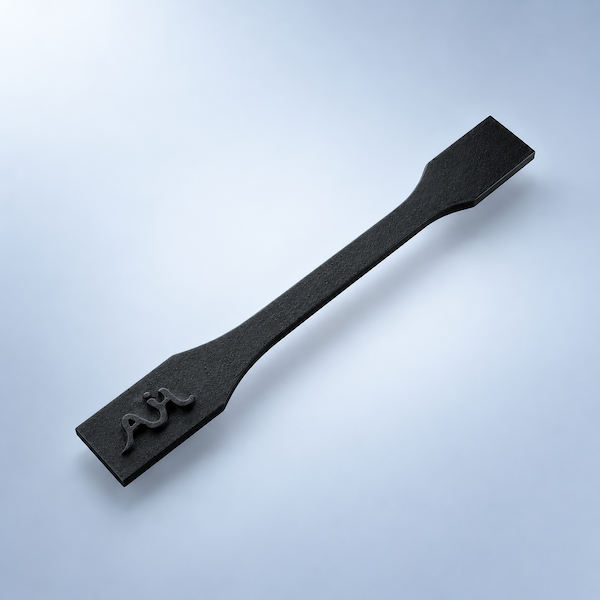
Digital Light Processing (DLP) solidifies an entire layer of photopolymer at once using a projected image.
Create a quoteMaterials that sit next to this article. Check the card, then upload CAD.
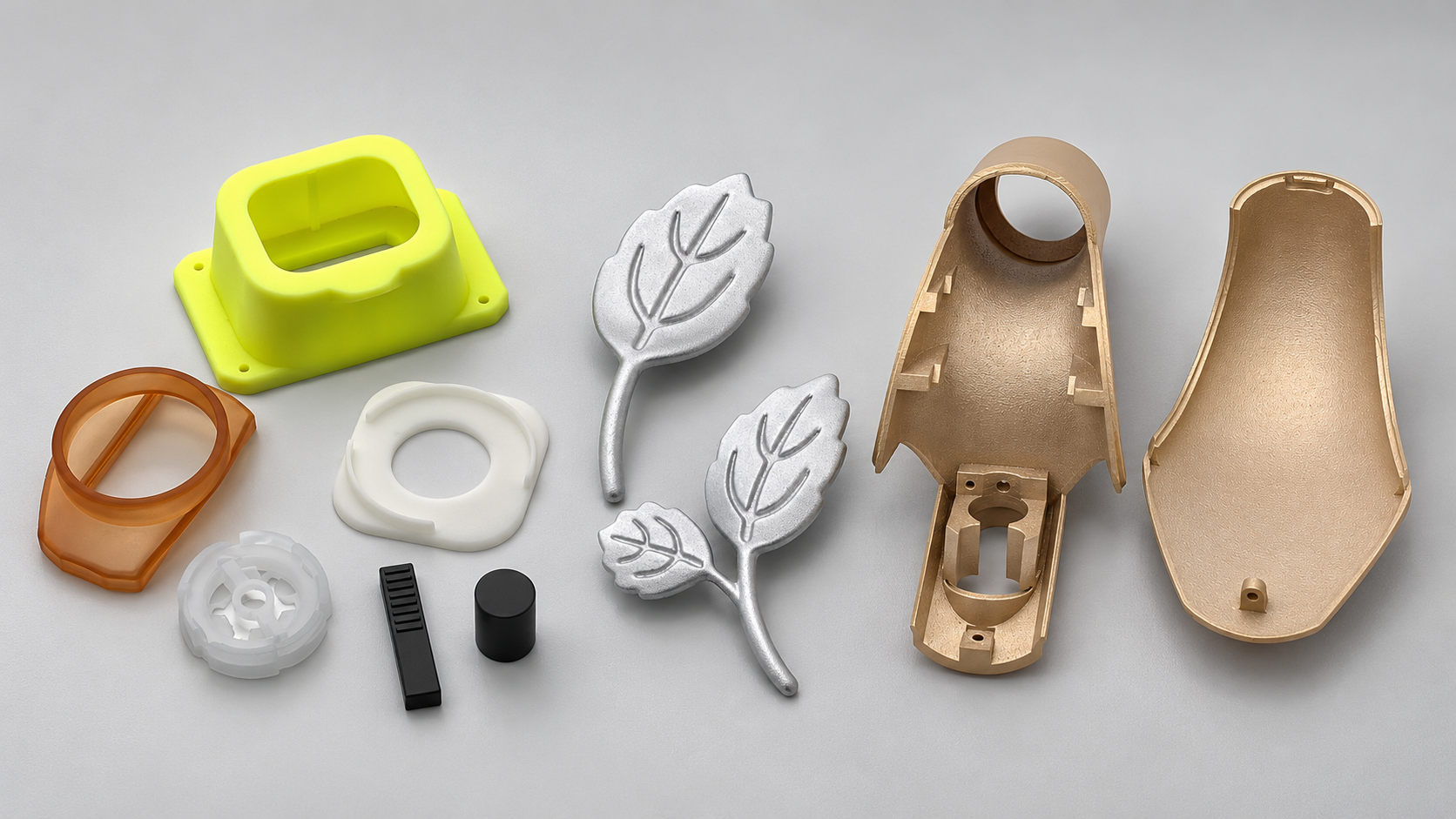
Process, finish, and file notes from the shop — not a marketing blog.
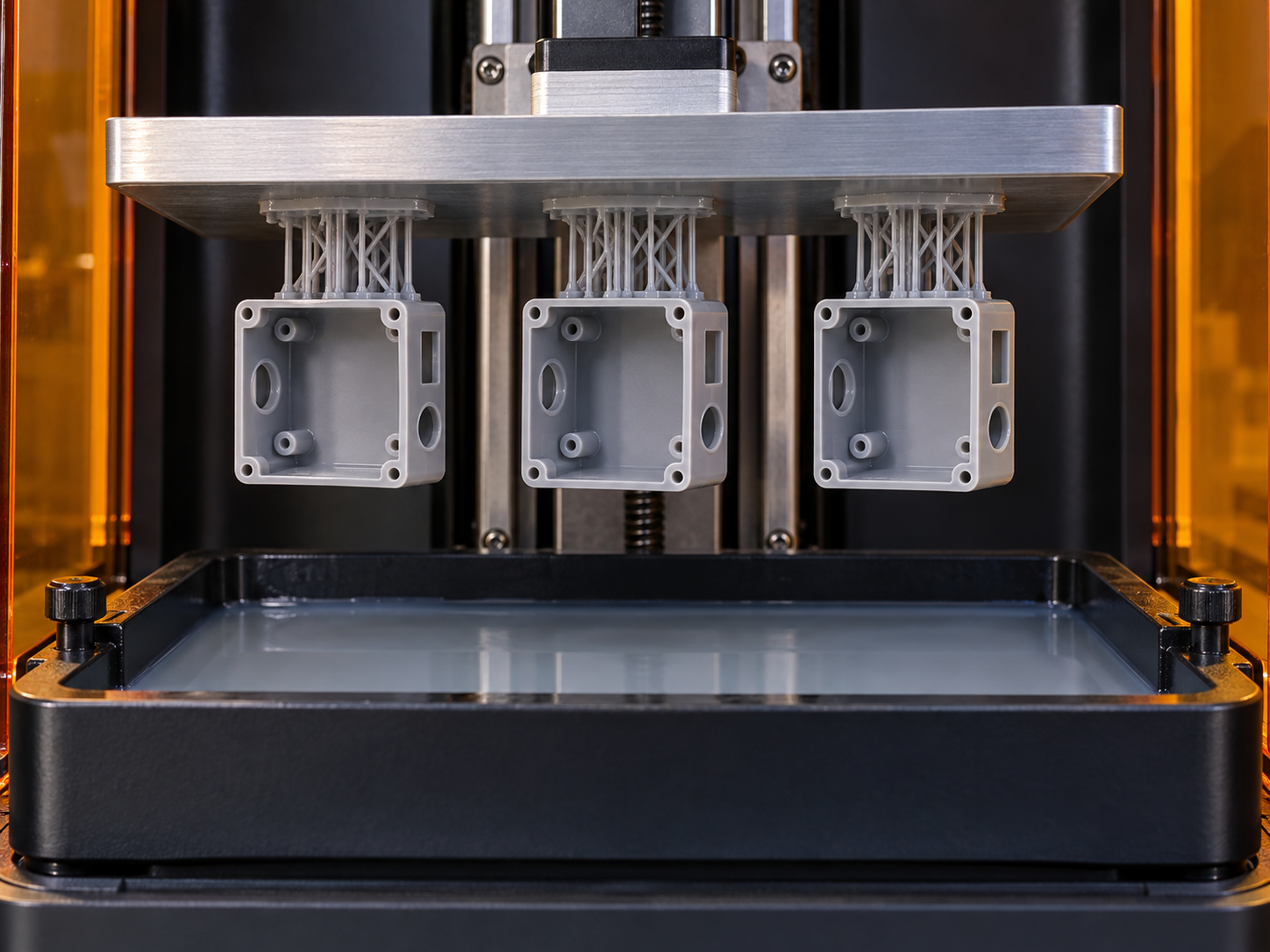
Company, payment, shipping, and process answers by topic.
Production lead times, shipping options, and order tracking.
AIHFABS quotes custom 3D printing and CNC machining from a CAD upload. Compare SLA, SLS, MJF, SLM, FDM, DLP, milling, and turning, then add finishing such as vapor smoothing, dyeing, anodizing, polishing, or powder coating in the same order.
Instant quoting is built for prototypes, jigs, housings, and small-batch production. You see material, process, quantity, and lead time together, which keeps engineering changes from turning into a new round of supplier emails.
You can review material, process, quantity, and lead time together, so engineering changes do not turn into another round of supplier emails.
Upload STL, STEP, and other common CAD formats for an online quote.
Compare 3D printing technologies and CNC options on the same part.
Select polymers or metals, then add 3D Plus hardware finishing when needed.
Review price and lead time before checkout, or request a manual quote for special specs.
If this page describes a process, industry, or sample part you want to reproduce, start from the upload flow and match technology plus finishing to your drawing.
We use cookies to personalize your experience. By using this site, you agree to our Privacy Policy
Accept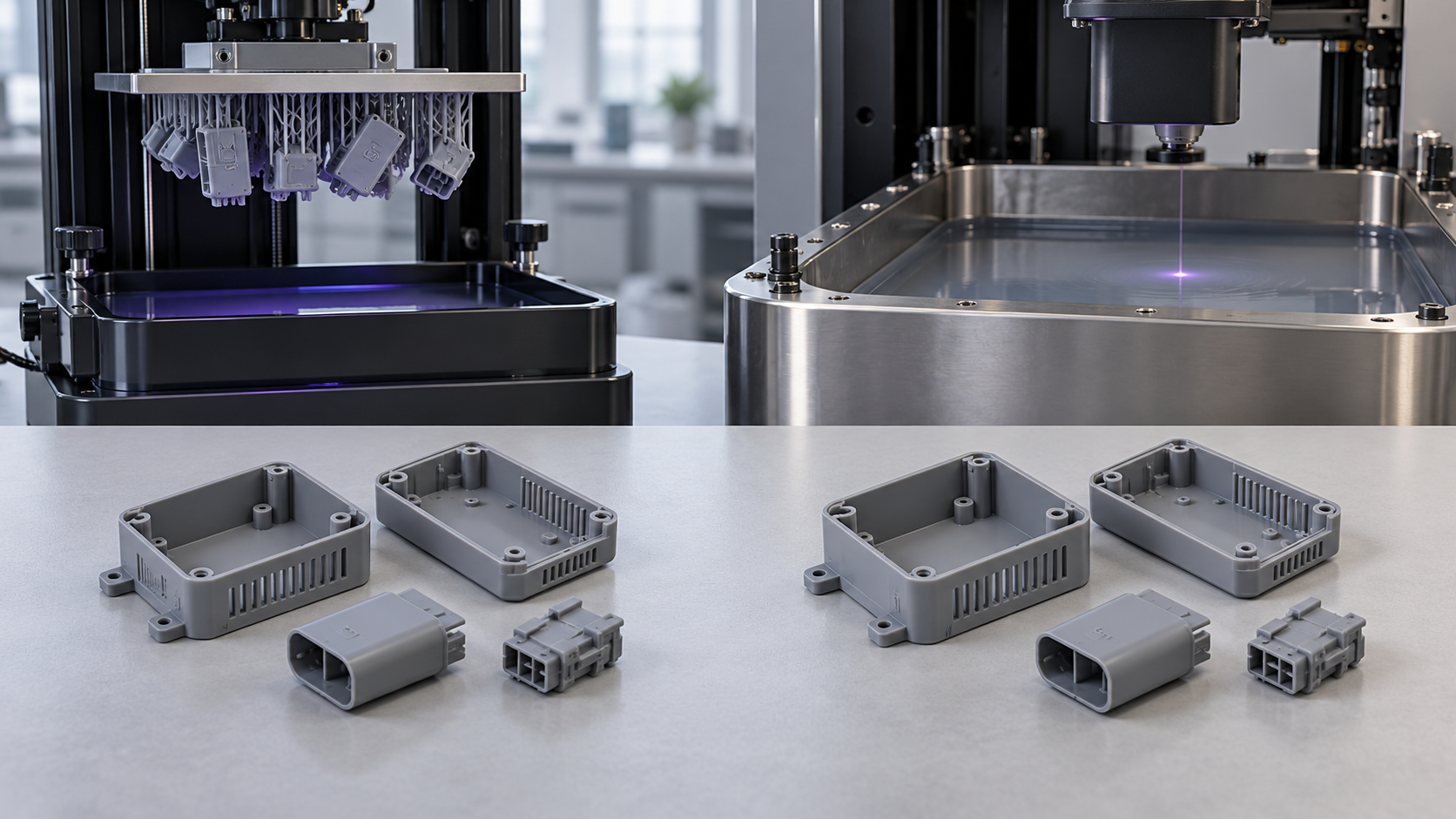

Leave A Comment