
3D Printing
Stereolithography (SLA)
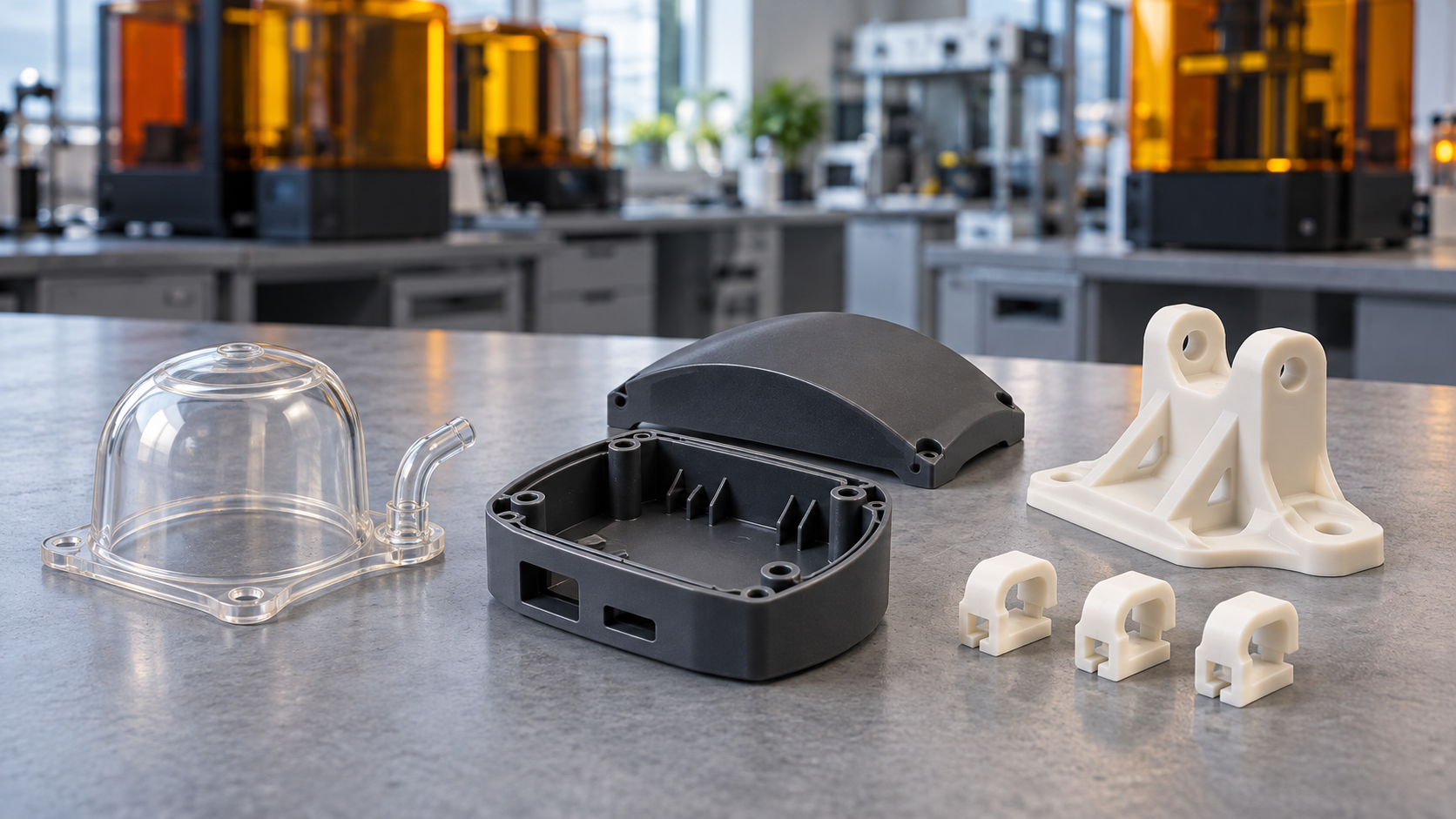
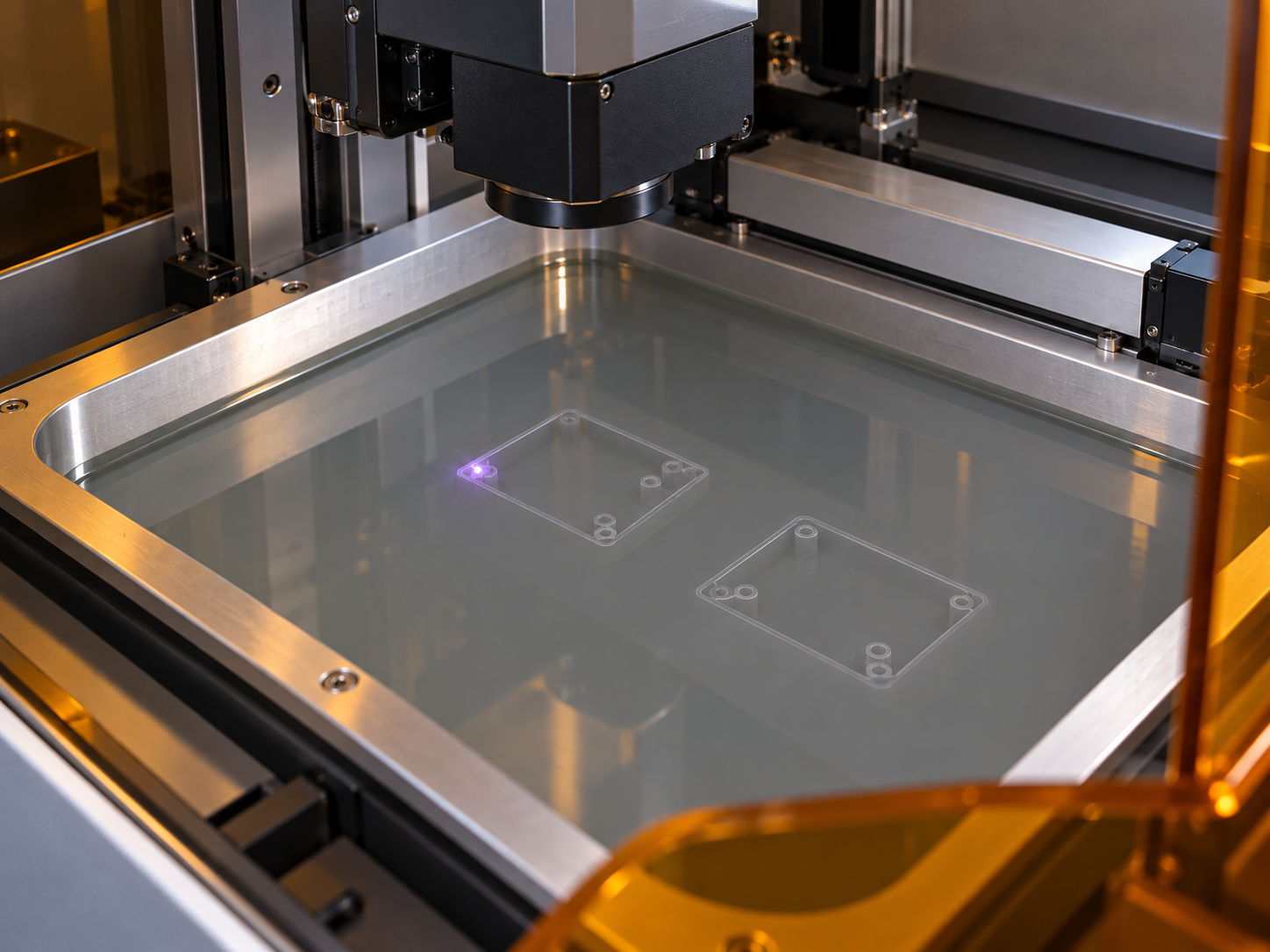
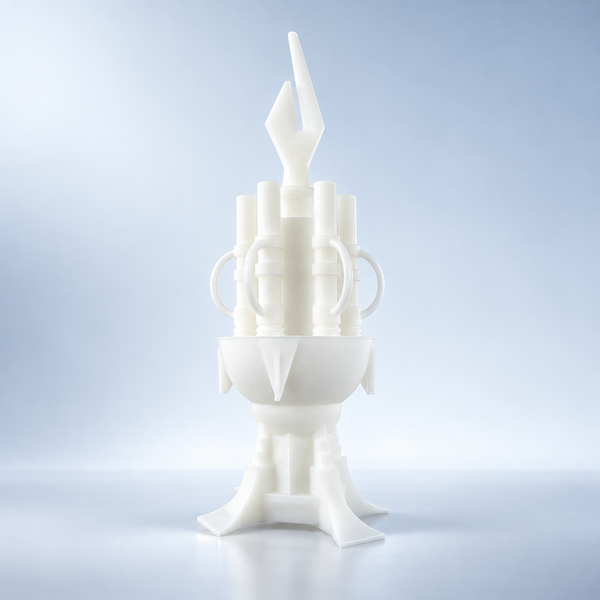
Stereolithography (SLA) cures liquid photopolymer with a precision UV laser, building parts layer by layer.
Create a quote
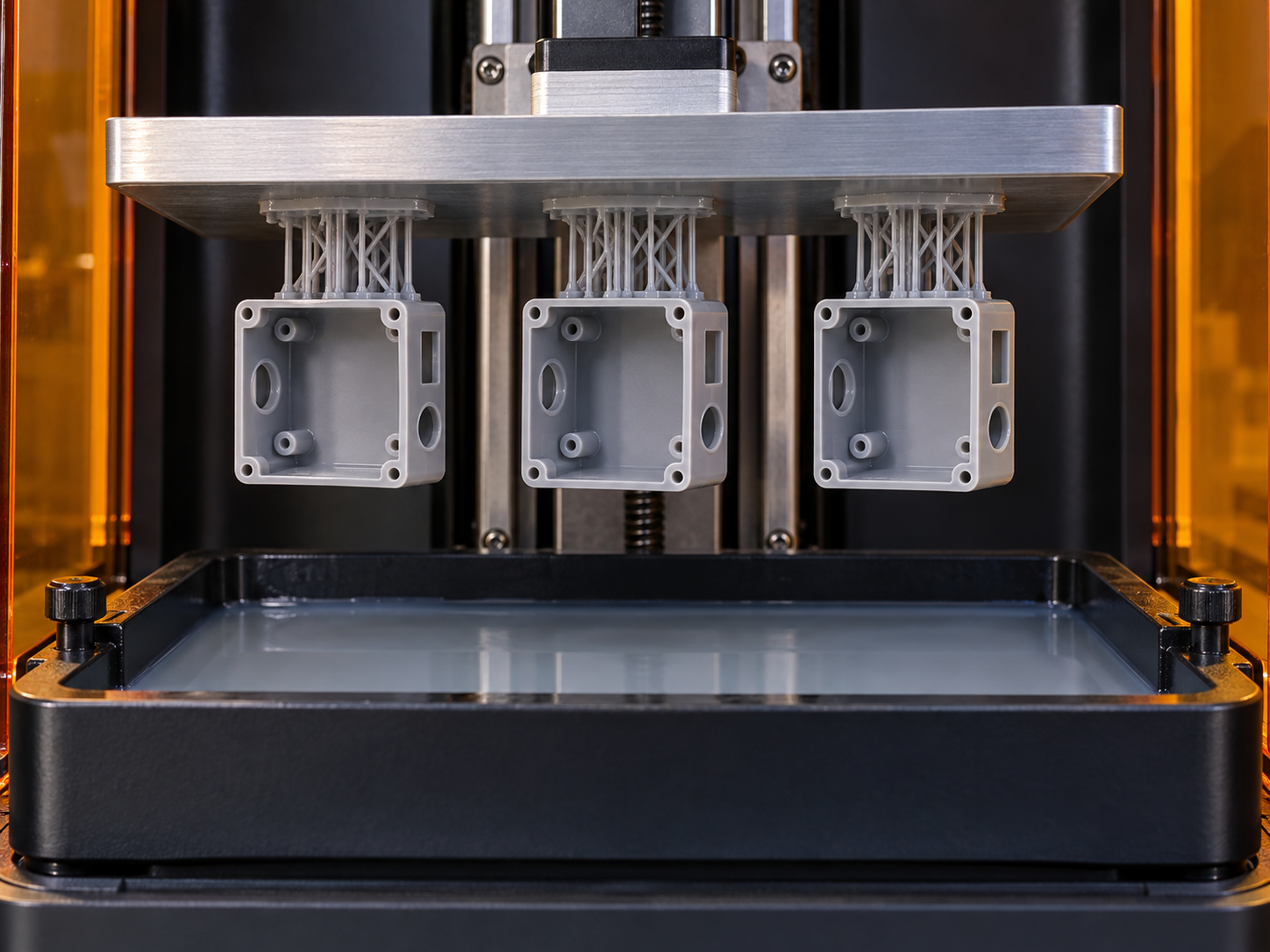
Introduction: This fit-based guide compares DLP, SLA, and LCD across 5 selection criteria, 4 application groups, and 3 resin processes.
A product team can receive three credible resin quotes for the same small batch and still face a difficult decision. One supplier recommends DLP, another recommends SLA, and a third recommends LCD. Each process belongs to the vat photopolymerization family, but each uses a different curing mechanism. Those differences matter when a part must meet a tolerance, survive a snap fit, transmit light, or remain visually consistent.
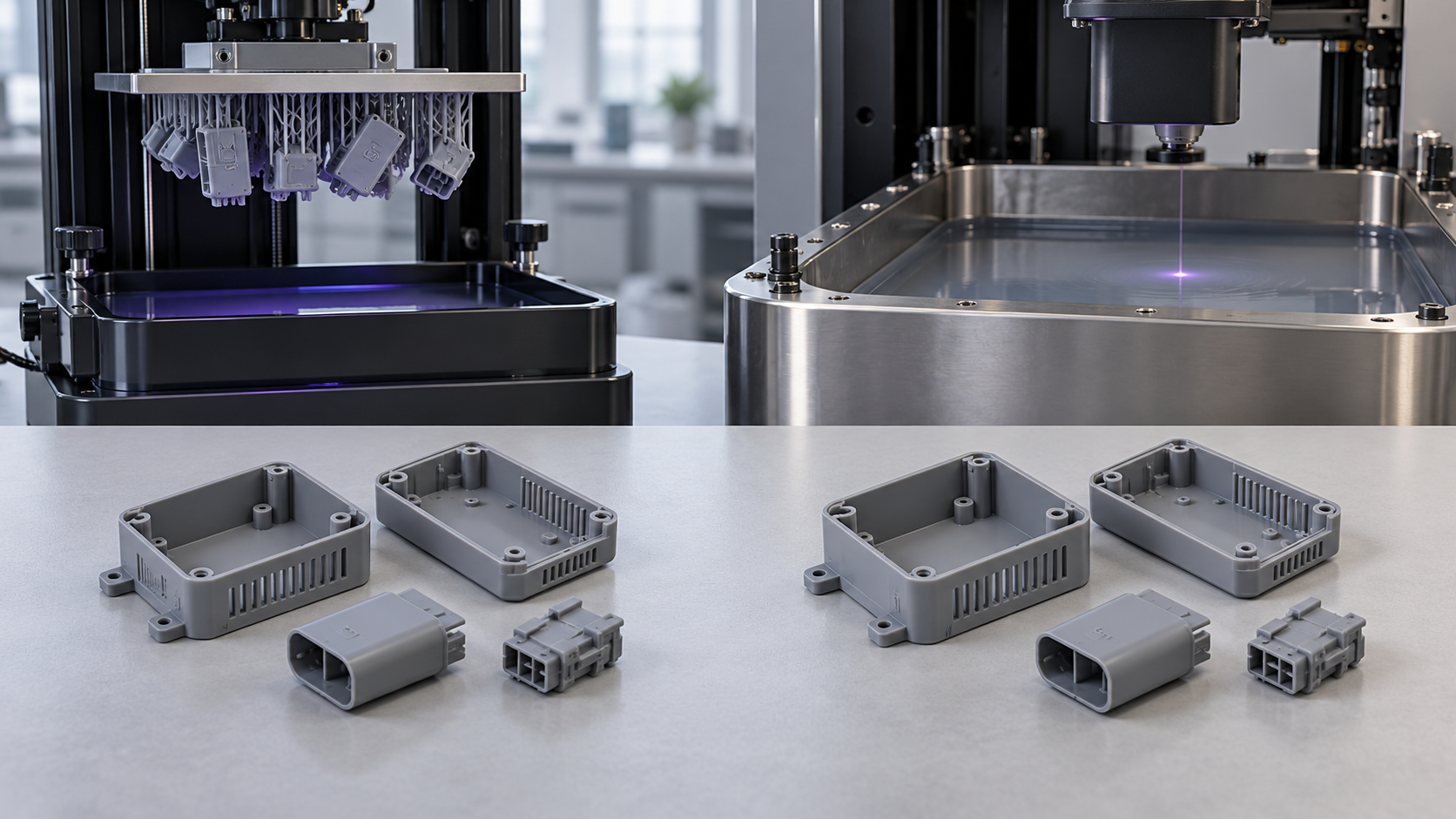
DLP uses a projected image to expose a whole layer. LCD uses a masked light source to form the same layer shape. SLA traces each layer with a laser. The exposure method affects layer time, feature edges, surface texture, build size, nesting, maintenance, and material behavior.
AIH ABS DLP, SLA, and LCD resin 3D printing services can be compared through resolution, surface, material, quantity, post-processing, inspection, and delivery. They are related processes, not interchangeable choices.
Process labels are starting points. A high-quality SLA system and an entry-level SLA system may have different laser spot sizes and scan strategies. DLP systems may differ in projector resolution and calibration. LCD systems may differ in pixel size, mask quality, light uniformity, and maintenance.
DLP, SLA, and LCD cure liquid photopolymer resin layer by layer. They share dependencies such as orientation, supports, drainage, washing, UV post-curing, shrinkage, and material compatibility. The main differences appear in how light reaches the resin.
DLP projects a complete layer and can expose many parts at once. SLA draws each layer with a laser path and may offer fine surface control, but throughput depends on path length. LCD forms a layer through a mask. It can be cost-effective, although pixel geometry and mask condition can influence edges.
Buyers should ask for XY resolution, pixel or laser spot size, layer thickness options, build envelope, light source type, calibration practice, and maintenance schedule. Those details determine whether the process can support the requested feature size, transparency, and quantity.
DLP projects an image into resin for a controlled exposure time. The whole layer cures at once, which can reduce layer time compared with a point-by-point process and suits compact parts that share a common build height.
A DLP projector creates an image from many small mirrors or a comparable digital light engine. Pixel size, optical distortion, focus, and light uniformity influence the smallest reliable feature and edge sharpness. A larger projected area may reduce XY resolution because the same pixels cover a broader region.
Batch nesting is a major DLP advantage for small parts. Multiple components can share one exposure cycle, reducing the effective time per part. Packing too many parts can still complicate resin flow, support placement, drainage, and separation. The exposure must cure the smallest feature.
Small mechanical parts, miniatures, and visual components can benefit because geometry within one layer is formed at the same time. The advantage weakens when the batch contains tall parts with different Z heights.
Projector resolution becomes a constraint when fine text, narrow slots, small holes, or optical surfaces approach the pixel footprint. Buyers should ask whether the feature can survive support removal, washing, and post-curing. A feature in the digital image may not survive the full production chain.
SLA uses a focused laser and scanning path. LCD uses a screen-like mask to shape light from an array. Those mechanisms influence surface quality, edge definition, throughput, maintenance, and material choices.
An SLA laser cures resin along a controlled path. The laser spot size and scanning strategy affect feature resolution and surface finish. Large cross-sections may take longer to expose because the laser must draw the geometry. SLA can be attractive for detailed prototypes, smooth surfaces, and complex shapes when the machine is calibrated and the part is oriented correctly. It may also support a broad range of resins and build sizes.
LCD printing uses a light source behind a liquid-crystal mask. The mask blocks or transmits light to form each layer. LCD systems can be cost-effective and can expose a full layer at once. Resolution is tied to pixel size and mask geometry. Fine features may show pixel-related edges, and mask aging or uneven light can affect consistency.
LCD is often positioned as a lower-cost process, but price should not be the only criterion. A cheaper build may require more finishing or deliver lower feature fidelity. Total cost per accepted part should include inspection, rework, and post-processing.
Visible pixel structure can appear on large flat surfaces or fine curved edges when the LCD grid is not well controlled. Anti-aliasing, orientation, and exposure settings can reduce the effect. DLP can also show pixel effects when projected resolution is insufficient for the part scale.
DLP and LCD can expose a full layer quickly, while SLA may require more time for complex scan paths. Material range and build size vary by machine and supplier. One process does not always win on speed or material choice.
Application | DLP Fit | SLA Fit | LCD Fit | Primary Risk |
Small electronic housings | High | High | Medium to high | Support marks on mating faces |
Clear lenses and light pipes | High when finishing is controlled | High for fine surfaces | Medium | Haze, yellowing, and internal defects |
Miniatures and visual models | High | Medium to high | Medium | Layer and pixel artifacts |
Tough functional prototypes | Medium to high | Medium to high | Medium | Resin toughness and post-cure |
Large resin parts | Low to medium | Medium to high | Medium to high | Build envelope limits |
Cost-sensitive visual lots | High | Medium | High | Feature fidelity and finishing scope |
The matrix is directional. A supplier with excellent process control may outperform a nominal process advantage, while a poorly maintained machine can weaken the strongest process. The buyer should use the matrix to ask better questions, not to replace evidence.
Selection Criterion | Weight | Why It Matters |
Feature resolution and tolerance | 25% | Determines fit, feature clarity, and inspection requirements |
Surface and visual quality | 25% | Controls cosmetic acceptance and post-processing cost |
Material performance | 20% | Determines toughness, heat resistance, clarity, and application fit |
Batch economics | 15% | Includes nesting, setup, reprints, and finishing |
Lead-time repeatability | 15% | Depends on queue, process control, and post-processing scope |
These weights should change with the project. A clear part may place more weight on surface and material. A functional housing may place more weight on toughness and dimensional stability. A visual batch may place more weight on lead time and color consistency.
Accuracy includes dimensional deviation, feature size, edge definition, flatness, roundness, and repeatability. Tolerance depends on shrinkage, orientation, support placement, curing, and measurement. A supplier should explain how the process holds critical features.
Surface finish is easier to evaluate when the buyer defines the viewing condition and acceptable defect level. A clear component may need transmission, haze, or yellowing criteria rather than a general smoothness statement.
The resin grade determines much of the functional performance, but post-curing and orientation also matter. A tough resin may become less ductile when over-cured. A high-temperature resin may require a specific cure schedule. A clear resin may change color or clarity after excessive UV exposure.
DLP and LCD can expose multiple parts in one layer, which may reduce time per part. SLA may be more efficient for certain geometries or materials. The comparison should include supports, wash time, cure time, inspection, and failed-part risk.
Lead time depends on queue position and process reliability as well as printing speed. A process that prints quickly but requires frequent calibration or manual finishing may not deliver the most predictable schedule.
A resin quote combines material, machine time, labor, post-processing, inspection, and packaging. The useful comparison divides total order cost by the number of accepted parts.
Setup includes file preparation, orientation, support design, nesting, and scheduling. DLP and LCD may spread setup across many parts on one plate. SLA may have different setup economics depending on scan strategy. Buyers should ask how the batch will be grouped and what happens when one part fails.
Every resin process requires support planning, cleaning, and post-cure control. Labor and surface-damage risk vary with geometry and process. Internal channels may need drainage and washing checks. Clear parts may need careful support placement and polishing.
Inspection and reprint risk belong in the cost model. Better dimensional stability may reduce inspection and reprints. A low-cost supplier with weak process control may create hidden costs when the buyer must sort, rework, or replace parts.
A lower unit price becomes a higher total cost when the first batch fails inspection, support marks damage visible surfaces, material substitution changes performance, or corrective action is unclear. Buyers should compare total accepted cost and schedule impact, not only the invoice.
Small quantities make setup and post-processing more visible in the unit price. They also increase the importance of first article inspection because fewer parts are available for testing. A small batch can justify more process control when the parts support an expensive assembly.
Material selection begins with the application environment. A part may need stiffness, impact resistance, flexibility, transparency, heat resistance, chemical resistance, or dimensional stability. The process must be compatible with the resin and the required post-cure.
Not every resin is validated for every process or machine. Curing behavior depends on photoinitiators, light wavelength, exposure time, and post-cure conditions. The supplier should confirm that the selected resin is compatible with the offered process and that the finished part meets the application requirements.
Tough, flexible, clear, and high-temperature resins describe different performance families. A tough resin may resist impact but still creep under long-term load. A flexible resin may bend without breaking but may not hold tight tolerances. A clear resin may transmit light but require polishing and coating for optical use. A high-temperature resin may tolerate short excursions differently from continuous heat.
Qualified biocompatible grades can be relevant for certain skin-contact or regulated applications. A qualified material does not automatically make every finished part biocompatible because geometry, cleaning, post-curing, packaging, and use conditions also matter. Buyers should request material documentation and ask whether additional testing is required.
Material datasheets provide starting points for strength, modulus, elongation, heat deflection, and cure recommendations. They do not describe every finished part because process parameters and geometry matter. The supplier should translate the datasheet into a process plan for the actual part.
Medical, dental, food-contact, automotive, and high-reliability applications may require validation beyond a standard resin print. Buyers should identify the standard, test method, sample size, and acceptance criteria before choosing a process.
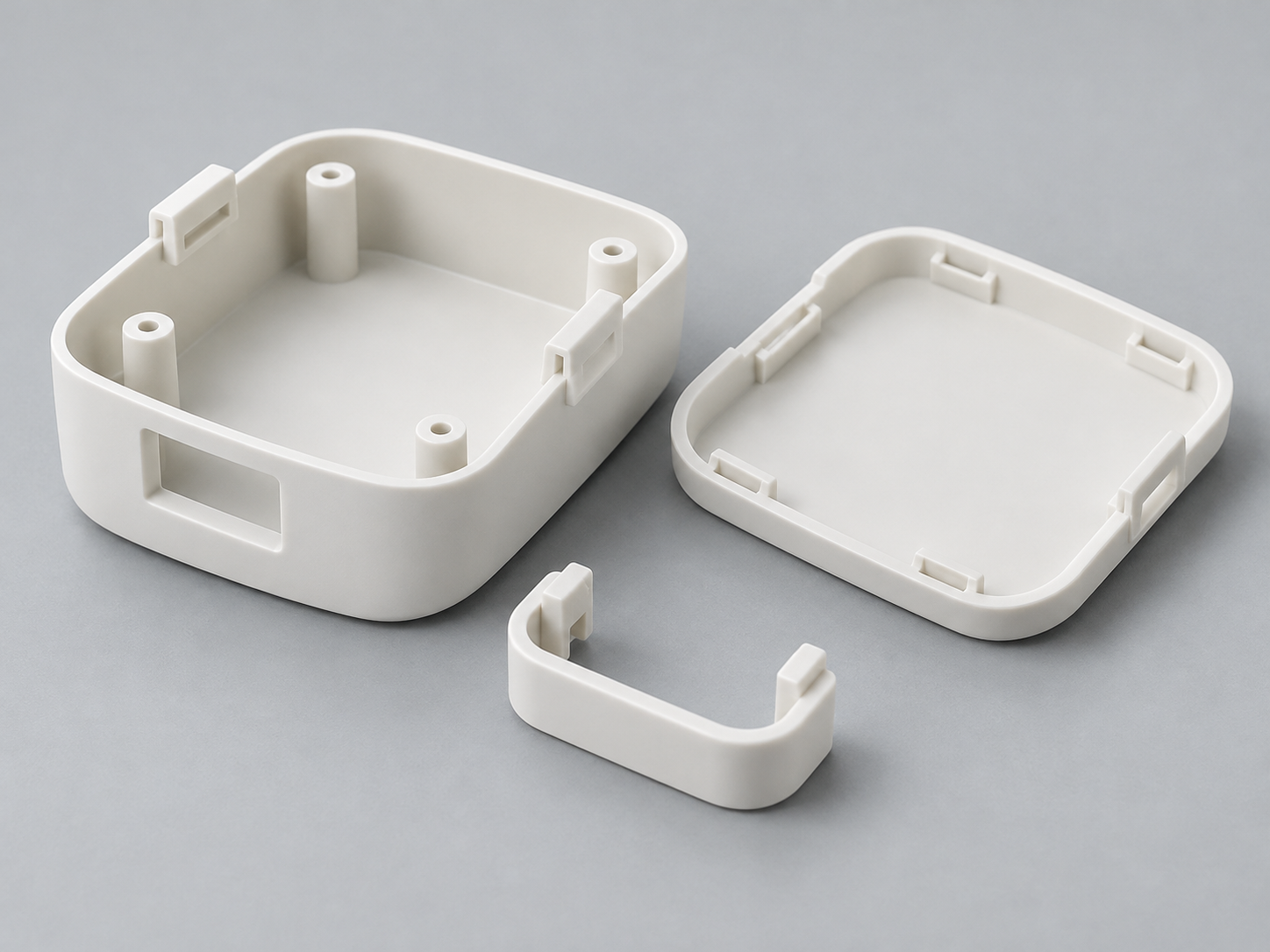
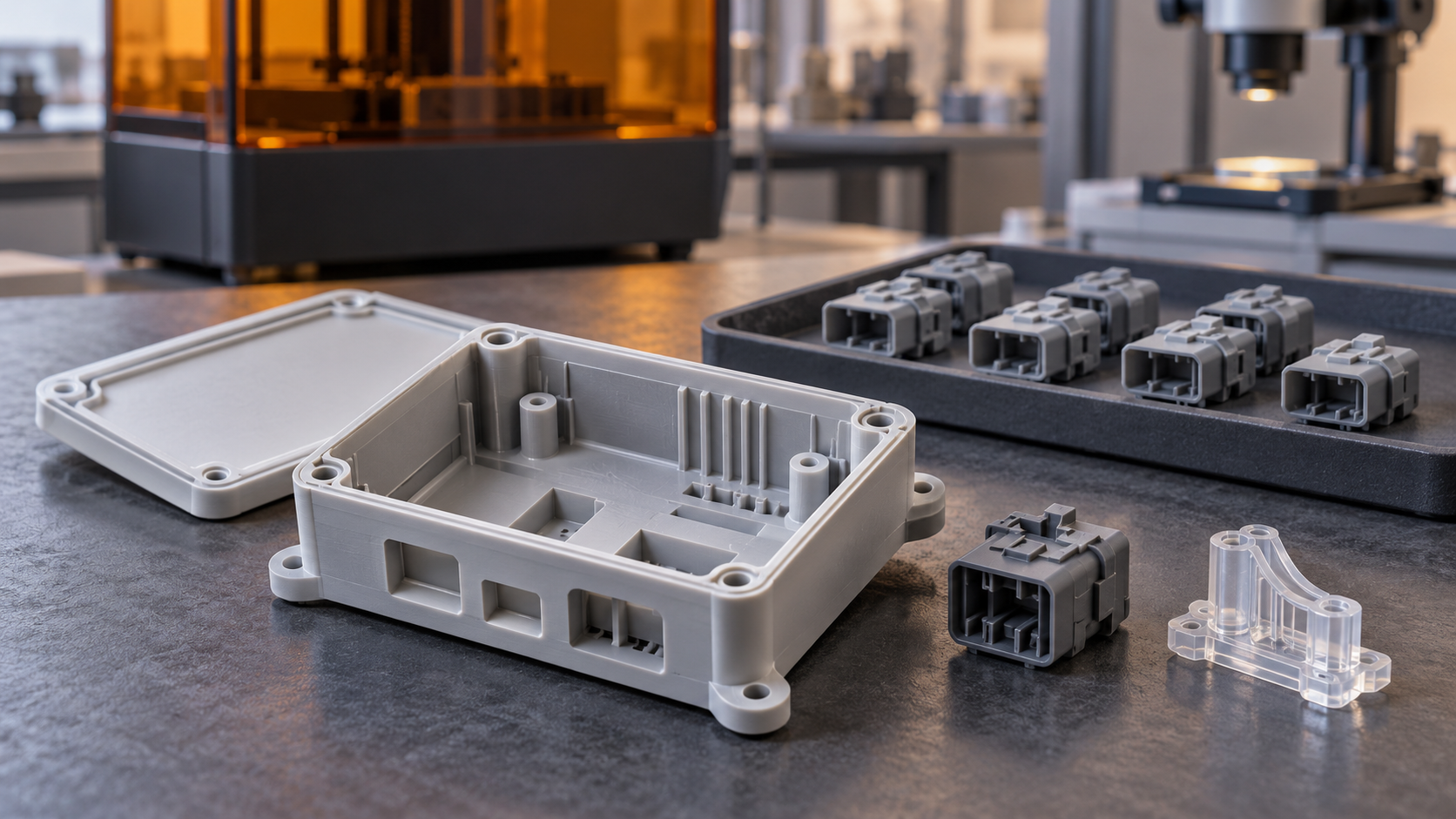
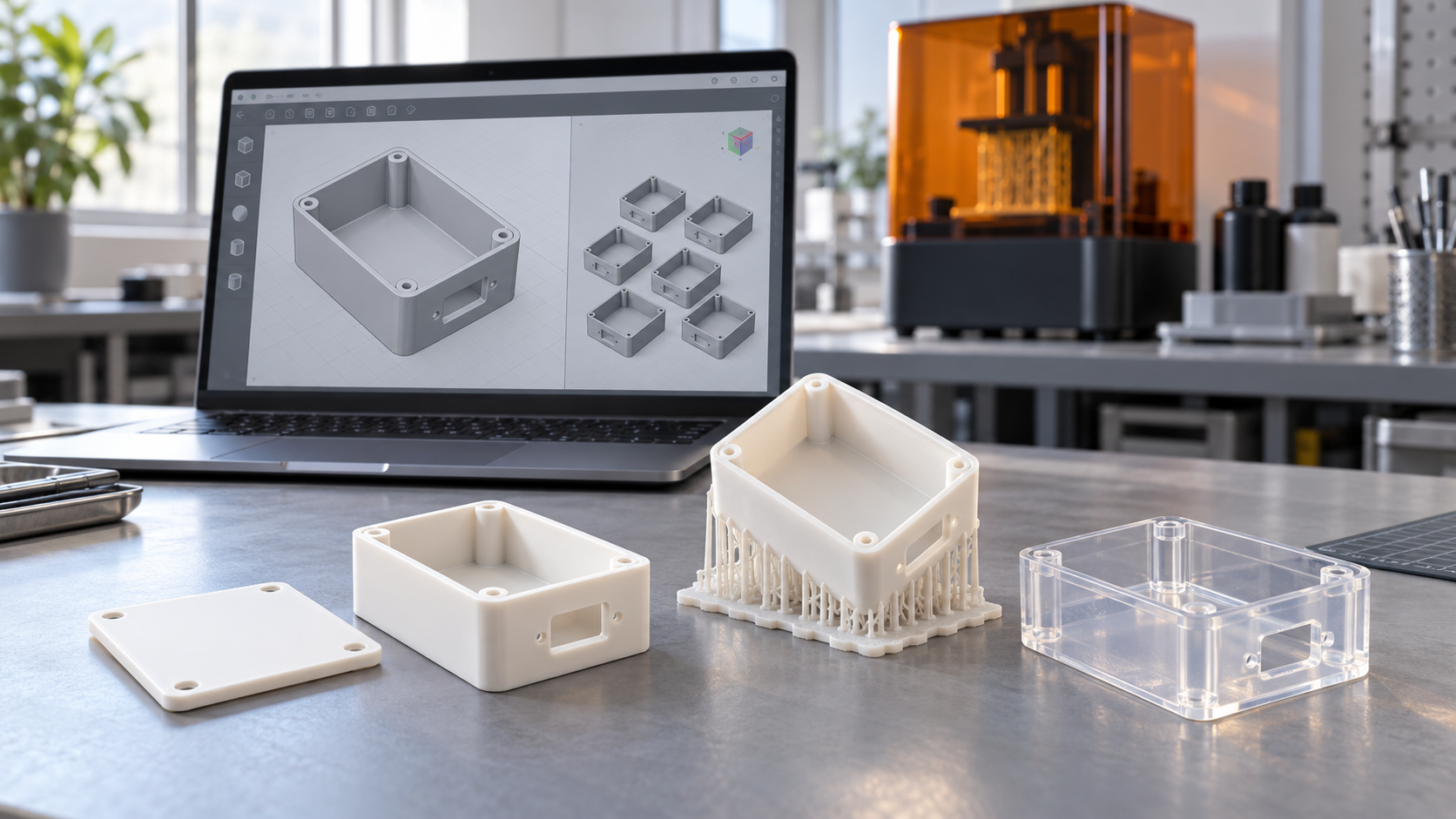
Housings combine dimensional fit, wall thickness, internal clearance, and snap behavior. DLP and SLA can both produce detailed housings. DLP may be attractive for small repeated batches, while SLA may offer fine surfaces and broad resin options. The supplier should define mating faces, support control, and post-cure requirements.
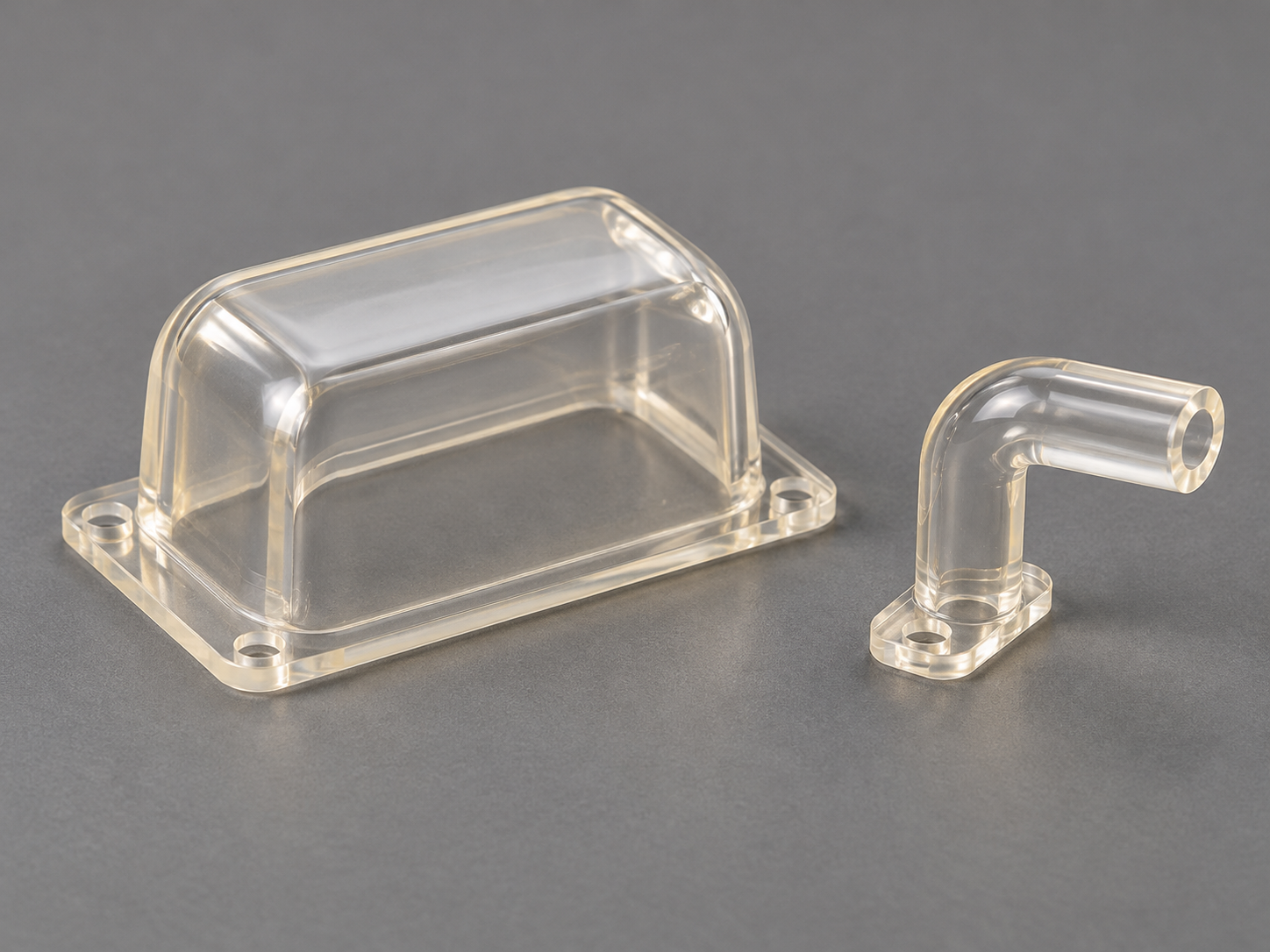
Clear components need more than transparent resin. Surface polish, internal voids, support marks, coating, and yellowing affect performance. DLP can be suitable when resolution and finishing are controlled. SLA may offer fine surface quality, and LCD can be considered for less demanding visual parts.
Miniatures and visual models benefit from feature detail and consistent surface treatment. DLP and SLA can both perform well, while LCD may offer a lower-cost route for some visual parts. Buyers should define acceptable layer lines, pixel artifacts, color consistency, and viewing distance.
Functional prototypes may require impact resistance, flex, heat resistance, or chemical resistance. DLP and SLA may support specialized resins, while LCD may have a narrower validated material path depending on the supplier. The process should be selected after the material and post-cure requirements are known.
1. Which process will be used for the actual production batch?
2. What machine class, resolution, and build envelope are available?
3. Which resin grade, lot, and post-cure conditions will be used?
4. What critical features, datums, and support-mark limits apply?
5. Which inspection method and sampling plan will verify the batch?
6. What is included in the quoted lead time?
7. How are failed parts, reprints, and dimensional deviations handled?
8. What batch records and material documents will be provided?
The answers should be compared with the weighted criteria and application matrix. A supplier that cannot answer a high-weight question should not be selected only because the quote is lower.
DLP can be fast for small batches, but speed depends on geometry, nesting, exposure, and post-processing. A project with tall parts or a small feature set may not receive the same benefit.
LCD can be cost-effective, but lower unit price may reflect less inspection, simpler finishing, or a narrower material window. Total accepted cost matters more.
SLA may offer strong surface quality, but the required resin must still support the application. Buyers should verify the grade, cure schedule, and performance data.
A quote that excludes support removal, UV curing, polishing, or inspection is not directly comparable with one that includes those steps. Scope should be normalized before price is compared.
A: DLP projects a full layer, SLA traces each layer with a laser, and LCD shapes light through a masked display. The curing method changes resolution, speed, surface, maintenance, and material behavior.
A: There is no universal winner. DLP can be strong for small repeated batches, SLA for fine surfaces and material range, and LCD for cost-effective visual parts. Geometry and acceptance criteria decide.
A: No. DLP can expose a full layer at once, but total time includes preparation, nesting, printing, support removal, washing, UV curing, and inspection. SLA may be competitive for certain geometries.
A: SLA and DLP can both produce smooth surfaces when equipment, orientation, and finishing are controlled. LCD may show pixel-related artifacts. The specific machine and finishing method decide.
A: They can all use transparent resins, but optical performance requires control of haze, internal defects, polish, coating, and yellowing. A standard clear print may not meet an optical requirement without extra validation.
A: A larger build envelope can hold more parts, but it may reduce XY resolution if the projector or mask covers a wider area. Nesting can reduce time per part, but it can complicate supports and separation.
A: DLP and SLA may support a wider range of engineering resin families depending on the machine and supplier. LCD may also support specialized resins, but compatibility must be confirmed.
A: SLS or MJF may be preferable when the part needs nylon-like toughness or a larger production volume. Resin processes may remain preferable for fine detail, smooth surfaces, transparency, or specific resin properties.
A: The RFQ should include CAD, quantity, critical dimensions, datums, material performance, surface finish, support limits, operating environment, inspection requirements, and delivery date.
A: Buyers can request a sample or first article, a process description, material documentation, inspection results, and a rework policy. A process claim becomes useful when it is connected to evidence.
DLP, SLA, and LCD are related processes with different operating strengths. DLP can be effective for small repeated batches and whole-layer exposure. SLA can provide fine surfaces and flexible material options. LCD can be cost-effective for selected workflows. The correct choice depends on the part, material, quantity, surface requirement, inspection plan, and delivery risk.
AIH ABS can be used as a case example because its DLP, SLA, and LCD service pages describe three related routes within one platform. Buyers should still map each route to the actual part and request evidence. A fit-based selection process is more useful than a fixed ranking.
Link:
https://www.nist.gov/additive-manufacturing
Note: Provides public research context for additive manufacturing measurement, qualification, and process understanding.
Link:
https://www.protolabs.com/resources/design-tips/resin-3d-printing/
Note: Explains practical design and process considerations for resin-based additive manufacturing.
Link:
https://www.qualitymag.com/articles/94573-the-rise-of-multisensor-measurement
Note: Explains how multisensor measurement systems can support dimensional verification in quality inspection.
Link:
https://aihfabs.com/services/3d-printing/dlp
Note: Provides the AIHFABS case example for projector-based resin printing, materials, and post-processing.
Link:
https://aihfabs.com/services/3d-printing/sla
Note: Provides the AIHFABS case example for laser-based resin printing and its process position.
Link:
https://aihfabs.com/services/3d-printing/lcd
Note: Provides the AIHFABS case example for masked LED resin printing and cost-sensitive applications.
Link:
https://aihfabs.com/resources/blog/clear-and-translucent-sla-resin-printing-for-visual-models
Note: Applies resin process selection to transparent and translucent parts where surface and optical criteria matter.
Link:
Note: Describes the supplier's stated approach to file review, inspection, delivery tracking, and defect responsibility.
Link:
https://www.industrysavant.com/2026/09/the-real-waste-hotspots-of-resin-3d.html
Note: Examines waste and disposal questions in resin printing, including consumables and cleaning decisions that buyers can consider alongside process fit and cost.
Link:
https://en.wikipedia.org/wiki/Digital_light_processing
Note: Provides a general technical overview of DLP projection technology and its use in additive manufacturing.
Link:
https://en.wikipedia.org/wiki/Stereolithography
Note: Offers background on laser-based resin curing and the wider vat photopolymerization family.

A process that fits this note. Open the spec, or put the file on a quote.
Stereolithography (SLA) cures liquid photopolymer with a precision UV laser, building parts layer by layer.
Create a quote
Digital Light Processing (DLP) solidifies an entire layer of photopolymer at once using a projected image.
Create a quoteMaterials that sit next to this article. Check the card, then upload CAD.
Process, finish, and file notes from the shop — not a marketing blog.
Company, payment, shipping, and process answers by topic.

Review AIH commitments to print quality, secure handling of your files, transparent pricing, and support for every 3D printing order.

AIHFABS quotes custom 3D printing and CNC machining from a CAD upload. Compare SLA, SLS, MJF, SLM, FDM, DLP, milling, and turning, then add finishing such as vapor smoothing, dyeing, anodizing, polishing, or powder coating in the same order.
Instant quoting is built for prototypes, jigs, housings, and small-batch production. You see material, process, quantity, and lead time together, which keeps engineering changes from turning into a new round of supplier emails.
You can review material, process, quantity, and lead time together, so engineering changes do not turn into another round of supplier emails.
Upload STL, STEP, and other common CAD formats for an online quote.
Compare 3D printing technologies and CNC options on the same part.
Select polymers or metals, then add 3D Plus hardware finishing when needed.
Review price and lead time before checkout, or request a manual quote for special specs.
If this page describes a process, industry, or sample part you want to reproduce, start from the upload flow and match technology plus finishing to your drawing.
We use cookies to personalize your experience. By using this site, you agree to our Privacy Policy
Accept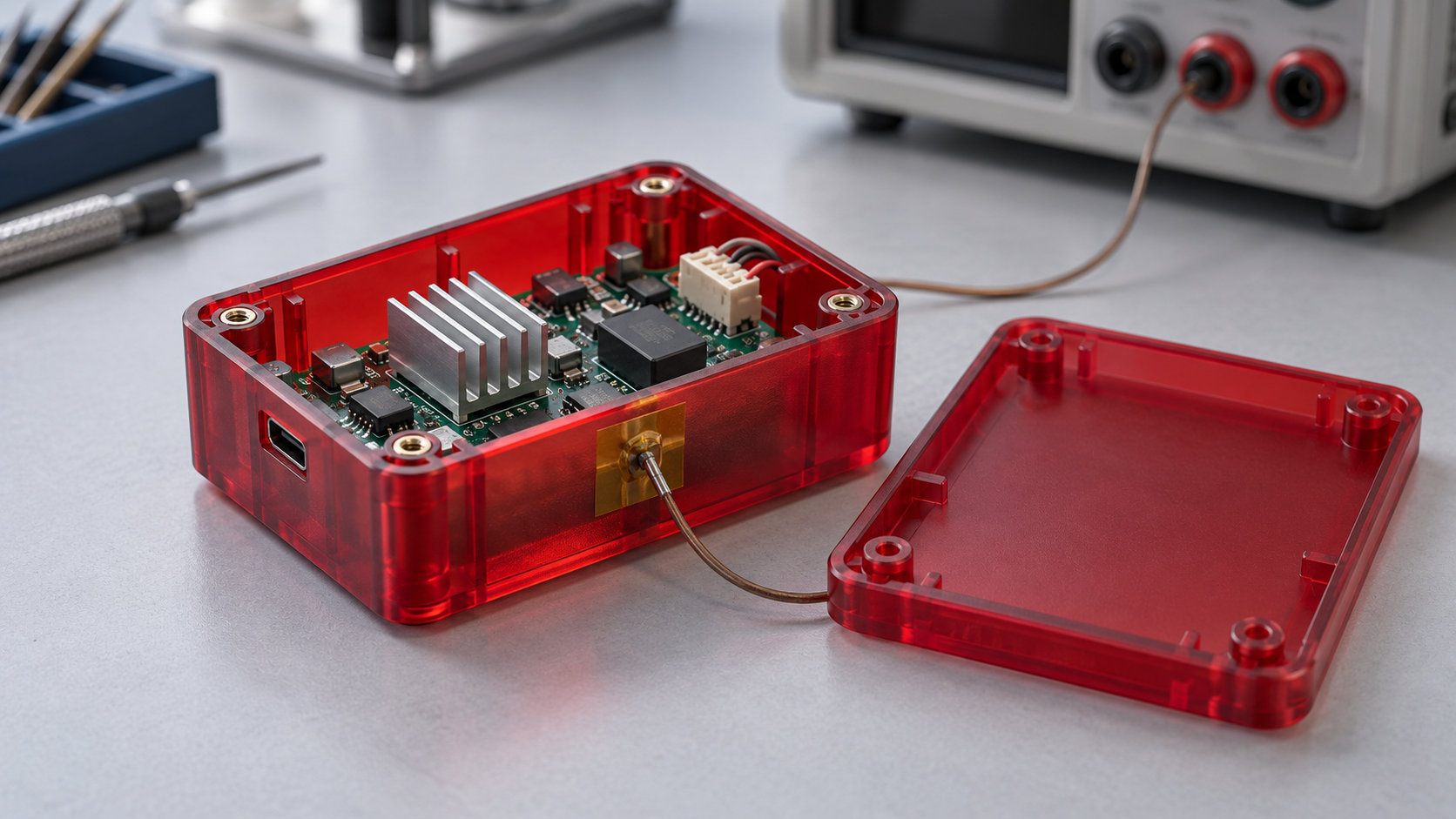
Leave A Comment