Rigid & semi-rigid PU resins
Start here for housings, panels, clear covers and assembly prototypes. Compare ABS-like, PC-like, PP-like and specialist PU formulations by the behavior your prototype must demonstrate.
Explore PU / ABS-like / PC-like →
Silicone makes the mold. The finished replica is normally polyurethane (PU) resin, formulated to resemble selected properties of engineering plastics or elastomers.
Start here for housings, panels, clear covers and assembly prototypes. Compare ABS-like, PC-like, PP-like and specialist PU formulations by the behavior your prototype must demonstrate.
Explore PU / ABS-like / PC-like →Start here for grips, flexible boots, cushioning and seal evaluation. Define hardness, deformation and recovery together with tear, compression and exposure requirements.
Explore rubber-like / elastomer →Silicone makes the mold. The finished replica is normally polyurethane (PU) resin, formulated to resemble selected properties of engineering plastics or elastomers.
These are candidate resin families, not a promise that every formulation is available. Confirm the actual product data sheet and sample requirements before ordering.
| Material / grade | Typical application | Confirm before quotation |
|---|---|---|
| ABS-like → | Housings, panels and structural prototypes | Compare strength, stiffness, impact and aging with the actual target grade. |
| PC-like → | Transparent and impact-evaluation prototypes | Confirm clarity, color, surface finish and aging on a sample. |
| PMMA (Acrylic)-like → | Windows, light covers and visual light-guide models | Confirm clarity, color, surface finish and aging on a sample. |
| PP-like → | Clips, hinges and compliant prototypes | Specify Shore scale, target hardness and repeated-flex requirements. |
| POM-like → | Gears and wear-interface evaluation | Compare strength, stiffness, impact and aging with the actual target grade. |
| PA-like / filled PU → | Loaded structural prototypes; confirm filled-resin composition | Compare strength, stiffness, impact and aging with the actual target grade. |
| Rubber-like (Elastomer) → | Seal, grip and cushioning prototypes for evaluation | Specify Shore scale, target hardness and repeated-flex requirements. |
| Heat-resistant PU → | Thermally exposed prototypes after grade review | Confirm the data sheet, operating temperature and exposure duration. |
| Flame-retardant PU → | Electronic enclosure prototypes with documented flame requirements | Request grade- and thickness-specific UL 94 documentation. |
| Transparent PU → | Clear or tinted appearance and assembly models | Confirm clarity, color, surface finish and aging on a sample. |
State continuous and peak temperature, exposure duration and any oven or reflow cycle. HDT is a test result, not a guaranteed continuous-use temperature.
ABS-like and PC-like are PU systems, not injection-molded ABS or PC. Compare the exact properties needed; there is no universal percentage of equivalence.
Use the actual Shore A or Shore D value and test method from the selected resin data sheet. Hardness does not establish heat resistance, fatigue life or chemical compatibility.
A UL 94 V-0 claim must match the exact resin, specimen thickness and documented test or recognition. The material-family name alone is not a rating.
Rubber-like PU can suit compliant prototypes and seals for evaluation. Flexible 3D printing and other molding methods also exist; select the route by function and validation.
Choose the test first, then shortlist a resin. A cosmetic model, a loaded enclosure and a compressed seal need different evidence even when their CAD geometry is similar.
| Prototype requirement | Families to review | Evaluate on the finished part |
|---|---|---|
| Enclosures & assembly fit | ABS-like or rigid PU | Bosses, screw engagement, mating clearances, stiffness and impact at the intended use temperature. |
| Clear windows & visual covers | Transparent, PC-like or PMMA-like PU | Haze, tint, viewing thickness, visible-face polish and appearance after the intended exposure. A clear sample does not establish optical-grade performance. |
| Clips & repeated flex | PP-like or a compliant PU formulation | Deflection, recovery and cracking over the required assembly cycles. Review the clip geometry and test the actual mating part. |
| Grips, boots & cushioning | Rubber-like elastomer PU | Shore scale and hardness, tear around thin sections, grip texture, deformation and recovery under load. |
| Seals & fluid contact | Elastomer formulation selected for the medium | Compression, leakage, swelling and recovery after exposure to the actual fluid and temperature. Hardness alone cannot establish sealing suitability. |
| Heat or flame requirements | Documented specialist PU grade | Exact grade, specimen thickness and relevant test conditions. Agree on required reports before ordering. |
Identify show faces, target color and gloss level. Supply a physical reference or color standard where appearance matters. Agree whether color is cast into the resin or applied as paint, and review a sample under the intended lighting.
Mark the viewing area and specify what must be visible through it. Master quality, mold surface, part thickness and finishing influence clarity. Discuss bubbles, tint and acceptable visual defects before production.
Flag thin walls, deep pockets and fragile projections for mold review. Identify where a parting line or gate witness is acceptable. Silicone tooling can accommodate some undercuts, but demolding still needs to protect both the part and the mold.
Provide the insert specification, location and assembly loads. Identify threads, sealing faces and datum features on a drawing. Review whether a feature should be cast, drilled or finished afterward, including how it will be inspected.
Send CAD, quantity and a drawing with critical dimensions. Describe loading, temperature, fluids, outdoor exposure and whether the part is for appearance, assembly or functional testing.
Review the exact resin designation and data sheet alongside master preparation, mold layout, finish and any inserts. Confirm the proposed delivered condition and material availability in the quotation.
Check dimensions, color, surface and assembly. Run representative functional checks on the chosen formulation; compare results against agreed acceptance criteria before releasing the remaining quantity.
Record the approved resin, finish and sample reference. Discuss tooling condition and repeat quantity when reordering; mold life and dimensional consistency depend on geometry, resin and handling.
The mold is silicone. The parts described here are cast PU resin systems. If your finished component must be silicone, specify that material requirement so a suitable process can be reviewed separately.
Use it to evaluate the properties relevant to your prototype. ABS-like describes a performance target rather than identical chemistry. Compare the selected resin with the intended production grade and validate the functions you need.
Provide the target Shore scale and value, but also describe load, deformation, recovery, temperature and contact media. Two formulations with similar hardness can differ in tear resistance, compression behavior and aging.
Mark critical dimensions, datums and inspection conditions for review. Geometry, master accuracy, resin shrinkage and flexible-part support affect the result. Agree on feature-specific acceptance criteria rather than assuming one tolerance applies to every surface.
Request the exact resin designation and technical data sheet. Specify any material traceability, test report or compliance evidence needed for your application before quotation. A supplier family page or an unrelated printing-material data sheet is not evidence for the delivered casting resin.
Review application requirements before choosing a grade or manufacturing route.
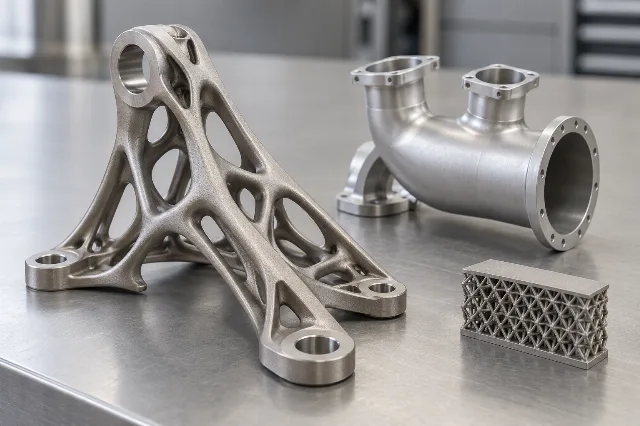
High specific strength for brackets and interfaces; review fatigue, build orientation, heat treatment and traceability before flight use.
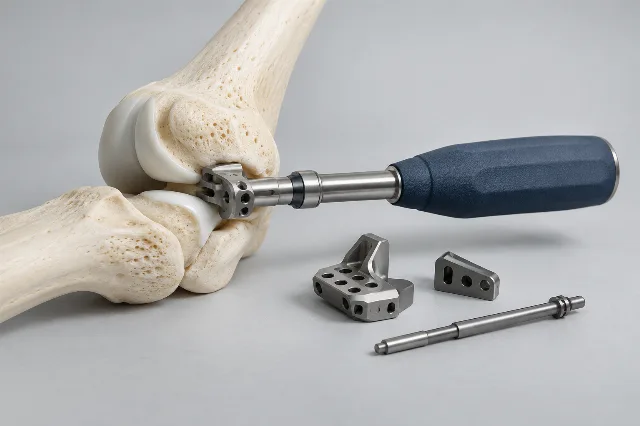
Instrument hardware and fixtures; select grade against corrosion, sterilization cycles and passivation requirements.
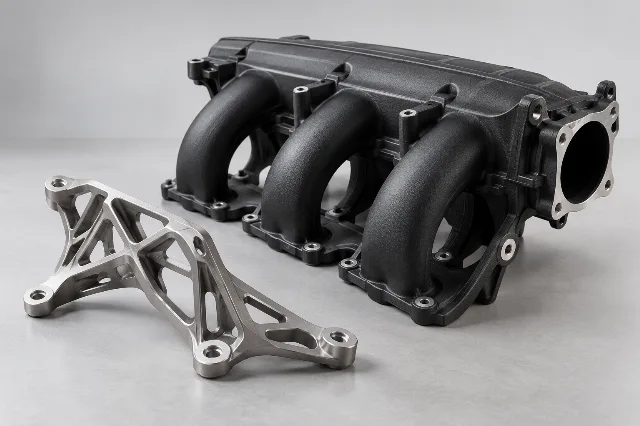
Lightweight housings and development brackets; assess vibration, thermal expansion and threaded joint durability.
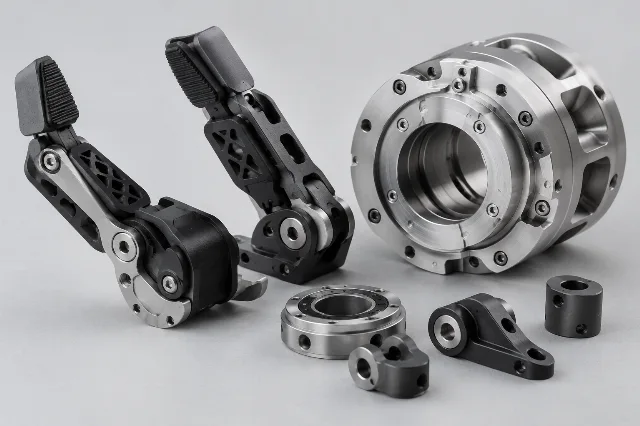
Grippers and cable guides; evaluate creep, moisture and repeated flexing.
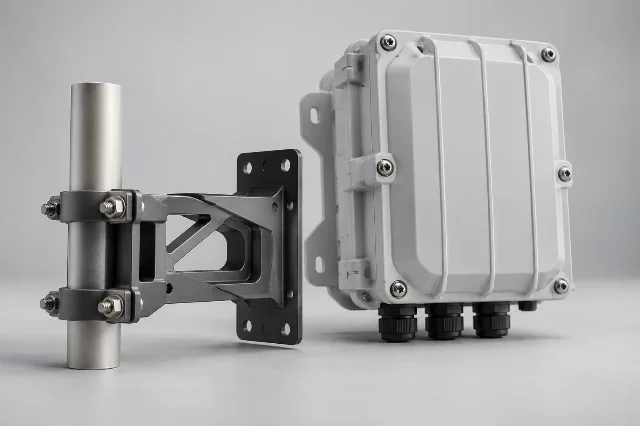
Thermal and electrical interfaces; review oxidation protection and contact resistance.
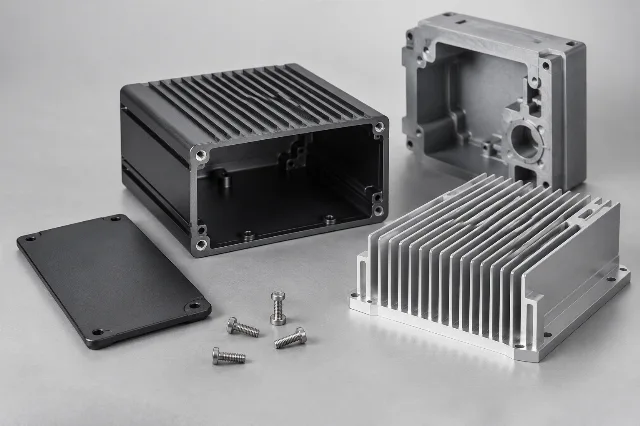
Prototype housings; ordinary ABS does not establish ESD protection or a flammability rating.
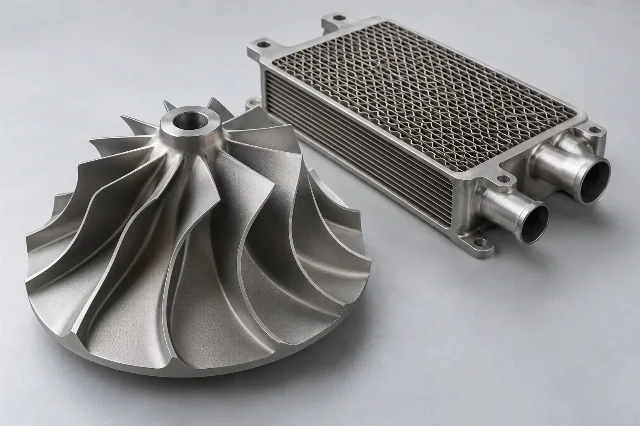
Conductive and thermal parts; specify contact geometry, plating and temperature rise criteria.
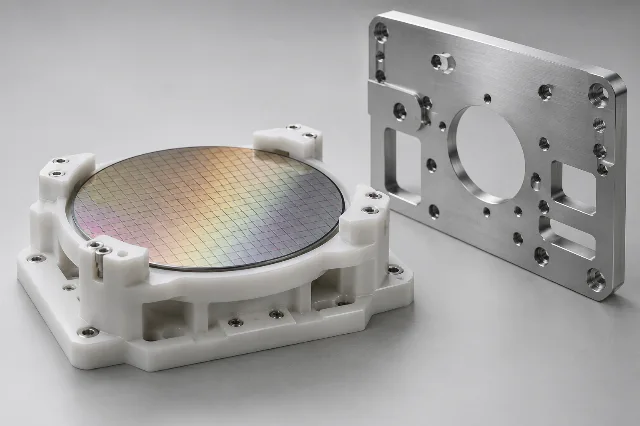
Insulating fixture components; verify outgassing, chemical compatibility and particle generation for the process.
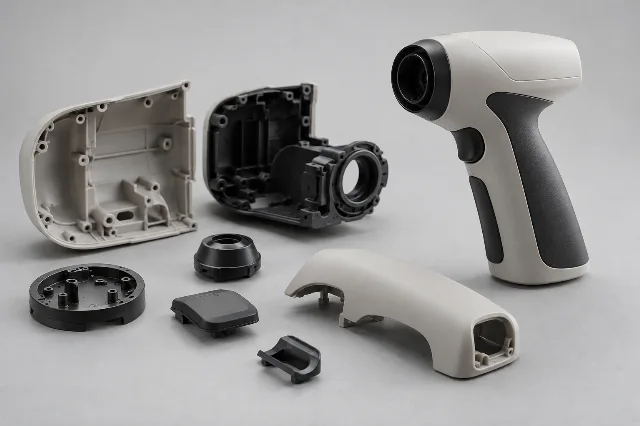
Appearance prototypes and housings; approve texture, color and assembly before tooling.
We use cookies to personalize your experience. By using this site, you agree to our Privacy Policy
Accept