What Makes a Plastic "Extreme"?
Extreme plastics are high-performance polymers engineered to maintain their mechanical, thermal, electrical, or chemical properties under conditions where ordinary plastics fail. Unlike commodity plastics such as PP or PE, these engineering materials are designed for demanding industries including aerospace, semiconductor manufacturing, medical devices, and automotive engineering.
Depending on the application, an "extreme" plastic may excel in heat resistance, chemical resistance, strength-to-weight ratio, wear resistance, or electrical insulation. Materials like PEEK, PBI, PPS, and PTFE often replace metal components because they reduce weight while maintaining exceptional durability.
Extreme Plastics Comparison at a Glance
Material | Extreme Property | Max Service Temperature | Typical Industry |
PMMA | Transparency | 80°C | Optical |
TPE | Softness | 100°C | Consumer |
PPS | Hardness | 220°C | Automotive |
PTFE | Chemical Resistance | 260°C | Chemical |
PBI | Heat Resistance | 380°C+ | Aerospace |
TPX | Lightweight | 150°C | Medical |
PEEK | Strength | 250°C | Medical |
ABS | Electroplating | 90°C | Automotive |
POM | Precision | 100°C | Mechanical |
The Ultimate Guide to the World’s Extreme Plastics
Plastics are not just cheap, disposable materials; they are a diverse family of polymers with mind-blowing properties. From aerospace engineering to everyday consumer goods, specific plastics push the boundaries of physics and chemistry. Let’s dive into the ultimate list of the world’s most extreme plastics in just 30 seconds!
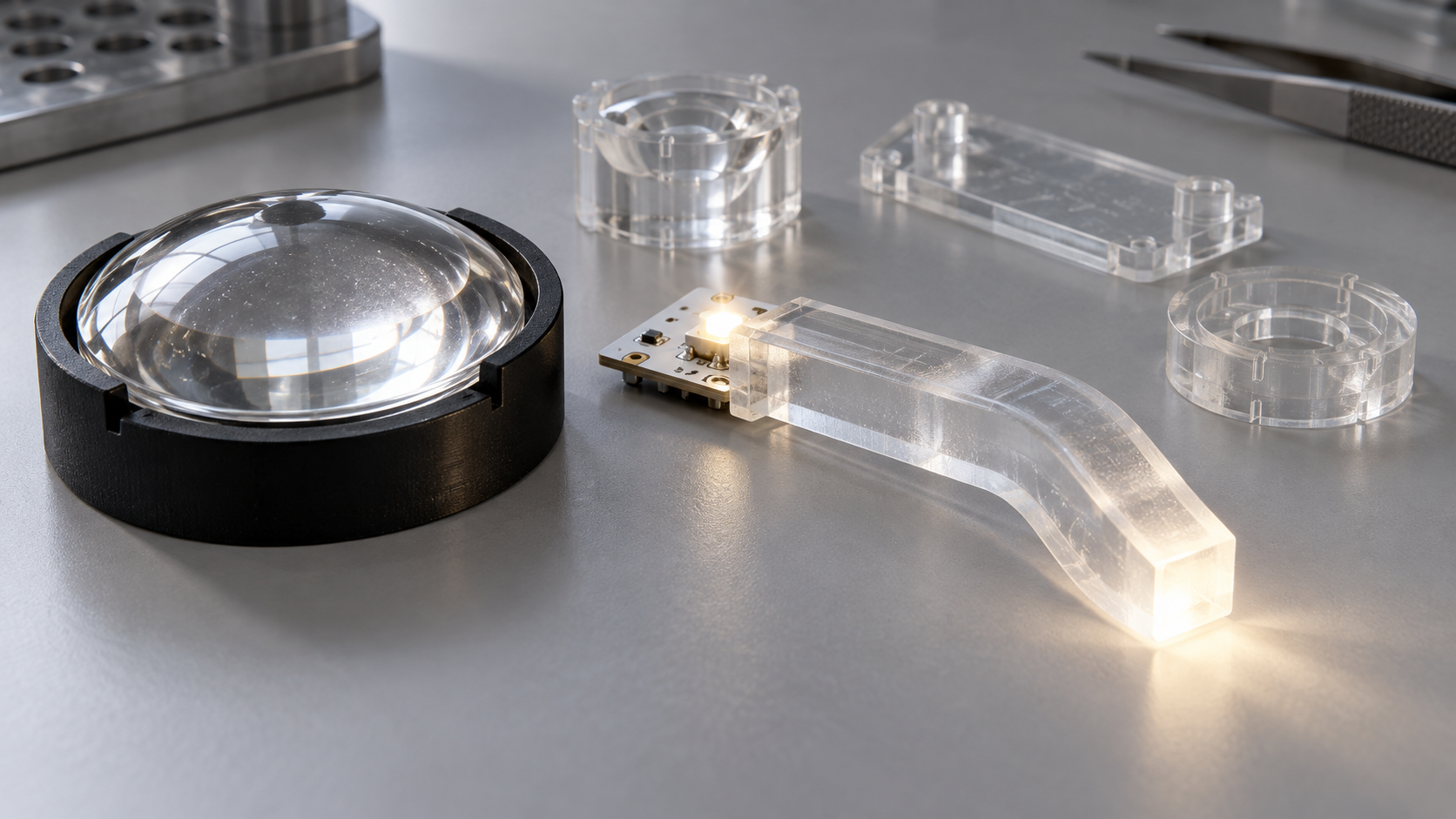
The Visual and Tactile Extremes When it comes to clarity, PMMA (Polymethyl methacrylate), commonly known as acrylic, takes the crown as the most transparent plastic. Its light transmission rivals that of glass, making it perfect for optical lenses and displays. On the opposite end of the spectrum is TPE (Thermoplastic Elastomer), the softest plastic. With a rubber-like, highly elastic touch, it is widely used in children’s toys and ergonomic grips. However, not all plastics are resilient; PS (Polystyrene) holds the title of the most brittle plastic. It shatters easily upon impact and is commonly seen in fragile foam packaging and disposable cutlery.
The Heavyweights of Strength and Resistance For industrial applications, PPS (Polyphenylene sulfide) is recognized as the hardest plastic. Boasting a rigidity that rivals steel, it is frequently used as a metal replacement in automotive and mechanical parts. When facing harsh chemical environments, PTFE (Polytetrafluoroethylene), or Teflon, is the undisputed champion of being the most corrosion-resistant plastic. It can withstand almost all strong acids, alkalis, and organic solvents. Meanwhile, PBI (Polybenzimidazole) stands as the most heat-resistant plastic. Capable of withstanding continuous temperatures over 380°C, it is an essential material for aerospace engines and extreme thermal insulation.
The Lightweight, Costly, and Unique In the pursuit of weight reduction, TPX (Polymethylpentene) is the lightest plastic in the world. Its incredibly low density makes it highly valuable in aerospace and advanced medical devices. At the premium end of the market, PEEK (Polyether ether ketone) is the most expensive plastic. Often called “plastic gold,” its exceptional biocompatibility and mechanical strength make it ideal for medical implants like artificial bones and high-end aerospace components. Finally, ABS (Acrylonitrile butadiene styrene) is the easiest plastic to electroplate. Its excellent surface finish allows it to be easily coated with metal, making it a favorite for automotive grilles and decorative.
A Quick Note on Odor While most engineering plastics are odorless, POM (Polyoxymethylene) is famously known as the most pungent-smelling plastic. During processing, it releases a distinct, sharp odor, though the final product is highly durable and widely used in precision gears.
Pushing Boundaries with AIHFABS 3D Printing Services Understanding these extreme materials is only half the battle; processing them requires cutting-edge technology. This is where AIHFABS 3D printing services come into play. Traditional manufacturing often struggles with high-performance polymers like PEEK, PBI, and PPS due to their extreme melting points and complex processing requirements. AIHFABS leverages advanced AI-driven algorithms and high-precision 3D printing technology to seamlessly handle these extreme plastics. Whether you need a custom PEEK medical implant, a lightweight TPX aerospace component, or a complex PPS mechanical gear, AIHFABS provides rapid prototyping and low-volume manufacturing with unmatched precision. By integrating AI into the printing workflow, AIHFABS optimizes print paths, reduces material waste, and ensures structural integrity, bridging the gap between theoretical material limits and practical, real-world applications.
Which Extreme Plastics Can Be 3D Printed?
Not every extreme plastic is equally suitable for additive manufacturing. Some materials, such as PEEK and PEI (ULTEM), are already widely used in industrial FDM systems, while others require specialized processing methods.
At AIHFABS, we focus on manufacturing high-performance engineering plastics for functional prototypes and end-use parts, selecting the most appropriate process based on temperature requirements, mechanical performance, and production volume.
Not every extreme plastic is equally suitable for additive manufacturing. Some materials, such as PEEK and PEI (ULTEM), are already widely used in industrial FDM systems, while others require specialized processing methods.
At AIHFABS, we focus on manufacturing high-performance engineering plastics for functional prototypes and end-use parts, selecting the most appropriate process based on temperature requirements, mechanical performance, and production volume.
How to Choose the Right Extreme Plastic?
Selecting the right material depends on operating temperature, chemical exposure, mechanical load, electrical insulation requirements, and manufacturing method.
If You Need | Choose |
Highest heat resistance | PBI |
Chemical resistance | PTFE |
Medical applications | PEEK |
Lightweight parts | TPX |
Metal replacement | PPS |
Frequently Asked Questions
What is the strongest extreme plastic?
PEEK is generally considered one of the strongest engineering plastics...
What plastic withstands the highest temperature?
PBI offers continuous operating temperatures above 380°C.
Can PEEK be 3D printed?
Yes. Industrial FDM systems are commonly used.
Is PTFE suitable for 3D printing?
PTFE is difficult to process with conventional 3D printing...
What industries use high-performance plastics?
Aerospace, medical, semiconductor, and automotive industries.
Turn High-Performance Plastics into Functional Parts
Understanding extreme plastics is only the first step—manufacturing them requires the right equipment and expertise. AIHFABS provides industrial 3D printing services for high-performance engineering plastics, helping customers produce functional prototypes and low-volume production parts with tight tolerances and reliable material performance.
Whether you're evaluating PEEK for aerospace components or selecting the right engineering plastic for a demanding application, our team can help identify the most suitable material and manufacturing process.





Leave A Comment