
3D Printing
Multi Jet Fusion (MJF)
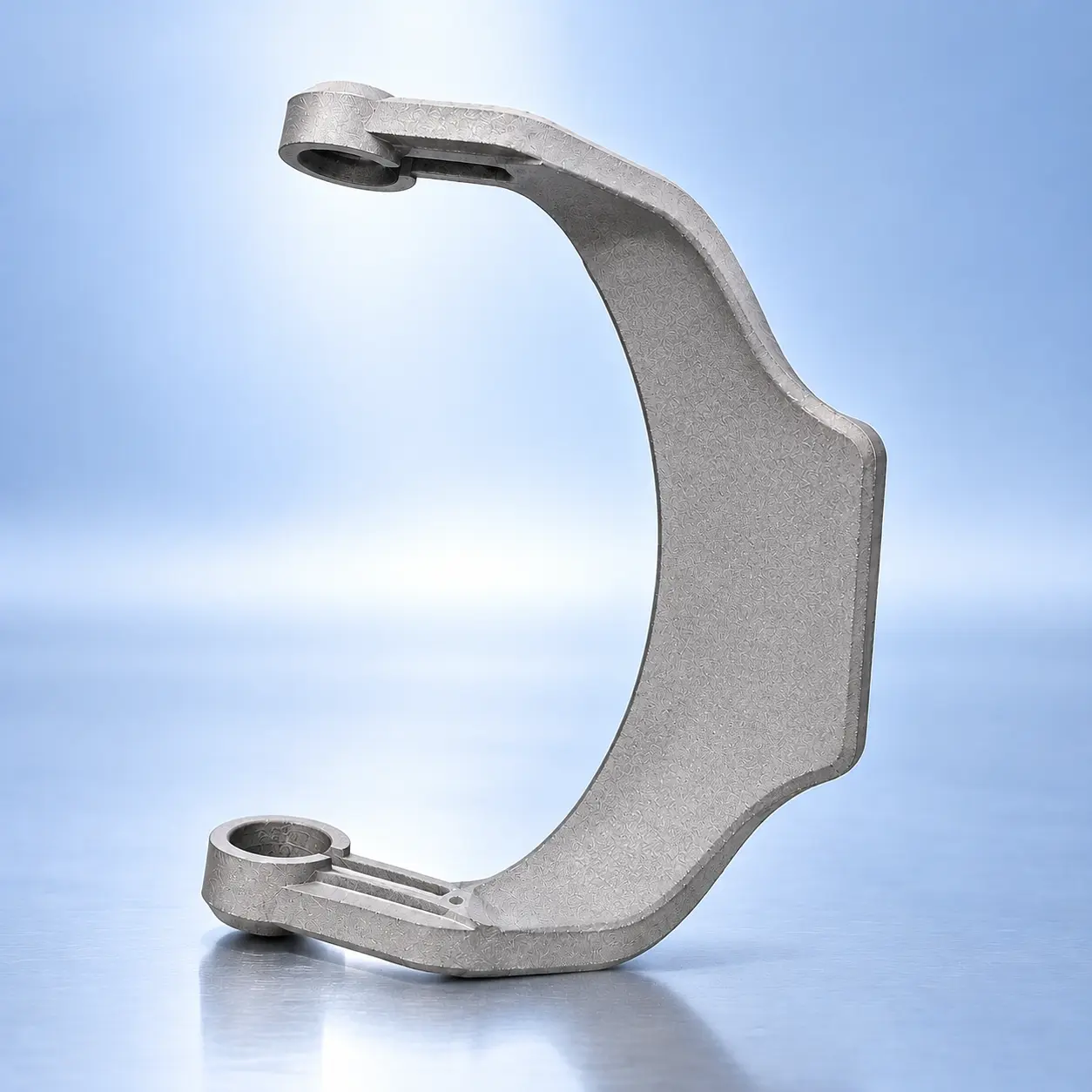
Multi Jet Fusion (MJF) applies fusing and detailing agents across a powder bed, then uses infrared energy to fuse each layer.
Create a quote
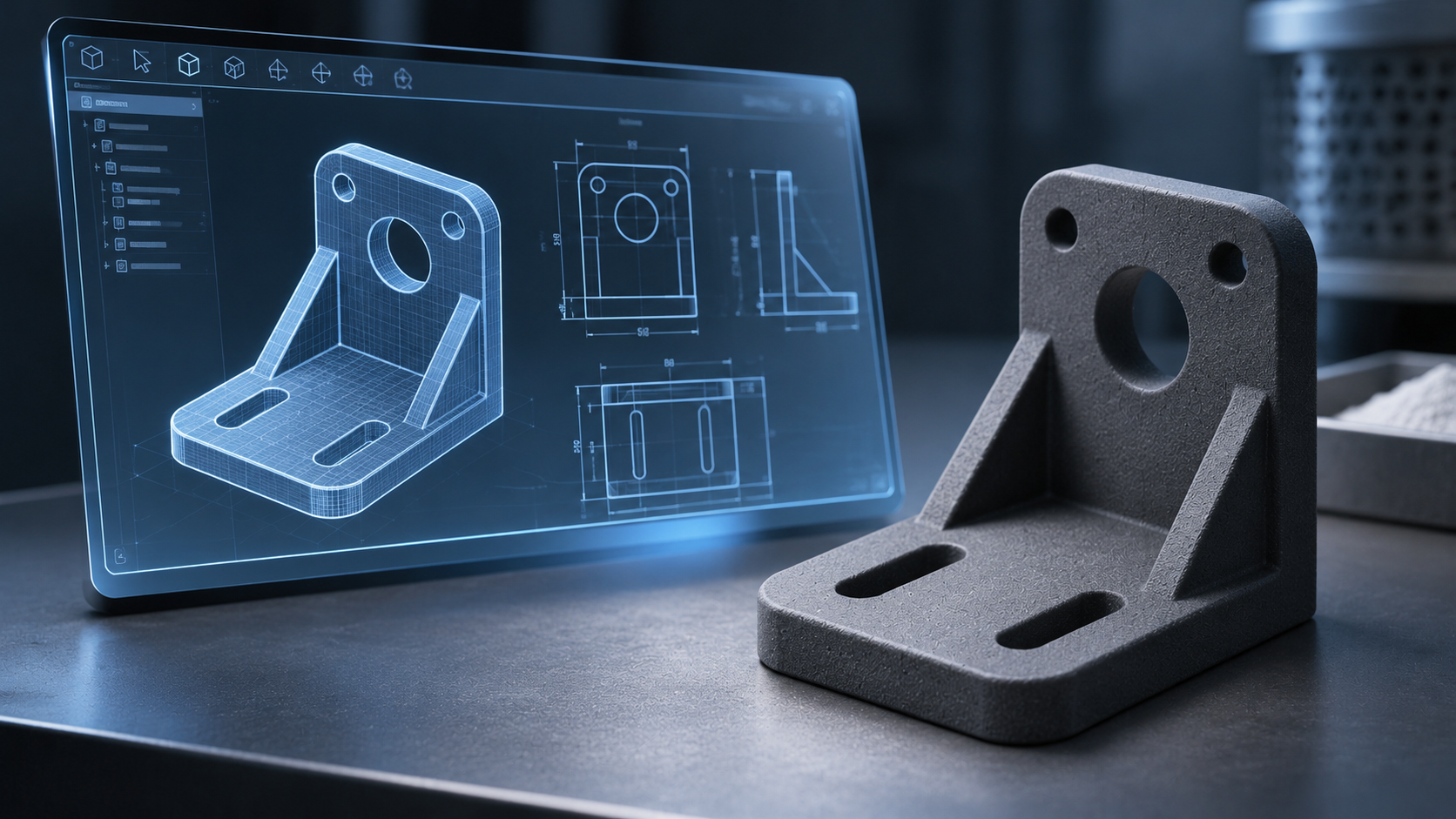
A design engineer finishes a bracket or enclosure, opens an MJF service page, and pauses before dragging a CAD, STEP, STL, or 3MF file into the upload box. The practical question is simple: does the quote request give away the design? The short answer is no. A file upload starts a manufacturing conversation, while ownership, copyright, trademark, and confidentiality sit in separate legal and project terms. These are general intellectual property principles, not legal advice, and the goal is to make a file-sharing decision easier to understand.
The service needs the geometry to understand the part, compare MJF with another process, and prepare a quote for the job. That purpose is narrow: evaluate the file and plan the work. It does not move the copyright in the design to the service, and it does not give the service a general right to reuse the model for other customers. A designer can share a file for a quote and still keep control of the design. Ownership and permission are different ideas. The owner of a CAD model may be the designer, an employer, a client, or another rights holder under a written agreement. Permission is a license: a specific allowance to use the file for a defined purpose. A quote request can sit inside that permission without changing who owns the underlying work. The printed part is also separate from the digital file; buying or approving a batch of MJF parts does not, by itself, buy the CAD model or the right to reproduce it elsewhere.
Copyright, trademark, and confidentiality answer three different questions. Copyright asks who controls copying of an original design file. Trademark asks whether a name, logo, or symbol identifies the source of goods. Confidentiality asks how non-public information is handled and who may see it. A custom MJF project can involve all three at once. WIPO's intellectual property overview treats these as related but distinct rights, which is why a single upload action should not be asked to carry every permission at once. Confidentiality is a separate agreement and practice question. It concerns access to non-public information, such as an unreleased product geometry, a customer's dimensions, or a planned design change. A confidentiality agreement can limit who sees the file, where it is stored, and how long it is kept. Those terms are useful even when copyright stays with the designer. Copyright ownership alone leaves access and handling as separate questions. AIHFABS lists CAD, STEP, STL, and 3MF upload for MJF quotes; confidentiality terms, retention periods, and rights-transfer clauses are separate project terms.
Copyright protects the design file as an original work. The U.S. Copyright Office explains that copyright covers original works of authorship fixed in a tangible medium, including drawings, models, and written project materials. In a CAD project, that can include the model's original shape, annotations, and the way the file is organized. Copyright does not cover every functional feature of a manufactured part, but the file itself can still be protected. The rights holder controls copying, distribution, and adaptation of the file. A service that receives the file for a quote can review it for that quote; broader reuse, resale, or sharing with another customer needs a clear license.
Trademark protects brand signs rather than the mechanical design itself. USPTO describes trademarks as source identifiers: names, logos, slogans, and similar signs that tell buyers who made or stands behind a product. If a CAD file includes a company logo on a grip, a branded enclosure, or a partner mark, that logo carries trademark questions separate from the copyright in the model. The shape of a functional bracket does not become a trademark simply because it is printed in a branded color. Designers can keep brand assets in separate files and state their permitted use. That keeps the MJF geometry review focused on fit and function.
Designers can keep rights clear by making the purpose of the upload explicit. A short note in the project file can say that the CAD, STEP, STL, or 3MF file is provided for evaluation and manufacturing of the named part. The note can also state that other use requires written permission. A formal contract can add detail, while the note gives the project a clear starting point. For teams using an on demand manufacturing service, the same discipline applies: keep a master file, send a controlled revision, and record which files were shared for the quote. If a logo or brand asset is involved, separate it from the mechanical model and identify its owner. AIHFABS lists upload support for CAD, STEP, STL, and 3MF files, so a designer can use the quote step to discuss the part and the handling terms in the same project conversation. A TPU 3D printing service for grips, gaskets, or flexible connectors often receives files with customer-specific geometry; the upload is still a quote step, and the project documents should carry any confidentiality or reuse terms. Designers should also align internal ownership before sharing: an employer, contractor, or client may hold rights, and the person uploading the file should have authority to do so. Clear ownership records make later manufacturing steps less ambiguous.
The practical takeaway is that a CAD upload is a permission to review, not a transfer of the design. Copyright protects the file as an original work, trademark protects brand signs, and confidentiality controls how non-public project information is handled. Keeping those ideas separate helps designers share an MJF model for a quote without assuming that ownership has moved. The AIHFABS MJF service page is a useful reference for the supported upload formats and manufacturing flow. The terms that matter most to a specific project—confidentiality, retention, and reuse—belong in the written project record.
A: No. Uploading a CAD file for a custom MJF quote does not automatically transfer ownership of the design. The upload lets the service review the geometry and prepare a quote for the job. Copyright and other rights stay with the existing rights holder unless a written agreement assigns them. A designer can share a STEP, STL, or 3MF file for evaluation while keeping the master file and reuse rights.
A: Copyright protects an original CAD file as a work of authorship: the model's original expression, drawings, and related project materials. It gives the rights holder control over copying, distribution, and adaptation of the file. It does not protect every functional feature of a printed part, so a functional bracket can still raise design-right questions through other rights or contracts. For 3D printing, the file itself is the practical object to protect when it is shared for a quote.
A: A confidentiality agreement controls access to and handling of non-public information, while copyright ownership controls rights in the design as an original work. One can own the copyright and still need an NDA to limit who sees the file, where it is stored, and how long it is kept. A confidentiality term can also apply to dimensions, test data, and launch plans that are not protected by copyright. That is why the two topics sit in different parts of a project agreement.
What is Intellectual Property?
AIHFABS MJF 3D Printing Service

A process that fits this note. Open the spec, or put the file on a quote.
Multi Jet Fusion (MJF) applies fusing and detailing agents across a powder bed, then uses infrared energy to fuse each layer.
Create a quote
Detailed polyurethane replicas for development and small batches.
Create a quoteMaterials that sit next to this article. Check the card, then upload CAD.
Process, finish, and file notes from the shop — not a marketing blog.
Company, payment, shipping, and process answers by topic.

AIHFABS quotes custom 3D printing and CNC machining from a CAD upload. Compare SLA, SLS, MJF, SLM, FDM, DLP, milling, and turning, then add finishing such as vapor smoothing, dyeing, anodizing, polishing, or powder coating in the same order.
Instant quoting is built for prototypes, jigs, housings, and small-batch production. You see material, process, quantity, and lead time together, which keeps engineering changes from turning into a new round of supplier emails.
You can review material, process, quantity, and lead time together, so engineering changes do not turn into another round of supplier emails.
Upload STL, STEP, and other common CAD formats for an online quote.
Compare 3D printing technologies and CNC options on the same part.
Select polymers or metals, then add 3D Plus hardware finishing when needed.
Review price and lead time before checkout, or request a manual quote for special specs.
If this page describes a process, industry, or sample part you want to reproduce, start from the upload flow and match technology plus finishing to your drawing.
We use cookies to personalize your experience. By using this site, you agree to our Privacy Policy
Accept

Leave A Comment