2026 Industry Guide & Market Overview
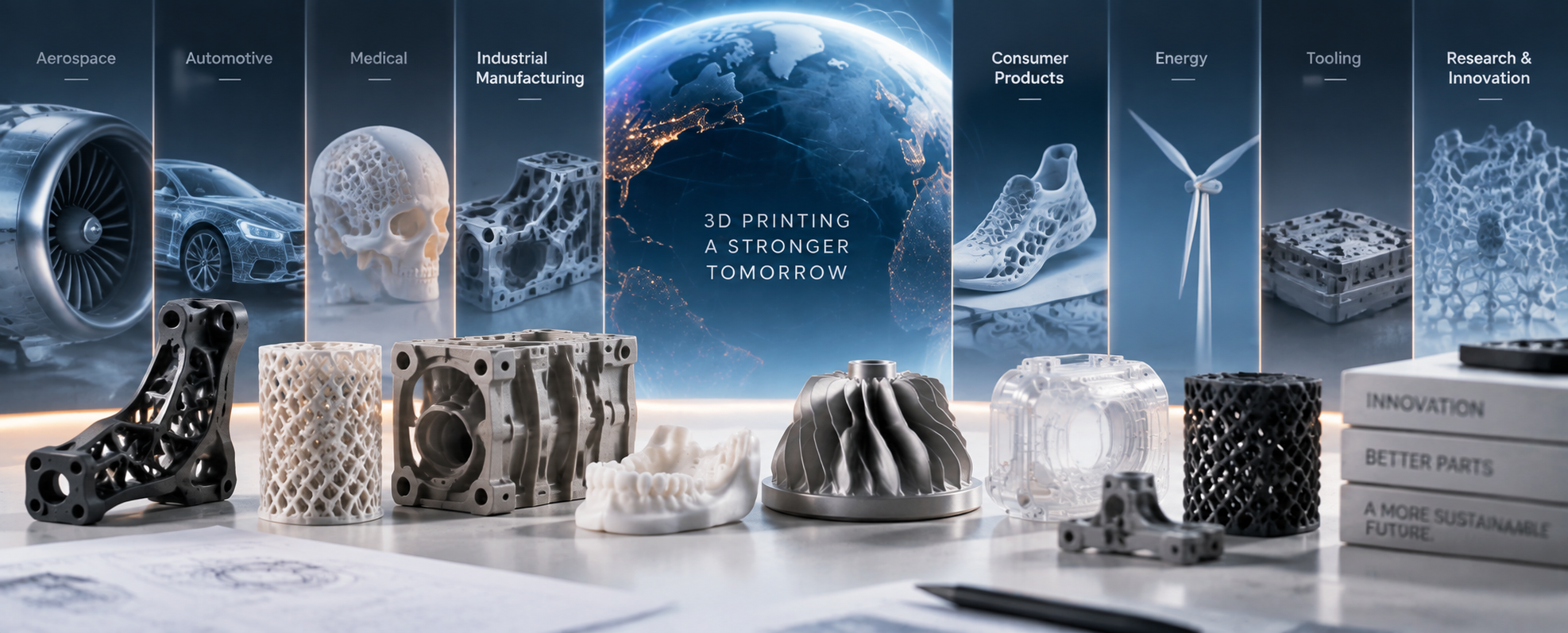
Additive manufacturing has evolved from its origin in rapid prototyping into one of the core pillars of the global industrial supply chain. Entering 2026, market demands for high precision, repetition, and scalable production are driving leading 3D printing companies to accelerate innovation across hardware, materials, and digital manufacturing platforms. Today, top 3D printing firms provide end-to-end solutions ranging from high-performance aerospace components to personalized medical devices.
Quick Overview: Top 10 3D Printing Companies
Below is a curated comparison table of 10 benchmark companies in the industry, covering original equipment manufacturers (OEMs) and digital on-demand manufacturing service platforms:
Company | Core Technologies | Key Applications |
|---|
Stratasys | FDM, PolyJet, SAF, P3 (photopolymer) | Aerospace, Automotive, Healthcare |
3D Systems | SLA, SLS, Direct Metal Printing Figure 4, ColorJet | Medical Implants, Dental, Precision Engineering |
EOS | Direct Metal Laser Sintering SLS | Heavy Industry, Tooling, High-End Energy |
Colibrium Additive | Electron Beam Melting (EBM), Metal PBF | Aerospace Engines, Defense Equipment |
HP | Multi Jet Fusion, Metal Jet | Volume Polymer Parts, Consumer Goods |
Carbon | Digital Light Synthesis / CLIP | High-End Consumer, Footwear, Medical Devices |
Desktop Metal | Binder Jetting(metal), Bound Metal Deposition | Automotive Volume Parts, Consumer Electronics, Machinery |
Protolabs | SLA, SLS, DMLS, PolyJet, MJF | Rapid Prototypes, Low-Volume Production |
Xometry | SLS, MJF, DMLS (metal), FDM, PolyJet | AI Instant Quoting, Elastic Supply Chain |
Unionfab | SLA, SLS, SLM, MJF, FDM Binder Jetting, LPBF (metal) | Industrial Prototypes, Cost-effective Volume, Cloud MES |
Top 10 3D Printing Brands and Service Providers
1. Stratasys——A Leader in Industrial Polymer 3D Printing
Core Tech : FDM, PolyJet, SAF, P3 (photopolymer)
Focus: Aerospace, Automotive, Healthcare
Stratasys remains a benchmark among industrial 3D printer manufacturers. Renowned for inventing Fused Deposition Modeling (FDM) and pioneering multi-material PolyJet technology, Stratasys focuses on building industrial machinery for high-requirement production environments. Its ecosystem deeply integrates robust hardware with advanced GrabCAD software, providing seamless shop-floor operational capabilities for aerospace and automotive industries.
2. 3D Systems——The Pioneer of Additive Manufacturing
Core Tech:SLA, SLS, Direct Metal Printing (DMP) Figure 4, ColorJet
Focus: Healthcare, Precision Engineering
As one of the earliest established 3D printing companies, 3D Systems possesses an extensive portfolio of hardware, software, and material offerings. The company has built an outstanding reputation in healthcare, producing patient-specific surgical guides, orthopedic implants, and dental devices, while supplying ultra-high-strength metal parts to aerospace clients.
3. EOS ——A Global Leader in Industrial Metal & Plastic 3D Printing
Core Tech: Direct Metal Laser Sintering, SLS
Focus: Heavy Industry, Tooling, Energy
Headquartered in Germany, EOS is the recognized pioneer of Direct Metal Laser Sintering (DMLS). As a top-tier industrial 3D printer manufacturer, EOS develops high-power powder bed fusion systems capable of processing titanium, aluminum, cobalt-chrome, and nickel superalloys, engineered specifically for demanding industrial applications.
4. Colibrium Additive
Core Tech:Electron Beam Melting, Metal PBF
Focus: Aerospace, Defense, Energy
Newly rebranded from GE Additive, Colibrium Additive stands as a global powerhouse in industrial metal additive manufacturing. Unifying Concept Laser's laser beam technology with Arcam's Electron Beam Melting , the company delivers large-scale, high-density metal 3D printing solutions tailored for critical aerospace engine components and heavy energy equipment.
5. HP
Core Tech: Multi Jet Fusion, Metal Jet
Focus: Volume Production, Consumer Goods
HP crossed over into additive manufacturing to reshape the speed and economics of polymer part production. Its proprietary Multi Jet Fusion (MJF) technology delivers isotropic mechanical properties and fine detail at production speeds capable of true serial manufacturing, solidifying HP's standing among top 3D printing brands.
6. Carbon
Core Tech: Digital Light Synthesis / CLIP
Focus: Premium Consumer, Footwear, Medical
Carbon revolutionized liquid resin printing speed with its breakthrough Digital Light Synthesis (DLS) technology. Utilizing light and oxygen for continuous, rapid curing, it produces parts with engineering-grade isotropic physical properties. Carbon's partnerships with global brands like Adidas have successfully commercialized mass production for customized consumer products.
7. Desktop Metal
Core Tech:Binder Jetting(metal), Bound Metal Deposition
Focus: Automotive, Electronics, Machinery
Desktop Metal is dedicated to bringing metal 3D printing into mass production. Its production-grade Binder Jetting platforms print up to 100 times faster than traditional powder bed technologies, drastically reducing per-part costs and becoming a prime selection for automotive and industrial giants driving cost efficiencies.
8. Protolabs
Core Tech:SLS, MJF, DMLS (metal), FDM, PolyJet
Focus: Rapid Prototyping, On-Demand Parts
Protolabs is synonymous with rapid delivery. Renowned for incredible turnaround speeds, Protolabs offers automated quoting and Design for Manufacturability (DFM) analysis, serving as an essential partner for engineering teams working under strict project schedules.
9. Xometry
Core Tech:SLS, MJF, DMLS (metal), FDM, PolyJet
Focus: Instant Quoting, On-Demand Procurement
Xometry operates a massive digital network connecting global buyers with manufacturing facilities. As a pioneer in utilizing AI-driven pricing algorithms, Xometry provides engineering teams with flexible, rapid capacity allocation across multiple additive manufacturing technologies.
10. Unionfab
Core Tech: SLA, SLS, SLM, MJF, FDM,Binder Jetting, LPBF (metal)
Focus: Prototypes, Electronics, Medical, Volume Parts
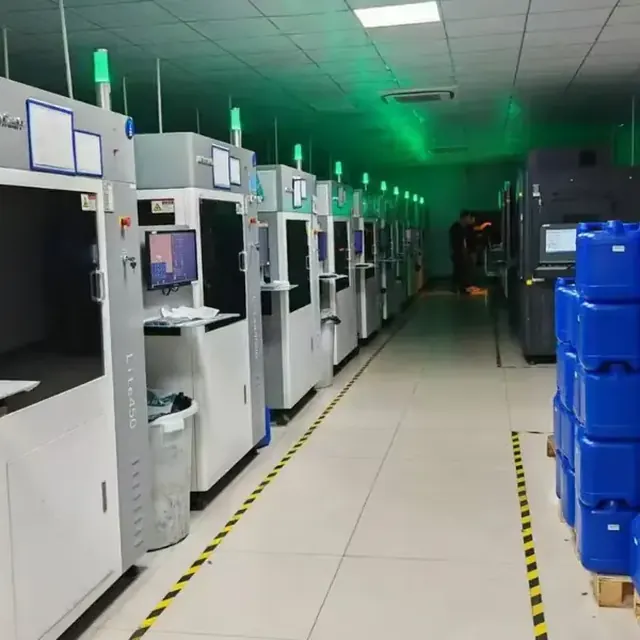
As an emerging digital on-demand manufacturing service platform, Unionfab seamlessly integrates online CAD uploads, automated DFM analysis, instant quoting, and real-time production tracking via its proprietary cloud MES system and distributed smart factory network. With robust industrial capacity and high cost-efficiency, Unionfab is rapidly becoming a preferred global partner for outsourced prototyping and production parts.
Service Providers vs. 3D Printer Manufacturers: How to Choose?
When incorporating additive manufacturing into business strategy, choosing between purchasing equipment directly from 3D printer manufacturers or partnering with on-demand 3D printing service providers depends on your operating model and needs:
Comparison Dimension | 3D Printer Equipment Manufacturers | On-Demand 3D Printing Service Providers |
|---|
Target Audience | Internal R&D labs, factories with high asset utilization | Agile product development teams, low-volume projects |
Capital Expenditure (CapEx) | High initial hardware investment | Zero CapEx; pay-per-part purchasing model |
Operational Expertise | Requires dedicated equipment operators & maintenance | Fully managed by service provider's engineering team |
Material & Tech Flexibility | Limited to purchased machine capabilities/materials | Instant access to SLA, SLS, DMLS, MJF, and more |
Capacity Scalability | Constrained by local in-house machine limits | Elastic scalability via global factory network |
Strategic Insight: Modern enterprises frequently adopt a "Hybrid Strategy": deploying desktop units internally for rapid design iterations, while outsourcing complex metal components, oversized geometries, or sudden volume spikes to specialized 3D manufacturing firms like Unionfab or Xometry.
Key Factors to Consider When Choosing a 3D Printing Firm
To ensure successful project delivery, businesses evaluating external 3D printing firms should focus on these core technical metrics:
Supported Technology Spectrum: Confirm the supplier offers the specific process required for your project (e.g., FDM for conceptual models, SLA for high-finish visual models, SLS/MJF for durable nylon production, or SLM/DMLS for structural metal parts).
Material Portfolio & Certifications: Verify that the service provider supplies engineering-grade resins, high-temperature polymers (e.g., PEEK, ULTEM), or certified metal powders with complete batch traceability.
Lead Time & Speed: Evaluate instant automated quoting responsiveness, as well as fulfillment capabilities for standard, expedited, or next-day deliveries.
Quality Assurance & ISO Certifications: Require official quality management system certificates, reviewing ISO 9001, AS9100 (aerospace), or ISO 13485 (medical grade) depending on industry requirements.
Frequently Asked Questions
Q1: What are the top ten 3d printers and brands for industrial use?
Industrial production is typically dominated by established platforms such as the Stratasys F900 (FDM), EOS M 290 (DMLS), HP Jet Fusion 5200 (MJF), 3D Systems ProFactory SLA 750, Carbon M3 (DLS), and Desktop Metal Production System. These platforms represent top-tier industrial hardware solutions globally.
Q2:Which companies are leading in additive manufacturing solutions?
In the additive manufacturing (3D printing) solutions industry, leading companies generally fall into two core categories. The first consists of hardware and technology OEMs, including Stratasys, 3D Systems, EOS, Colibrium Additive, HP, Carbon, and Desktop Metal. Through innovative technologies such as FDM, SLA, DMLS, MJF, and Binder Jetting, these companies lead the production of high-precision polymer and metal components across aerospace, medical, automotive, and consumer goods industries. The second category comprises digital manufacturing and supply chain platforms, such as Protolabs, Xometry, and Unionfab, which leverage cloud-based Manufacturing Execution Systems (MES) and distributed smart factory networks to significantly improve the global orchestration of on-demand manufacturing and rapid prototyping. Together, these two groups create an end-to-end additive manufacturing ecosystem that seamlessly integrates advanced hardware, software, and cloud-enabled production.
Q3: How do I select the right 3d manufacturing company for prototyping?
Focus on quoting responsiveness, material breadth, quality certifications, and Design for Additive Manufacturing (DFAM) feedback. Quality 3D printing companies provide automated manufacturability checks upon model upload to catch design flaws like thin walls or uncleaned internal cavities before printing.
Q4: What industries benefit most from custom 3d printing services?
Aerospace (lightweight brackets and ducts), Automotive (custom tooling and intake manifolds), Medical/Dental (patient-specific surgical guides and aligners), Consumer Electronics (functional enclosures), and Industrial Equipment (spare parts and fixtures) are the primary adopters.
Conclusion
The additive manufacturing market of 2026 offers engineers, designers, and supply chain executives unprecedented options. Leading 3D printer manufacturers continue to enhance machine throughput and material performance, while specialized 3D printing firms offer scalable on-demand capacity that helps companies bypass traditional tooling lead times.
By thoroughly evaluating project requirements against technical specifications, material properties, and quality management standards, you can select the ideal partner from these top 3D manufacturing companies to accelerate product development and turn innovations into reality.




Leave A Comment